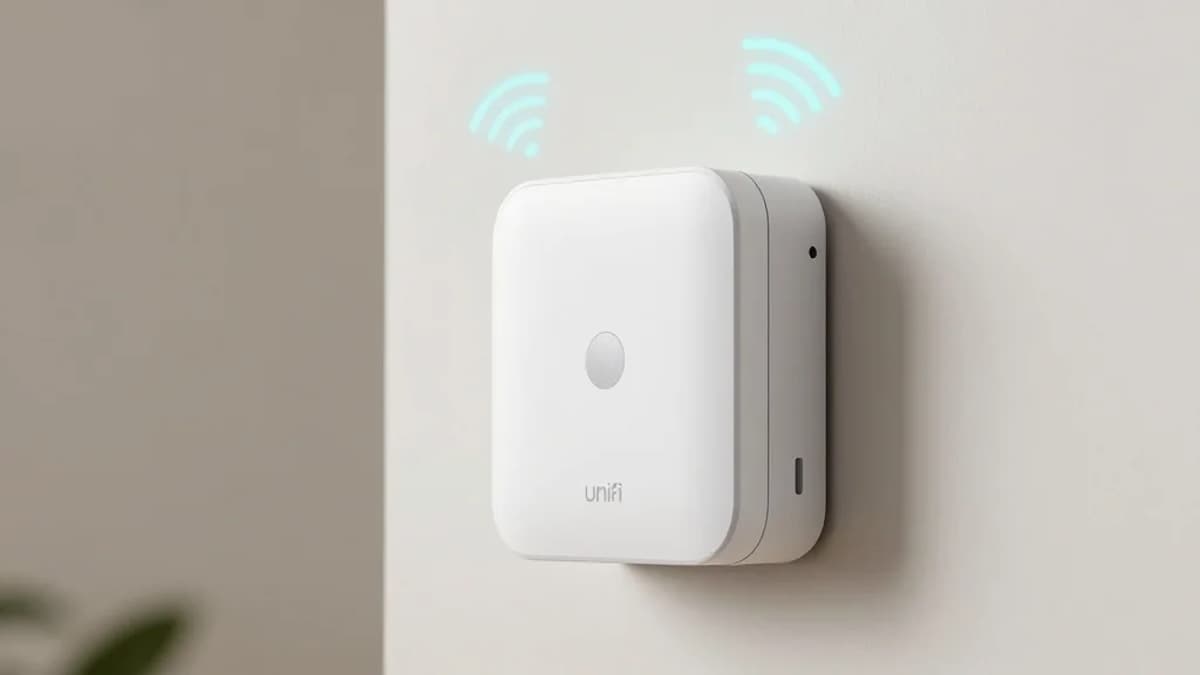
UniFi U7 Mesh Arrives: Compact Wi-Fi 7, IPX6, 2.5GbE Uplink
•March 3, 2026
0
Why It Matters
The U7 Mesh brings enterprise‑grade Wi‑Fi 7 performance to cost‑sensitive deployments, expanding Ubiquiti's reach in both indoor and outdoor‑adjacent markets. Its flexible mounting and multigig uplink address common bottlenecks in mesh networks, enabling more reliable high‑density connectivity.
Key Takeaways
- •U7 Mesh supports dual‑band Wi‑Fi 7, not tri‑band
- •IPX6 rating enables outdoor‑adjacent installations
- •2.5 GbE uplink prevents wired bottleneck
- •Covers up to 140 m², handles 200+ clients
- •Managed via UniFi Network for centralized analytics
Pulse Analysis
Wi‑Fi 7 is rapidly becoming the new standard for high‑throughput, low‑latency wireless, yet many vendors still focus on tri‑band designs that push 6 GHz into the mix. Ubiquiti’s decision to launch a dual‑band, BE5000‑class access point reflects a pragmatic approach: it delivers the efficiency gains of Wi‑Fi 7—such as higher order modulation and reduced latency—while keeping hardware costs and regulatory hurdles lower. This positions the U7 Mesh as an attractive upgrade for existing UniFi customers who want next‑gen performance without overhauling their spectrum planning.
Beyond the radio, the U7 Mesh’s physical design addresses a real‑world deployment challenge. Its IPX6 rating and versatile mounting options let installers place the unit on walls, poles, or desks in semi‑outdoor environments where traditional ceiling‑only APs would struggle. The integrated long‑range antenna system is tuned for robust mesh backhaul, ensuring that each hop maintains throughput and stability. Coupled with a 2.5 GbE uplink, the device mitigates the common bottleneck of gigabit‑limited wired connections, making it suitable for high‑density venues such as campuses, hotels, and retail spaces.
From a business perspective, the U7 Mesh’s $179 price point undercuts many competing Wi‑Fi 7 solutions, offering a compelling value proposition for small‑to‑medium enterprises and managed service providers. Its seamless integration with the UniFi Network controller adds operational efficiency, allowing administrators to monitor RF performance, client distribution, and mesh health from a single dashboard. As organizations increasingly demand reliable, high‑capacity wireless for IoT, video, and remote work, the U7 Mesh could accelerate Wi‑Fi 7 adoption by lowering entry barriers while delivering the performance needed for modern digital workloads.
UniFi U7 Mesh arrives: compact Wi-Fi 7, IPX6, 2.5GbE uplink
0
Comments
Want to join the conversation?
Loading comments...