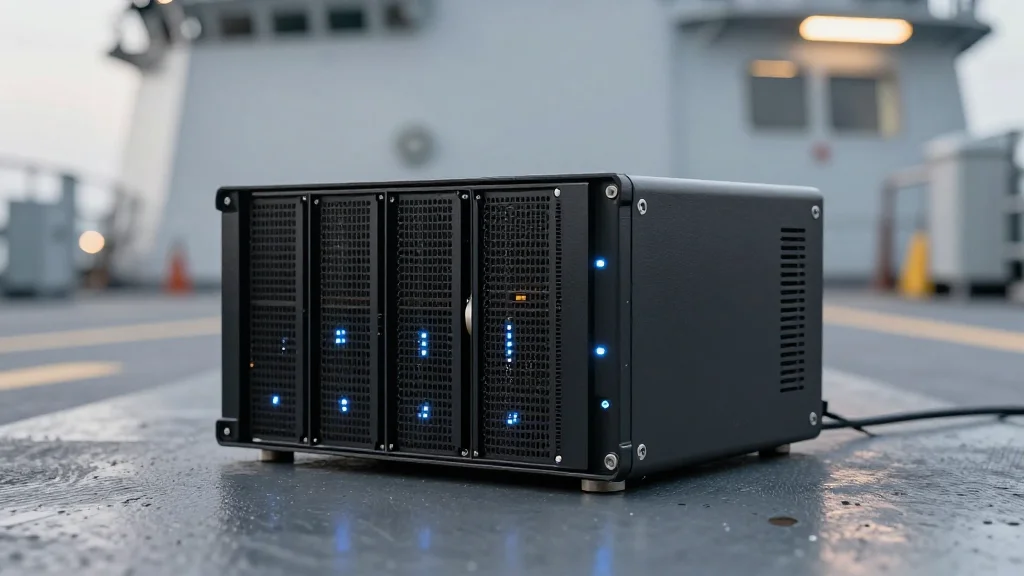
U.S. Navy Deploys Nvidia DGX‑GB300 Supercomputers Amid Iran Conflict

Companies Mentioned
Why It Matters
The Navy’s deployment demonstrates that high‑performance AI hardware is becoming a critical component of modern warfare, enabling rapid model training on classified data without reliance on external cloud services. This shift could reshape defense procurement, driving increased budgets for on‑premises compute and prompting allied nations to reassess their own AI infrastructure strategies. Moreover, the move highlights the growing importance of data sovereignty in national security, a factor that will likely influence future technology partnerships and export controls. By fielding the DGX‑GB300, the United States signals to both allies and competitors that it is willing to bypass traditional acquisition timelines to secure AI capabilities. This could intensify the global AI arms race, prompting faster development cycles and deeper integration of AI into operational planning across all services.
Key Takeaways
- •U.S. Navy installed Nvidia DGX‑GB300 AI supercomputers at the Naval Postgraduate School during the Iran conflict
- •DGX‑GB300 provides on‑premises training for large neural networks on classified data
- •Deployment contrasts with slower procurement in China and budget‑constrained European NATO members
- •Federal FedRAMP High cloud spending expected to rise as defense AI contracts grow
- •Fielding may trigger similar acquisitions across U.S. service branches and NATO allies
Pulse Analysis
The Navy’s rapid fielding of Nvidia’s DGX‑GB300 marks a decisive pivot from cloud‑first AI strategies to hardware‑centric solutions in the defense arena. Historically, the U.S. Department of Defense has leaned on commercial cloud providers for scalability, but the need for absolute data control in wartime has exposed the limits of that model. By installing the DGX‑GB300, the Navy not only secures a sovereign compute environment but also creates a testbed for future AI‑driven weapons and decision‑support tools.
From a market perspective, this deployment could catalyze a wave of high‑end GPU purchases across the Pentagon, potentially dwarfing the modest annual growth rates seen in civilian AI hardware sales. Vendors that can certify their platforms for FedRAMP High and meet stringent security requirements will likely capture a disproportionate share of defense spend. Nvidia, already dominant in the AI chip market, stands to solidify its foothold in the military sector, especially if the DGX‑GB300 proves effective in operational trials.
Strategically, the move may force allies to accelerate their own hardware programs to maintain interoperability. NATO’s existing interoperability frameworks could be updated to include specifications for AI supercomputers, creating a new standard for joint operations. Conversely, adversaries such as China and Russia may double down on their own sovereign AI compute initiatives, intensifying the technology race. The Navy’s decision thus serves as both a benchmark and a catalyst, reshaping procurement timelines, budget allocations, and the broader geopolitical balance of AI‑enabled warfare.
U.S. Navy Deploys Nvidia DGX‑GB300 Supercomputers Amid Iran Conflict
Comments
Want to join the conversation?
Loading comments...