UWB: Why Angle-of-Arrival Positioning Hinges on Antenna Isolation
Companies Mentioned
Why It Matters
By solving the antenna‑isolation bottleneck, the LK1820201 enables cost‑effective, small‑form‑factor devices to deliver centimeter‑level AoA positioning, reducing infrastructure spend and extending battery life across multiple industries.
Key Takeaways
- •Qorvo recommends ≥‑25 dB isolation and 0.45 λ antenna spacing.
- •LK1820201 delivers –26 dB isolation across 6‑8.5 GHz band.
- •0.5 mm height enables integration in wearables and tags.
- •High radiation efficiency lowers transmit power, extending battery life.
- •AoA reduces anchor count, cutting RTLS deployment costs.
Pulse Analysis
UWB’s rapid adoption stems from its ability to deliver sub‑decimeter accuracy without the spectrum congestion of Wi‑Fi or Bluetooth. As smartphones from Apple, Samsung and Xiaomi embed UWB chips, developers are moving beyond simple range measurements toward angle‑of‑arrival (AoA) techniques that extract directional information from a single anchor. This shift promises leaner infrastructure for industrial RTLS, tighter security for automotive keyless entry, and more intuitive navigation for autonomous robots, but it also exposes a critical hardware constraint: the need for high antenna isolation to preserve phase integrity.
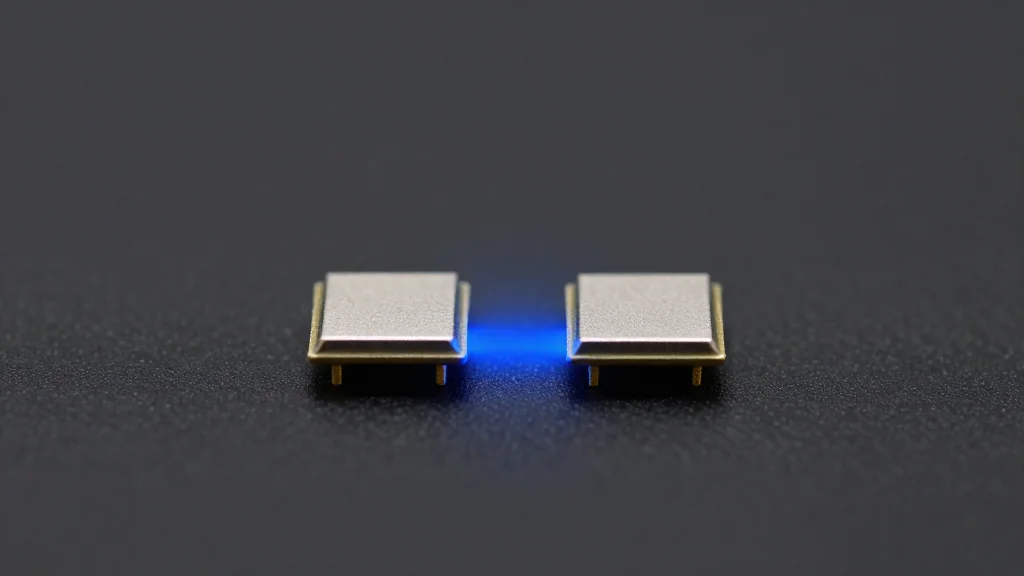
The industry‑standard –25 dB isolation threshold, outlined in Qorvo’s APH511 application note, ensures that mutual coupling does not corrupt the phase‑difference‑of‑arrival (PDoA) metric. Traditional solutions rely on large ground planes or external decoupling networks, which clash with the tight form‑factor demands of wearables, tags, and consumer devices. Leankon’s LK1820201 chip antenna tackles this dilemma with a proprietary decoupling architecture that consistently exceeds the –25 dB benchmark across the entire UWB Channel 9 spectrum. Its ultra‑low 0.5 mm profile and high radiation efficiency further reduce transmit power, translating into weeks‑long battery life for battery‑operated tags.
The practical impact is immediate: manufacturers can now design compact UWB modules that deliver true AoA accuracy, cutting the number of anchors required for full‑coverage tracking and lowering total system cost. In factories, this means fewer access points for worker‑safety geofencing; in hospitals, more reliable asset tracking without bulky hardware; and in cars, robust verification of a smartphone’s position relative to the vehicle. Coupled with Leankon’s design‑enablement services—PCB layout guidance, simulation, and certification support—the antenna removes the primary barrier to widespread AoA deployment, positioning UWB as the go‑to technology for precise indoor positioning in the coming decade.
UWB: Why angle-of-arrival positioning hinges on antenna isolation
Comments
Want to join the conversation?
Loading comments...