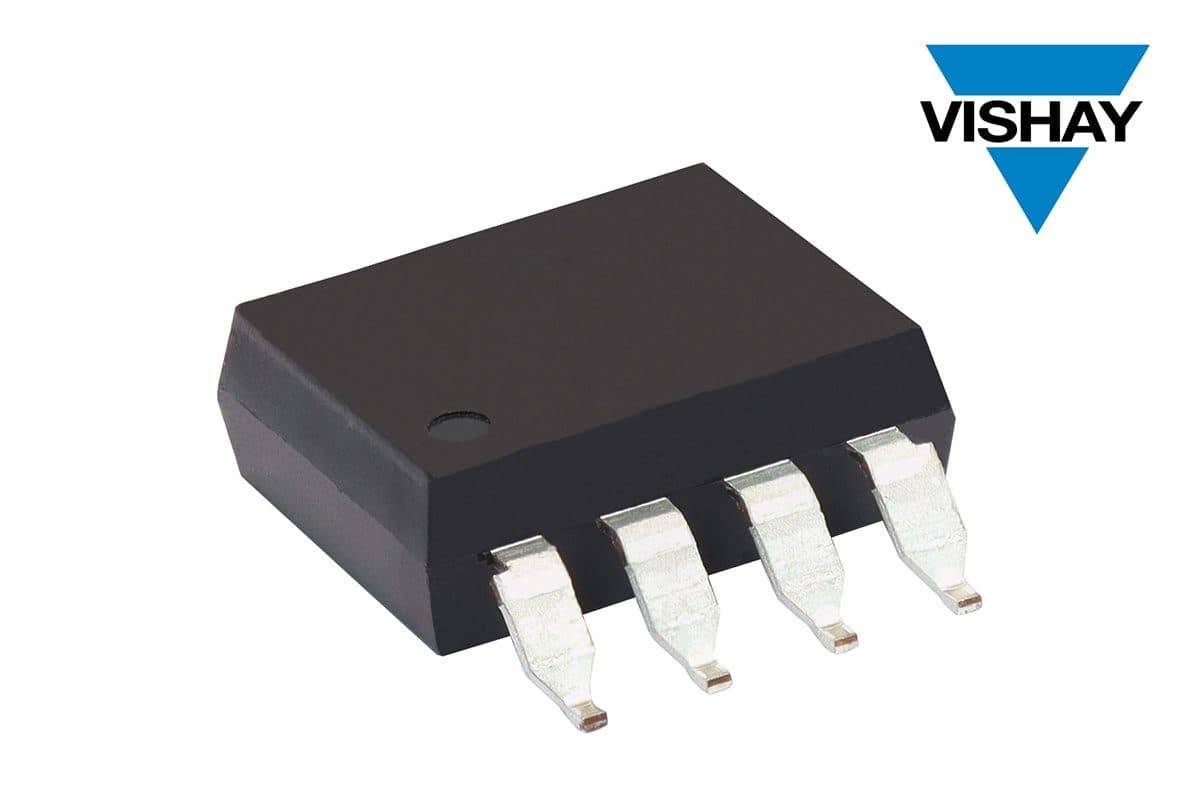
Vishay’s New Automotive Optocouplers Combine 5300 VRMS Isolation and 11 Mm Creepage for EV Electronics Isolation Stages
Companies Mentioned
Why It Matters
The higher isolation and creepage margins enable more reliable EV charger and BMS designs, reducing risk of arcing under grid‑connected conditions. This gives OEMs a component that meets reinforced‑insulation requirements, potentially shortening development cycles.
Key Takeaways
- •Vishay launches VOWA617A/VOWA618A optocouplers with 5300 V RMS isolation.
- •Creepage distance ≥11 mm, 38% higher than typical 8 mm competitors.
- •CTI of 600 achieves Material Group 1, highest insulation rating.
- •Operating temperature up to +145 °C, surpasses consumer‑grade limits.
Pulse Analysis
Optocouplers are the silent workhorses that keep high‑voltage EV power stages electrically isolated while allowing control signals to pass. As electric vehicles push toward higher charging powers and tighter integration of on‑board chargers, DC‑DC converters, and battery‑management systems, manufacturers demand components that can withstand harsh automotive environments without compromising safety. Traditional optocouplers often fall short on creepage distance and comparative tracking index, creating potential failure points in grid‑connected applications where voltage spikes and surface arcing are common.
Vishay’s VOWA617A and VOWA618A address these gaps by combining a 5300 V RMS isolation rating with a creepage distance of at least 11 mm—roughly 38% more margin than the 8 mm norm. The CTI of 600 places them in Material Group 1, the highest insulation category, while offering a wide CTR range of 50%‑600% and input currents as low as 1 mA. Temperature resilience is also notable, with an operating range from –40 °C to +125 °C and a junction limit of +145 °C, far surpassing consumer‑grade parts that cap at +85 °C. These specifications translate into fewer design compromises for engineers and a clearer path to meeting reinforced‑insulation standards required for grid‑connected EV equipment.
For OEMs and tier‑1 suppliers, the immediate availability of these parts—backed by an eight‑week lead time—means faster prototyping and reduced supply‑chain risk. The higher isolation margins can improve system reliability, lower warranty costs, and support the industry’s shift toward higher‑power fast‑charging infrastructure. As regulatory scrutiny on EV safety intensifies, components like Vishay’s new optocouplers will likely become baseline requirements, shaping future design architectures and influencing component sourcing strategies across the automotive sector.
Vishay’s new automotive optocouplers combine 5300 VRMS isolation and 11 mm creepage for EV electronics isolation stages
Comments
Want to join the conversation?
Loading comments...