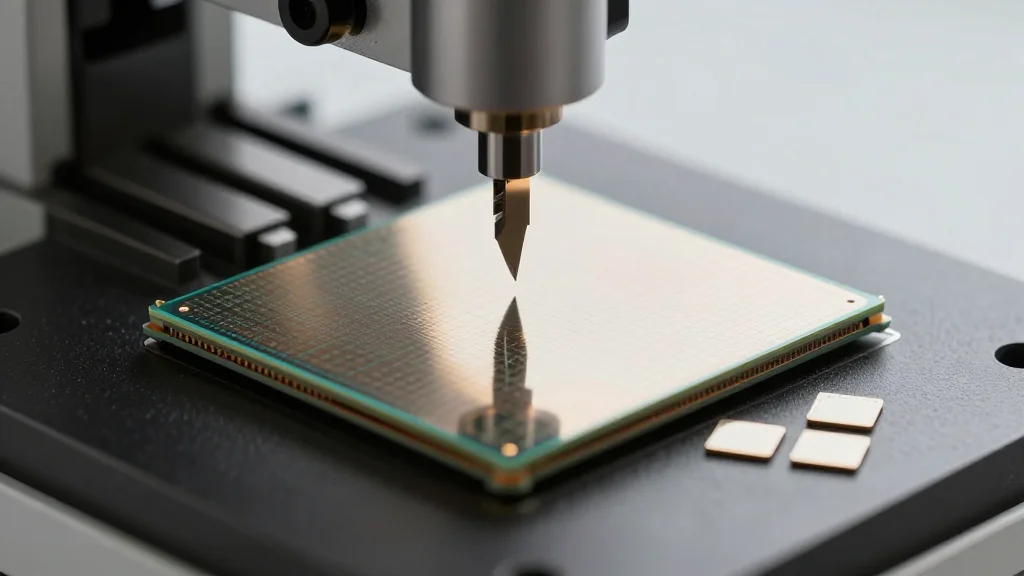
Wafer Dicing Service | Silicon Wafer Dicing & Die Singulation
Why It Matters
Efficient, high‑quality dicing reduces chip damage and improves overall production yield, a critical cost driver for semiconductor manufacturers and emerging hardware startups. The platform shortens supplier‑selection cycles, enabling faster time‑to‑market for new devices.
Key Takeaways
- •AnySilicon matches customers with qualified wafer dicing suppliers
- •Blade, laser, stealth, and scribe‑and‑break methods cover diverse needs
- •Supports silicon, GaAs, SiC, GaN, sapphire, glass, and ceramic wafers
- •Accurate dicing reduces chipping, improves yield for MEMS and power devices
- •Fast RFQ process speeds prototype and low‑volume production timelines
Pulse Analysis
The semiconductor ecosystem increasingly relies on precise wafer singulation to sustain Moore‑scale density gains and to meet the stringent reliability standards of automotive, medical, and IoT applications. As device geometries shrink and new materials like SiC and GaN gain traction for power and RF markets, the margin for error in dicing narrows. Even minor edge chipping can cascade into packaging failures, driving up scrap rates and eroding profit margins for both IDMs and fabless innovators.
Modern dicing technologies—mechanical blade, ultrafast laser, stealth laser, and scribe‑and‑break—address distinct material challenges. Blade dicing remains cost‑effective for thick silicon, while laser and stealth approaches excel on thin, brittle substrates such as MEMS, glass, or compound semiconductors, delivering sub‑10‑micron kerf widths and minimal mechanical stress. Selecting the optimal method requires detailed knowledge of wafer thickness, street width, and device fragility, a decision matrix that many small‑volume players lack in‑house. AnySilicon’s platform aggregates this expertise, presenting vetted suppliers who can tailor processes to niche specifications.
From a business perspective, the ability to obtain rapid, accurate quotations shortens the prototype‑to‑production timeline—a decisive advantage in fast‑moving markets. By centralizing RFQ data—material, diameter, die dimensions, and handling requirements—companies avoid the lengthy vendor‑search phase that traditionally stalls R&D cycles. The resulting agility not only improves cash flow by reducing inventory of unsold dies but also enhances competitive positioning as firms can iterate designs and scale volumes with confidence. Looking ahead, as advanced packaging and heterogeneous integration become mainstream, demand for specialized dicing services will rise, making platforms that streamline supplier matchmaking an essential component of the semiconductor supply chain.
Wafer Dicing Service | Silicon Wafer Dicing & Die Singulation
Comments
Want to join the conversation?
Loading comments...