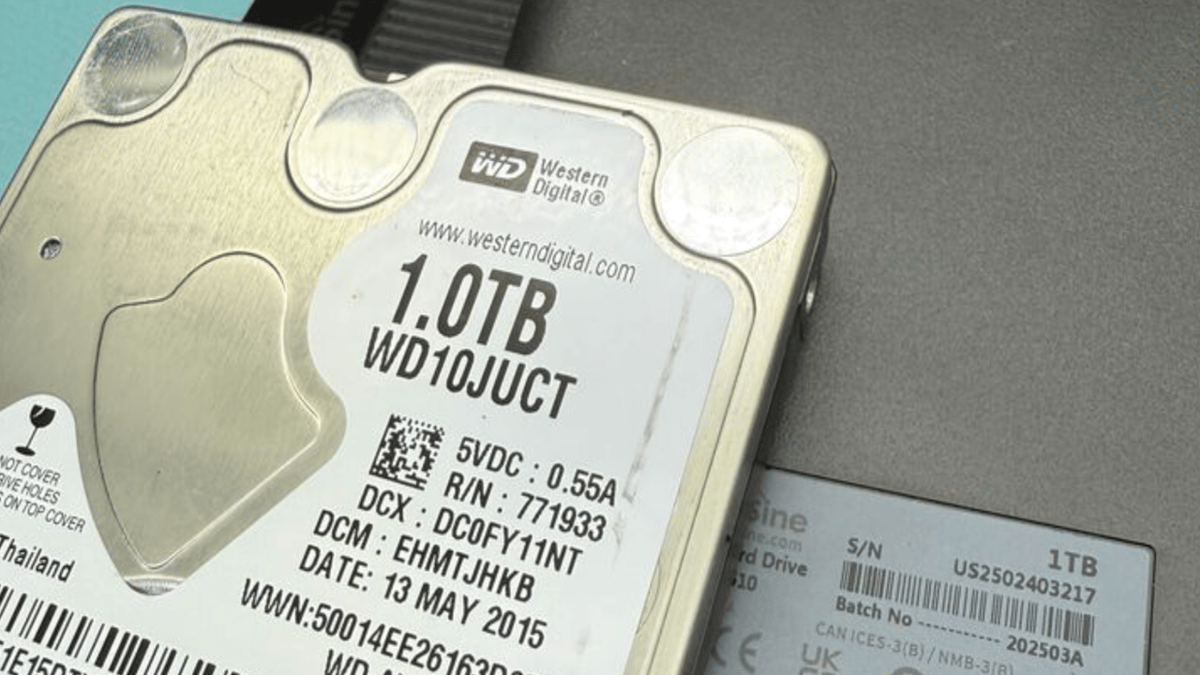
Western Digital Says It Can Increase Your HDD Capacity and Cut Power Usage Thanks to a 'Clever Way' Of Spinning Down Hard Drives that Doesn't Impact Performance Too Much

Companies Mentioned
Why It Matters
The energy savings lower operating costs and enable higher‑density storage, a critical advantage for large‑scale cloud and enterprise data centers. This could revitalize HDDs as a cost‑effective tier in hybrid storage architectures.
Key Takeaways
- •Fast spin‑down reduces HDD power draw without noticeable latency
- •Enables higher drive density within same power and cooling envelope
- •Creates a new tier between SSDs and archival HDDs
- •No software modifications required for deployment
- •Hyperscalers testing could drive broader industry adoption
Pulse Analysis
Data centers are under mounting pressure to trim electricity bills while scaling storage capacity. Traditional hard‑disk drives, despite their low cost per gigabyte, have long been penalized for their constant power draw, even when idle. As hyperscale operators shift toward greener footprints, any technology that can shave watts without compromising service‑level agreements becomes a strategic asset. Western Digital’s latest spin‑down mechanism taps into that need, offering a hardware‑level solution that sidesteps the latency pitfalls that have hampered earlier attempts.
The core of WD’s innovation lies in accelerating the transition between active and low‑power states. By shortening spin‑up times to near‑sub‑millisecond thresholds, the drives can enter standby without causing application‑visible delays. This rapid cycle not only curtails power consumption but also frees up thermal headroom, allowing more disks to be housed in the same rack footprint. The result is a denser storage tier that sits comfortably between high‑performance SSDs and slower archival drives, delivering a cost‑effective balance of speed and capacity for tiered storage architectures.
If hyperscalers validate the performance claims, the broader market could see a resurgence of HDDs in multi‑tiered environments. Enterprises seeking to optimize total cost of ownership may adopt the new tier as a bridge, reserving SSDs for hot data while relegating colder workloads to the spin‑down‑enabled drives. This shift could also influence server‑room design, with power and cooling budgets stretching further. In the longer term, the technology may prompt software vendors to refine tier‑placement algorithms, fully leveraging the hardware’s fast standby capability and reshaping the storage hierarchy for years to come.
Western Digital says it can increase your HDD capacity and cut power usage thanks to a 'clever way' of spinning down hard drives that doesn't impact performance too much
Comments
Want to join the conversation?
Loading comments...