What Rising Rack Densities Mean for Power Connectors
Companies Mentioned
Why It Matters
Connector reliability is now a linchpin for uptime and energy efficiency as data centers scale to megawatt‑class racks, directly influencing the economics of AI‑driven hyperscale operations.
Key Takeaways
- •Rack densities now exceed 100 kW, some targeting 1 MW
- •Liquid and immersion cooling cut cooling energy by up to 95%
- •Connectors must resist dielectric fluids and higher voltages (48‑800 V DC)
- •OCP and UL are drafting new standards for high‑density cooling
Pulse Analysis
The AI boom has transformed data‑center design, turning power density from a modest 3‑8 kW per rack into a multi‑hundred‑kilowatt challenge. According to the International Energy Agency, global data‑center electricity consumption will climb from 415 TWh in 2024 to roughly 945 TWh by 2030, driven largely by GPU‑heavy workloads and large language models. This exponential growth forces operators to rethink not only how power is delivered but also how heat is extracted, because traditional hot‑aisle/cold‑aisle airflow can no longer keep pace with thermal loads.
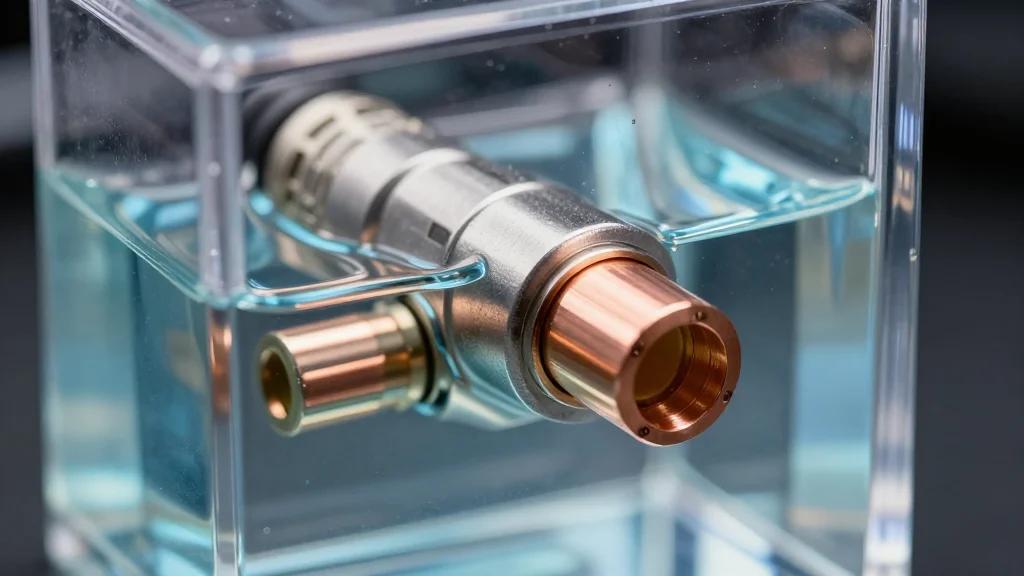
Liquid‑cooling architectures—single‑phase immersion, two‑phase immersion, and direct‑to‑chip cooling—are rapidly becoming mainstream. By submerging components in dielectric fluids or channeling coolant directly to hot spots, these systems can reduce cooling‑related energy use by 60‑95% while unlocking up to 120% more processing capacity per square foot. However, the shift introduces new engineering constraints for power connectors: materials must be chemically compatible with fluorochemical or hydrocarbon coolants, maintain insulation at elevated temperatures, and support higher operating voltages as the industry moves from 12 V backplanes to 48‑800 V DC distribution.
Manufacturers like Anderson Power are responding with purpose‑built connector families that feature enhanced creepage distances, robust sealing, and fluid‑compatible alloys. Simultaneously, standards bodies such as the Open Compute Project and UL are updating specifications to address dielectric‑fluid exposure, higher voltage clearances, and long‑term reliability testing. As hyperscalers adopt megawatt‑scale racks, these connector innovations will be critical to preserving uptime, reducing total‑cost‑of‑ownership, and meeting the projected 8% share of U.S. electricity demand that data centers will consume by the end of the decade.
What Rising Rack Densities Mean for Power Connectors
Comments
Want to join the conversation?
Loading comments...