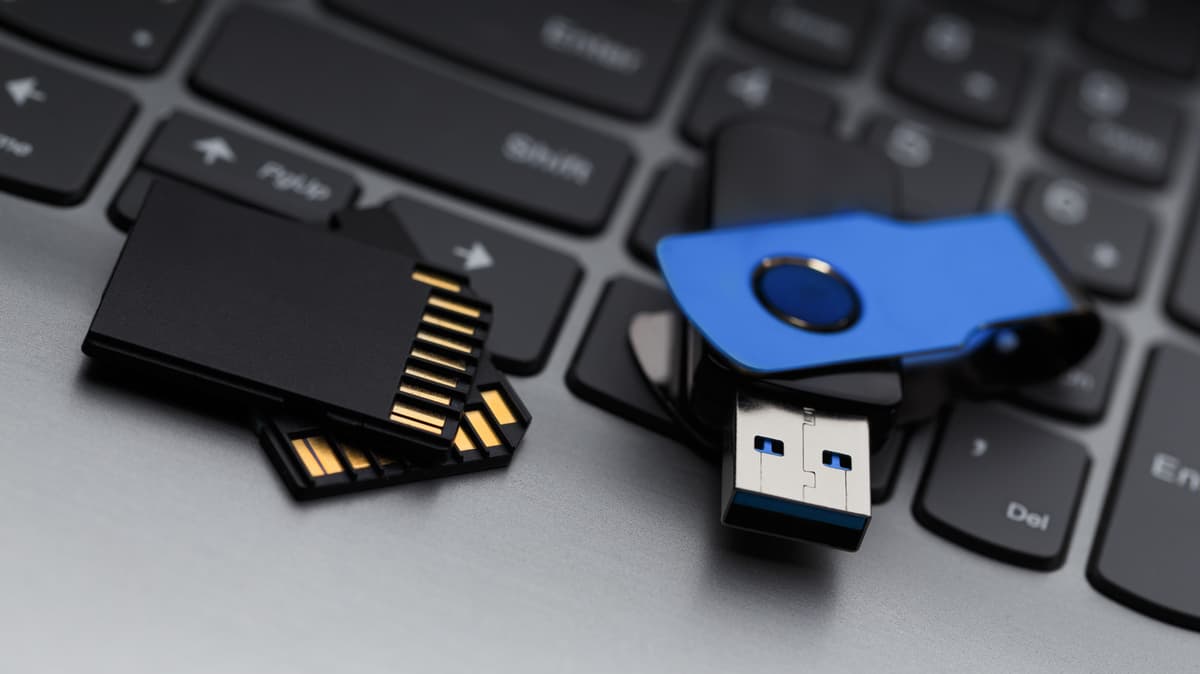
What's The Average Lifespan Of USB Drives & SD Memory Cards?
Companies Mentioned
Why It Matters
Understanding flash‑memory wear helps businesses protect critical data and choose storage that matches operational demands, reducing unexpected loss and replacement costs.
Key Takeaways
- •SD cards and USB drives target ≥10 years with normal use
- •Lifespan measured in program‑and‑erase cycles; SLC ≈100k, MLC ≈10k, TLC ≈3k
- •Consumer devices mostly use MLC or TLC, offering lower endurance
- •High‑endurance cards designed for continuous video recording extend lifespan
- •Avoid extreme temperature, moisture, and unsafe ejection to preserve data
Pulse Analysis
Flash memory’s durability hinges on program‑and‑erase cycles, a metric that quantifies how often a cell can be written and erased before it degrades. Single‑level cell (SLC) NAND offers the longest life at roughly 100,000 cycles, but its high cost confines it to niche applications. Multi‑level cell (MLC) and triple‑level cell (TLC) NAND dominate consumer USB drives and SD cards, delivering 10,000 and 3,000 cycles respectively. For enterprises that rely on portable storage for field data collection or security‑camera footage, recognizing these limits informs procurement decisions and budgeting for replacements.
Reliability isn’t solely a function of cycle count; environmental factors play a critical role. Extreme heat, cold, or humidity accelerates charge leakage, while frequent unsafe ejection can corrupt file tables. Best practices include periodically powering up drives, storing them in temperature‑controlled environments, and using the operating system’s safe‑remove feature. Moreover, flash media should not be treated as long‑term archival storage; data retention degrades over years, especially if devices sit unplugged. Companies should pair external drives with regular cloud backups or on‑site redundant systems to mitigate data‑loss risk.
The market is responding with high‑endurance variants engineered for continuous write workloads, such as dash‑cam and surveillance applications. These cards employ wear‑leveling algorithms and more robust NAND to stretch usable life, albeit at a premium price. As the cost gap narrows, businesses can strategically select MLC or even SLC solutions for mission‑critical tasks while reserving cheaper TLC models for low‑risk transfers. Ultimately, aligning storage choice with usage patterns, environmental controls, and a disciplined backup regimen safeguards data integrity and optimizes total cost of ownership.
What's The Average Lifespan Of USB Drives & SD Memory Cards?
Comments
Want to join the conversation?
Loading comments...