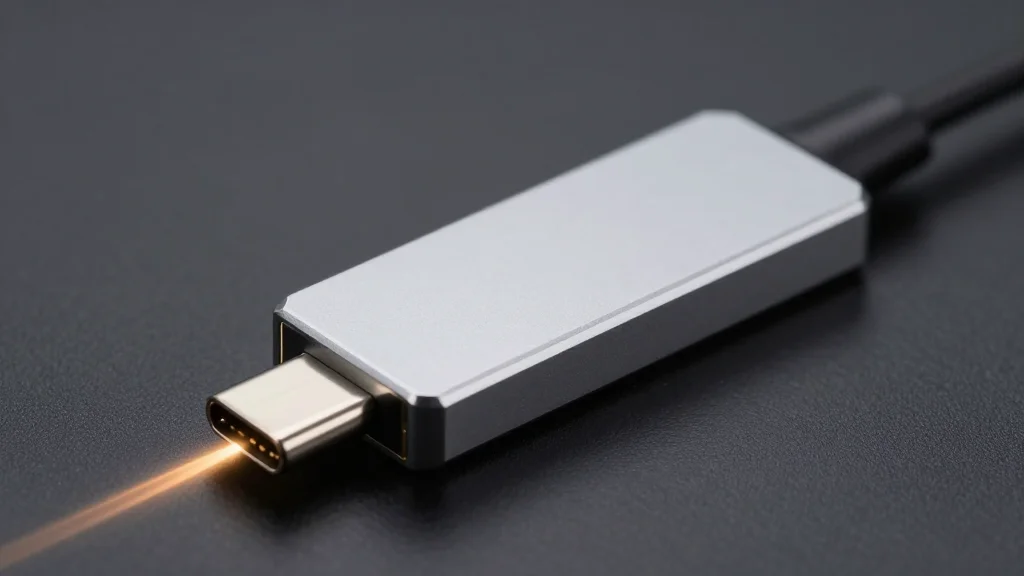
WisdPi’s $80 RTL8159 USB‑C 10 GbE Adapter Beats Bulky Thunderbolt Options

Companies Mentioned
Why It Matters
The emergence of a sub‑$100 10 GbE USB‑C NIC signals a shift in how high‑speed networking will be provisioned on laptops and small form‑factor PCs. By leveraging the increasingly common USB 3.2 Gen 2 x2 interface, manufacturers can bypass the cost and thermal penalties of Thunderbolt, potentially standardizing 10 GbE connectivity across a broader device spectrum. This could accelerate adoption of 10‑gigabit Ethernet in enterprise remote‑work setups, edge computing nodes, and content‑creation rigs that previously relied on proprietary Thunderbolt docks. Moreover, the adapter’s reliance on the RTL8159 chipset—an off‑the‑shelf, widely supported solution—lowers the barrier for OEMs to integrate similar NICs directly into future laptops. As USB‑C ports become the universal I/O hub, the market pressure on Thunderbolt to justify its premium may intensify, prompting Intel and Apple to reconsider pricing and power‑efficiency strategies for their own high‑speed interconnects.
Key Takeaways
- •WisdPi’s RTL8159‑based 10 GbE USB‑C adapter retails for $80, half the price of comparable Thunderbolt NICs.
- •Full 10 Gbps throughput achieved only on a desktop with a USB 3.2 Gen 2 x2 (20 Gbps) port.
- •Laptops with USB 3.1/Gen 2 ports capped at 6‑7 Gbps, with macOS mis‑reporting link speed as 2.5 Gbps.
- •Windows required a manual Realtek driver update; macOS recognized the device instantly.
- •5 Gbps adapters cost $30 and deliver 4.6 Gbps, offering better value for non‑10 GbE networks.
Pulse Analysis
The WisdPi adapter arrives at a moment when USB‑C is consolidating data, power, and video lanes into a single connector. Historically, 10 GbE networking on laptops has been the domain of Thunderbolt, a technology that commands a premium price and generates noticeable heat. By delivering comparable speeds—when paired with a true USB 3.2 Gen 2 x2 port—at a fraction of the cost, WisdPi is effectively democratizing high‑speed Ethernet. This could force OEMs to reconsider the necessity of Thunderbolt ports on consumer‑grade laptops, especially as USB‑4 continues to absorb many of Thunderbolt’s capabilities.
From a competitive standpoint, the adapter’s reliance on the RTL8159 chipset is a double‑edged sword. On one hand, the chip’s ubiquity ensures driver support across Windows and macOS, but on the other, its performance ceiling is bound by the host’s USB bandwidth. As USB‑C port labeling remains inconsistent, end‑users may struggle to identify whether their machines can unlock the adapter’s full potential. Industry bodies and OS vendors would benefit from clearer reporting standards, a pain point highlighted by Geerling’s experience with Windows masking port speeds as "3.0" and macOS mis‑labeling link rates.
Looking forward, the adapter’s success hinges on two trends: the proliferation of USB 3.2 Gen 2 x2 ports in new laptops and the maturation of driver ecosystems that can fully exploit the RTL8159’s capabilities. If manufacturers adopt the 20 Gbps USB lane as a baseline, we could see a rapid migration away from Thunderbolt‑only 10 GbE solutions, opening the market to a broader range of peripherals—from external GPUs to high‑resolution displays—without sacrificing network performance. In that scenario, WisdPi’s early‑move pricing could set a new benchmark for affordable, high‑speed connectivity.
WisdPi’s $80 RTL8159 USB‑C 10 GbE Adapter Beats Bulky Thunderbolt Options
Comments
Want to join the conversation?
Loading comments...