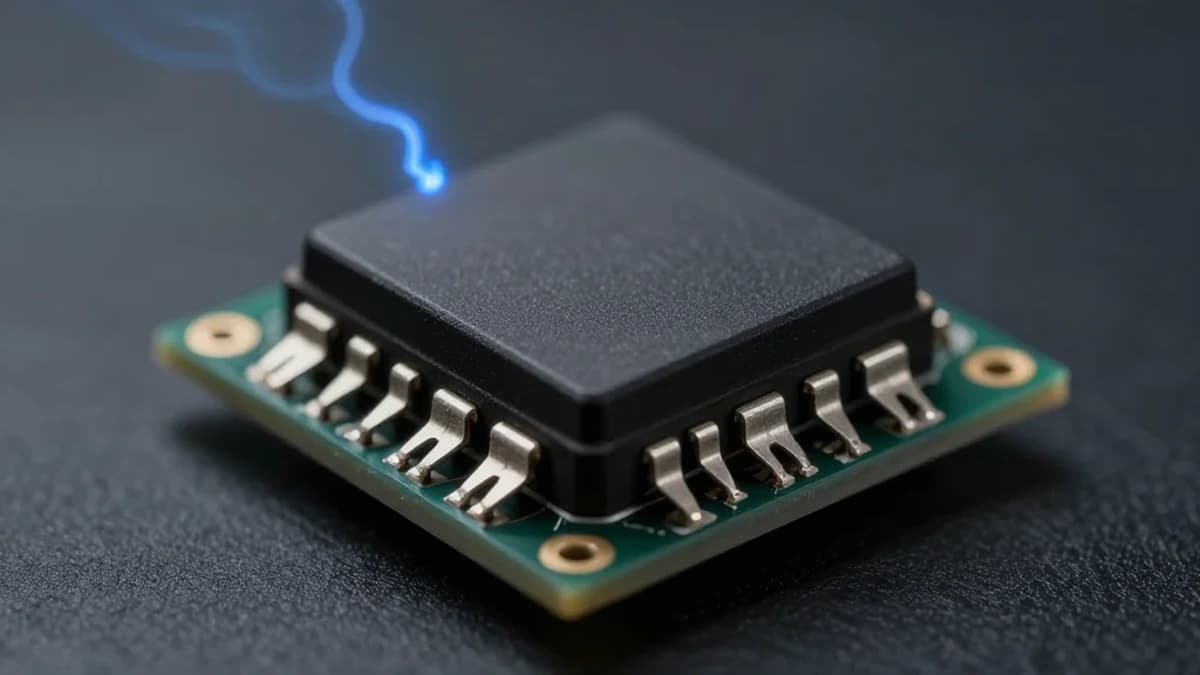
Wolfspeed Launches First Commercially Available 10kV SiC Power MOSFET
•March 5, 2026
0
Why It Matters
The 10 kV SiC MOSFET removes a long‑standing voltage barrier, allowing more compact, efficient and reliable high‑voltage power systems across grid, data‑center and industrial markets.
Key Takeaways
- •First commercial 10 kV SiC MOSFET released
- •Promises 30% system cost reduction
- •Enables over 300% power density increase
- •Lifetime projected at 158,000 years under bias
- •Facilitates AI data‑center and solid‑state transformer growth
Pulse Analysis
The semiconductor industry has long pursued silicon carbide (SiC) as a replacement for silicon in high‑voltage power conversion because of its superior bandgap, thermal conductivity and breakdown strength. Until now, commercial SiC devices topped out at 6.5 kV, limiting their use in ultra‑high‑voltage applications such as solid‑state transformers and large‑scale grid infrastructure. Wolfspeed’s introduction of a 10 kV SiC MOSFET pushes the voltage envelope by more than 50 percent, opening a new class of compact, efficient converters that were previously only feasible with bulky silicon IGBTs or mechanical switches.
The new CPM3‑10000‑0300A die delivers a predicted 158,000‑year dielectric lifetime, sub‑10 ns rise time, and conversion efficiencies approaching 99 %. Those metrics translate into concrete system benefits: designers can collapse multi‑cell architectures into a two‑level topology, cutting component count and reducing bill‑of‑materials costs by roughly 30 %. Higher switching frequencies raise power density by over 300 % while halving thermal management requirements, allowing lighter, smaller enclosures for data‑center power supplies, wind‑turbine converters, and pulsed‑power equipment.
From a market perspective, the 10 kV SiC MOSFET positions Wolfspeed ahead of rivals still confined to lower voltage portfolios, giving it leverage in emerging segments such as AI‑driven data centers, renewable‑energy grid upgrades, and next‑generation solid‑state transformers. Early customer sampling suggests a rapid transition from prototype to volume production, potentially accelerating the de‑risking of high‑voltage SiC designs. As utilities and cloud providers seek to improve reliability and lower total cost of ownership, the technology could become a cornerstone of the electrification roadmap, spurring further investment in SiC epitaxy and packaging.
Wolfspeed launches first commercially available 10kV SiC power MOSFET
0
Comments
Want to join the conversation?
Loading comments...