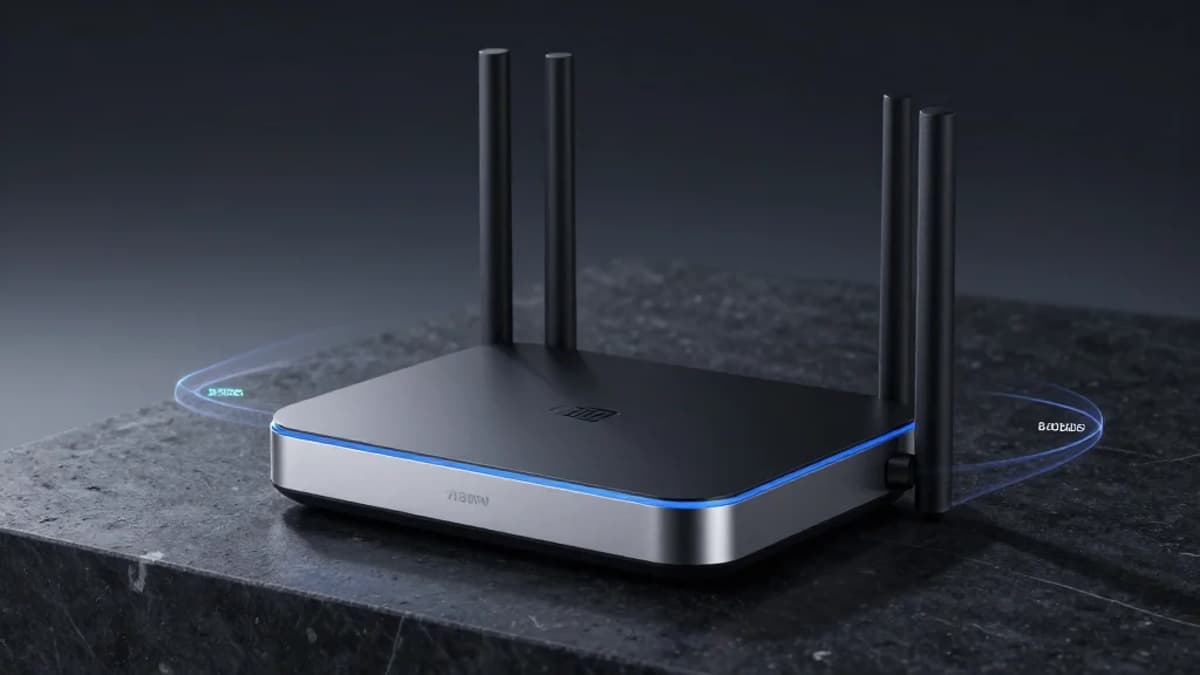
Xiaomi BE19000 Pro Combines Wi-Fi 7 Speed With Integrated NAS Features
•March 6, 2026
0
Why It Matters
By merging flagship‑grade Wi‑Fi 7 performance with native storage and 10 GbE connectivity, Xiaomi creates a single‑box solution that can replace separate networking and NAS appliances, reshaping premium home‑office setups.
Key Takeaways
- •Tri‑band Wi‑Fi 7 delivers up to 18.6 Gbps throughput
- •Integrated M.2 slot provides built‑in NAS capability
- •Dual 10 GbE ports support multi‑gigabit wired backbones
- •Qualcomm Dragonwing SoC powers high‑density antenna array
- •Design targets premium enthusiasts, not typical home users
Pulse Analysis
Wi‑Fi 7 is rapidly becoming the new benchmark for wireless networking, offering higher data rates, lower latency, and improved spectrum efficiency. Xiaomi’s BE19000 Pro capitalizes on this shift by delivering a theoretical 18.6 Gbps aggregate speed across its 2.4 GHz, 5 GHz, and 6 GHz bands. The inclusion of a Qualcomm Dragonwing processor and a twelve‑antenna design underscores the company’s intent to provide robust multi‑device handling and extensive coverage, positioning the router as a serious contender against other high‑end models from Netgear, Asus, and TP‑Link.
Beyond raw speed, the BE19000 Pro distinguishes itself with integrated storage options. An internal M.2 2280 slot lets users install an SSD for instant NAS capabilities, while a USB 3.0 port offers flexibility for external drives. This dual‑path storage architecture enables seamless media streaming, rapid file backups, and shared access for home‑office teams without the need for a separate network‑attached storage appliance. Coupled with dual 10 GbE Ethernet ports, the router can handle multi‑gigabit wired traffic, making it suitable for environments with fiber‑to‑the‑home services or high‑performance local networks.
The market impact hinges on pricing and regional rollout, which Xiaomi has yet to announce. If positioned competitively, the BE19000 Pro could democratize premium networking features that were previously limited to enterprise‑grade gear. Its sleek graphite‑gray chassis also appeals to design‑conscious consumers, bridging the gap between performance and aesthetics. As Wi‑Fi 7 adoption accelerates, devices like the BE19000 Pro may set a new standard for all‑in‑one routers, prompting rivals to integrate storage and 10 GbE support in future offerings.
Xiaomi BE19000 Pro Combines Wi-Fi 7 Speed With Integrated NAS Features
0
Comments
Want to join the conversation?
Loading comments...