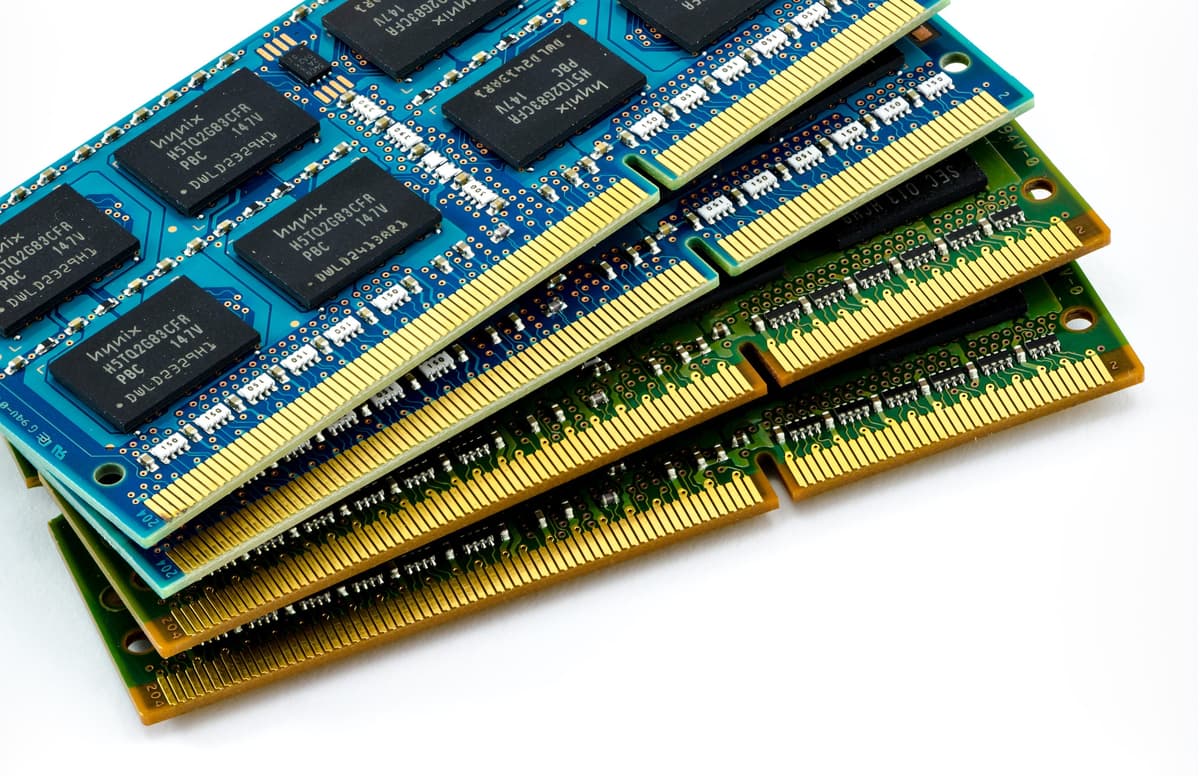
YouTuber Has DIMM Idea, Builds Working DRAM in Backyard

Companies Mentioned
Why It Matters
The project illustrates how acute DRAM shortages can spark grassroots innovation, while also exposing the technical and economic barriers that keep home‑grown memory far from practical deployment.
Key Takeaways
- •DIY YouTuber built functional 5×4 DRAM array in backyard cleanroom
- •Memory cell capacitors hold 12.3 pF, close to target 15 pF
- •Charge retention limited to ~4 ms, far below commercial RAM standards
- •Project highlights scaling challenges without industrial automation
- •Future goal: chain cells for usable PC memory
Pulse Analysis
The relentless surge in artificial‑intelligence workloads has turned DRAM into a strategic commodity, pushing module prices to record highs in 2025‑2026. Data‑center operators are outbidding consumer markets, leaving PC builders and hobbyists facing volatile vendor quotes and supply delays. Against this backdrop, a self‑styled “Dr. Semiconductor” launched a YouTube channel documenting a DIY approach: converting a garden shed into a makeshift cleanroom and attempting to fabricate his own memory cells. The experiment underscores how acute pricing pressure can inspire unconventional, grassroots engineering solutions.
The backyard micro‑fab follows a stripped‑down DRAM flow. A 5 × 4 matrix of capacitors and transistors is laid out, transferred onto silicon, coated with photoresist, patterned, etched, and doped with phosphorus to form conductive regions. Without the high‑speed steppers or automated wafer handlers used by Samsung or Micron, the creator relies on manual alignment and micromanipulators to probe the micron‑scale devices. Test results show each capacitor stores 12.3 pF—close to the 15 pF design goal—while the cells retain charge for only about four milliseconds, far short of commercial specifications.
While the prototype proves that functional DRAM can be produced outside a fab, the performance gap highlights fundamental scaling challenges. The limited retention time and susceptibility to punch‑through at higher voltages illustrate why industrial fabs invest heavily in precision equipment and process control. Nonetheless, the project offers valuable insight for educators, hobbyists, and small‑scale innovators seeking hands‑on experience with semiconductor manufacturing. Future iterations that interconnect multiple arrays could approach usable memory densities, but a cottage‑industry of home‑built RAM remains unlikely given the economics of mass production and the continuing AI‑driven demand for high‑capacity, high‑reliability DRAM.
YouTuber has DIMM idea, builds working DRAM in backyard
Comments
Want to join the conversation?
Loading comments...