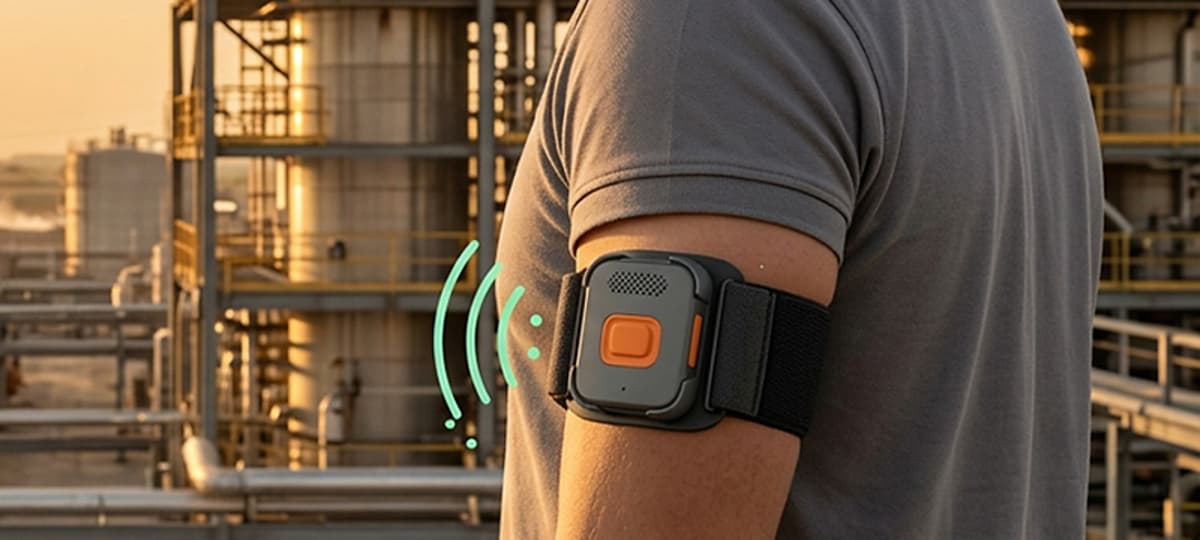
Zackat Labs Combines Wearable Heat-Stress Monitoring and Gas Alerts on AT&T Cellular IoT
Companies Mentioned
Why It Matters
Unifying personal health and environmental hazard data shortens response times and streamlines safety workflows for high‑risk sectors, while AT&T’s managed connectivity reduces the overhead of overseeing large, mobile device fleets.
Key Takeaways
- •Zackat Labs' W3 wearable merges heat‑stress and gas monitoring.
- •Bluetooth links gas sensor to wearable, simplifying field deployment.
- •AT&T Cellular IoT and Control Center manage device connectivity fleet‑wide.
- •RCW Energy Services distributes W3, targeting oil‑gas and construction crews.
Pulse Analysis
The industrial safety market is shifting from static, site‑based detectors toward wearable telemetry that follows the worker. Companies like Zackat Labs are capitalizing on this trend by embedding physiological sensors—core temperature, heart‑rate variability, fatigue markers—directly into a rugged wrist‑mounted device. When paired with a Bluetooth‑connected gas module, the solution captures both personal health and immediate environmental hazards, addressing gaps that traditional fixed monitors miss in remote or temporary job sites.
Technically, the W3 platform leverages AT&T’s cellular IoT network for low‑latency, always‑on data transmission, while the AT&T Control Center provides a single pane of glass for SIM provisioning, device activation, and lifecycle management. This architecture eliminates the need for separate network contracts per sensor, reduces integration complexity, and enables real‑time alerts to supervisors’ smartphones and a cloud dashboard. The Bluetooth bridge between the wearable and gas detector consolidates alert streams, ensuring that a single notification can convey multiple risk factors, which is critical for crews operating in oil‑gas, construction, or heavy‑industry environments.
For enterprises, the real value lies in how the alerts are woven into existing EHS (environmental health and safety) processes. Seamless escalation, automated check‑ins, and documentation workflows turn raw sensor data into actionable safety interventions. As distributors like RCW Energy Services roll the solution out to field technicians, the market will watch adoption rates, reliability metrics, and integration success stories. If the platform can consistently deliver accurate, timely warnings across large, mobile workforces, it could set a new benchmark for connected‑worker safety and spur further convergence of wearables, edge analytics, and managed IoT connectivity.
Zackat Labs Combines Wearable Heat-Stress Monitoring and Gas Alerts on AT&T Cellular IoT
Comments
Want to join the conversation?
Loading comments...