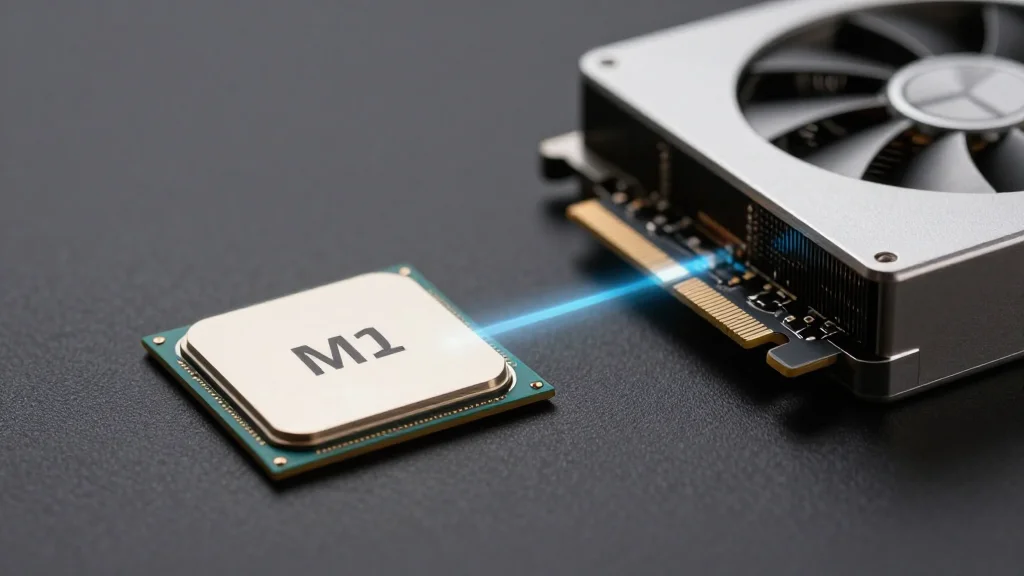
Zero‑Copy GPU Inference via WebAssembly on Apple Silicon Cuts Data‑Movement Overhead

Companies Mentioned
Why It Matters
Apple’s Unified Memory Architecture has long been touted as a performance advantage for graphics and compute workloads, but this demonstration shows a concrete software‑level benefit for AI inference. By removing the copy‑serialize‑copy cycle, developers can reduce inference latency by an order of magnitude, which is critical for interactive web applications, real‑time video analysis, and privacy‑preserving on‑device AI. Moreover, the technique leverages open standards—WebAssembly, Metal, and the Wasmtime runtime—making it portable across the Apple ecosystem without vendor‑locked APIs. For hardware vendors, the work underscores the value of tightly integrated CPU‑GPU memory designs. Competing platforms that rely on discrete GPUs will face a growing performance gap for workloads that can exploit zero‑copy pathways. As more AI services move to the edge and to the browser, the ability to run high‑throughput inference without data movement could become a differentiator for Apple Silicon devices in the enterprise and consumer markets.
Key Takeaways
- •Zero‑copy path demonstrated by sharing mmap‑aligned memory between Wasmtime and Metal on Apple Silicon.
- •Measured memory overhead of only 0.03 MB versus 16.78 MB for explicit copy, confirming no hidden duplication.
- •Technique enables in‑place AI inference for WebAssembly modules, eliminating serialization latency.
- •Leverages Apple’s Unified Memory Architecture, which removes the PCIe bus bottleneck present on discrete GPUs.
- •Potential to accelerate web‑based AI services and edge AI workloads on macOS and iOS devices.
Pulse Analysis
The zero‑copy GPU inference demo is more than a clever hack; it signals a shift in how developers may architect AI pipelines on unified‑memory chips. Historically, the CPU‑GPU boundary has been a hard wall, forcing developers to copy data into separate buffers and pay both latency and energy costs. Apple’s decision to expose a true shared memory model through Metal, combined with the flexibility of Wasmtime’s custom allocator, collapses that wall for a class of workloads that can tolerate the sandboxed environment of WebAssembly.
From a market perspective, this could accelerate adoption of Apple Silicon in server‑side AI inference farms, especially for SaaS providers that already use Wasm for isolation and portability. Competitors such as NVIDIA’s CUDA ecosystem will need to offer comparable zero‑copy pathways—perhaps via NVLink or unified memory extensions—to stay relevant for low‑latency inference. The demonstration also hints at a broader trend: software stacks are catching up to hardware capabilities, turning architectural advantages into tangible performance gains for end users.
Looking ahead, the key challenge will be ecosystem support. Tooling must evolve to make zero‑copy buffers a first‑class abstraction in ML libraries, and security models need to ensure that shared memory does not become an attack surface. If those hurdles are cleared, we could see a new generation of web‑native AI applications that run at near‑native speed, reshaping the competitive dynamics between cloud‑centric AI providers and edge‑focused hardware manufacturers.
Zero‑Copy GPU Inference via WebAssembly on Apple Silicon Cuts Data‑Movement Overhead
Comments
Want to join the conversation?
Loading comments...