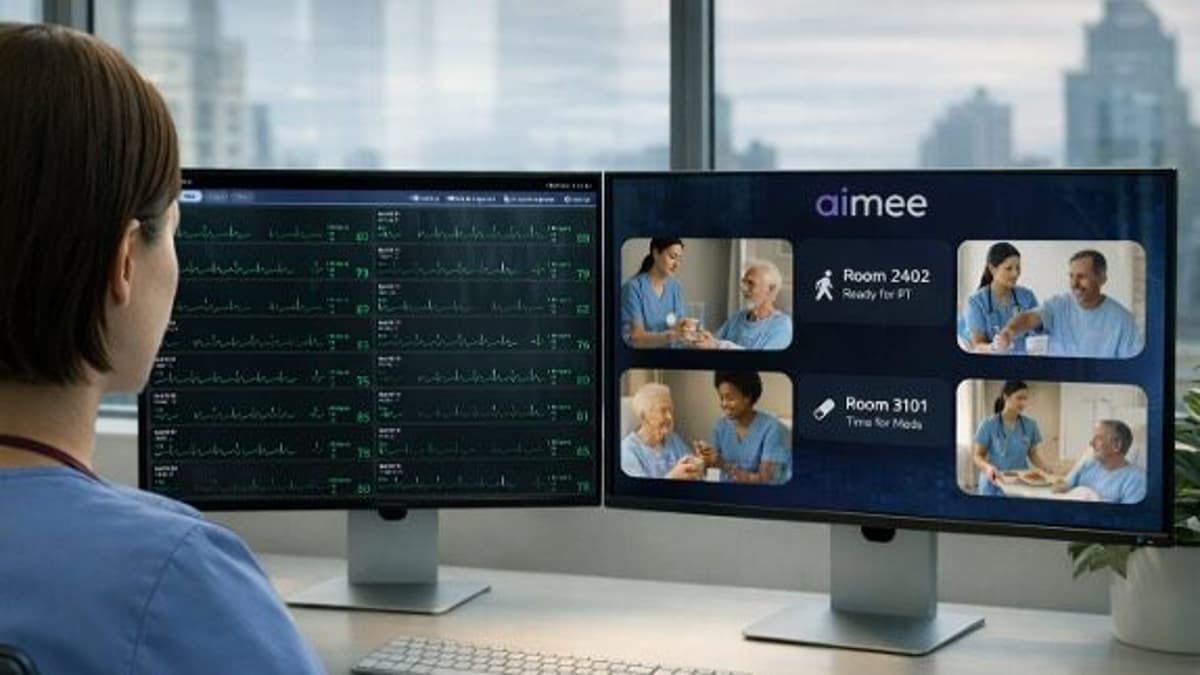
Beyond Vitals Spot Checks: Sibel Health and LookDeep Health Combine Wearable Monitoring with Real-Time Bedside AI
•February 25, 2026
0
Why It Matters
The integration can lower preventable deaths and readmissions while cutting alarm fatigue, offering a scalable, interoperable monitoring model for the broader hospital market.
Key Takeaways
- •Continuous wearables cut mortality risk vs spot checks
- •LookDeep AI adds context to vital sign alerts
- •IEEE 11073 SDC ensures interoperable, lock‑in‑free integration
- •Bedside AI reduces alarm fatigue and improves response
- •Extends monitoring into hospital‑to‑home recovery
Pulse Analysis
Hospitals are confronting a stark paradox: while technology enables continuous physiological sensing, most non‑ICU patients remain monitored through four‑hour spot checks that miss the majority of deteriorations. Large‑scale analyses published in 2025 revealed that intermittent monitoring triples the odds of in‑hospital mortality or ICU transfer, and that over three‑quarters of hypotensive and desaturation events occur outside observation windows. This evidence is driving a market shift toward wearable platforms that can deliver uninterrupted, clinical‑grade data, creating a fertile environment for solutions that bridge the gap between data collection and actionable insight.
Enter the convergence of continuous vitals and bedside artificial intelligence. LookDeep’s aimee™ leverages computer vision, audio analysis, and natural language processing to interpret patient behavior—sleeping, ambulating, or showing distress—in real time. When paired with Sibel’s ANNE® One, the system transforms raw numbers into context‑rich alerts, allowing clinicians to prioritize true emergencies and suppress false alarms that fuel fatigue. Crucially, the integration adheres to the IEEE 11073 Service‑Oriented Device Connectivity (SDC) standard, ensuring that data flows seamlessly into existing EHRs and monitoring hubs without proprietary lock‑in, a key differentiator in a crowded med‑tech landscape.
Beyond the ward, the partnership extends monitoring into the hospital‑to‑home continuum, a phase where patient oversight traditionally collapses. Continuous wearables can flag oxygen desaturation or arrhythmias days after discharge, providing clinicians with early warning signals that can prevent readmissions. For health systems, this translates into cost savings, improved quality metrics, and a competitive edge in value‑based care contracts. As reimbursement models increasingly reward outcomes over volume, solutions that combine interoperable hardware with AI‑driven context are poised to become foundational components of next‑generation patient care ecosystems.
Beyond Vitals Spot Checks: Sibel Health and LookDeep Health Combine Wearable Monitoring with Real-Time Bedside AI
0
Comments
Want to join the conversation?
Loading comments...