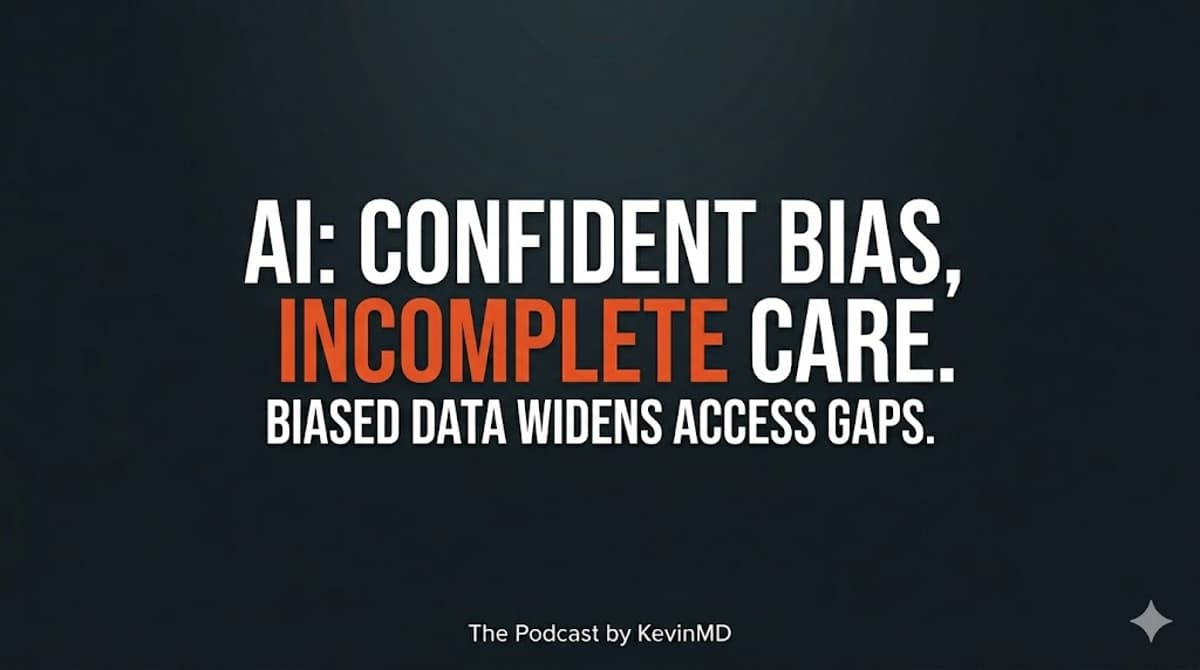
Bridging the Health Equity Gap with Artificial Intelligence
Key Takeaways
- •AI can improve early disease detection but may amplify existing biases.
- •Training data lacking diverse patients leads to inaccurate predictions for underserved groups.
- •Digital infrastructure gaps limit AI benefits for communities with poor internet access.
- •Physician involvement essential to design equitable AI tools from the start.
Pulse Analysis
The health‑care AI market is projected to exceed $70 billion by 2030, driven by investors seeking to capitalize on predictive analytics, imaging interpretation and remote monitoring. While these technologies promise cost reductions and faster diagnoses, their performance hinges on the quality of training data. U.S. electronic health records reflect long‑standing disparities—racial minorities, low‑income patients and those without insurance are often under‑documented—so models trained on such data can misclassify risk, leading to suboptimal treatment recommendations for the very groups that need them most.
Beyond data, the digital divide creates a parallel barrier. Rural clinics and inner‑city health centers frequently lack high‑speed broadband, compatible devices, or staff trained to navigate AI‑enabled portals. When AI tools assume constant connectivity, patients without reliable internet miss out on tele‑triage, AI‑driven alerts, and digital therapeutics, effectively widening outcome gaps. Health systems that ignore these infrastructure gaps risk deploying costly solutions that deliver limited ROI and may attract scrutiny from regulators focused on health‑equity compliance.
Addressing these challenges requires intentional design. Inclusive data strategies—such as augmenting datasets with community health records and employing bias‑mitigation algorithms—can improve model generalizability. Equally, embedding physicians in the development lifecycle ensures real‑world insights about patient access, language barriers and social determinants shape AI outputs. Policymakers are beginning to mandate transparency and fairness audits, making equity a competitive differentiator. Companies that prioritize equitable AI not only mitigate legal risk but also unlock broader market adoption, positioning themselves as leaders in a health‑tech landscape where inclusive innovation is becoming a business imperative.
Bridging the health equity gap with artificial intelligence
Comments
Want to join the conversation?