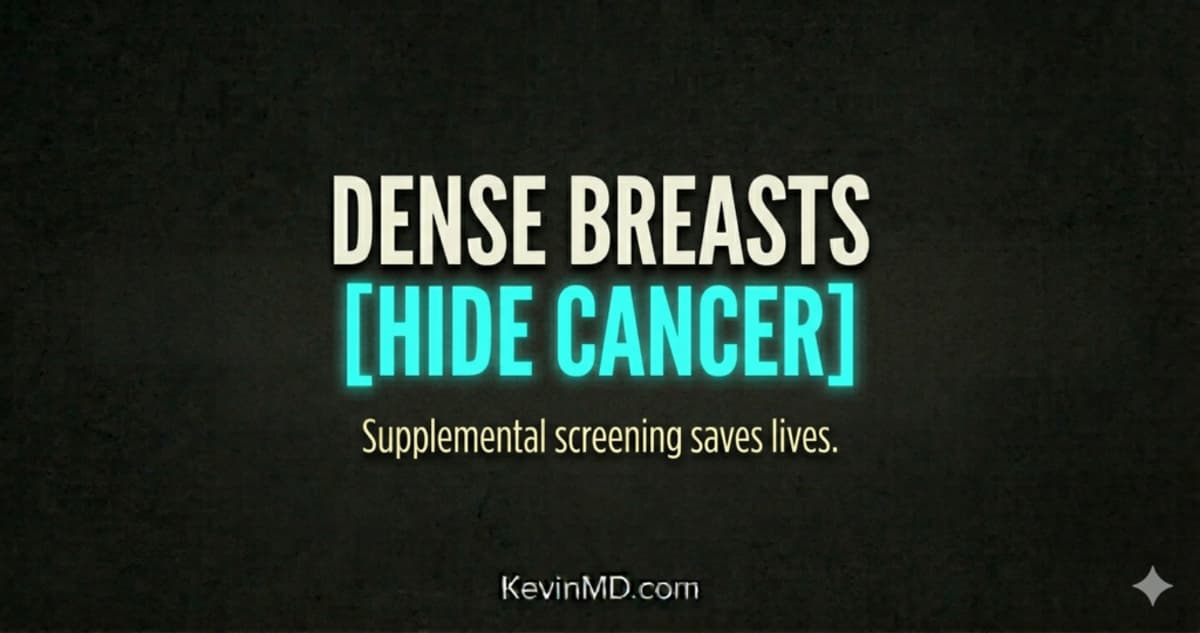
Navigating Dense Breast Tissue and Breast Cancer Screening Guidelines
Key Takeaways
- •Dense breasts cut mammography sensitivity to roughly 50% in category D
- •Women with category C or D face a 4‑ to 6‑fold higher cancer risk
- •2025 NCCN advises MRI or alternative imaging for extremely dense breasts
- •FDA now requires density disclosure on all mammogram reports
- •Shared decision‑making is essential to tailor supplemental screening to risk
Pulse Analysis
Breast density has emerged as a critical factor in cancer detection because dense fibroglandular tissue obscures lesions on conventional 2‑D mammography. Studies show that in women with extremely dense breasts, mammograms miss roughly half of existing cancers, effectively reducing the test’s sensitivity to coin‑flip odds. Moreover, dense tissue itself is an independent risk factor, raising a woman’s relative chance of developing breast cancer four to six times compared with fatty‑breasted counterparts. These dual challenges—masking and heightened risk—have prompted a shift in how clinicians assess screening adequacy.
Regulatory and guideline bodies have responded. In 2024 the U.S. Food and Drug Administration required radiologists to include breast‑density categories (A‑D) in patient reports, empowering women with actionable information. The following year, the National Comprehensive Cancer Network updated its recommendations: women with heterogeneously dense breasts (Category C) should continue annual mammography with tomosynthesis and consider supplemental imaging after a shared‑decision discussion; those with extremely dense breasts (Category D) are advised to add annual MRI (or contrast‑enhanced mammography, molecular breast imaging, or whole‑breast ultrasound when MRI is unavailable). These changes aim to close the detection gap while balancing cost and accessibility.
For providers, the practical implication is a move toward personalized screening pathways. Physicians must discuss density findings openly, evaluate each patient’s overall risk profile, and guide choices about supplemental modalities. Insurance coverage, geographic availability of MRI, and patient anxiety are all variables that influence the final plan. As awareness grows, health systems are investing in tomosynthesis units and breast‑density education tools to streamline referrals. Ultimately, integrating density data into routine care promises earlier tumor identification, less aggressive treatment, and better survival outcomes—benefits that resonate far beyond the clinic and into families’ futures.
Navigating dense breast tissue and breast cancer screening guidelines
Comments
Want to join the conversation?