University of Minnesota Medical School Nixes Its Classroom “Partnership” With UnitedHealth Group After HEALTH CARE Un-Covered’s Expose
•February 13, 2026
0
Why It Matters
This case highlights the risk of corporate influence infiltrating medical training, potentially shaping future physicians’ priorities toward financial incentives over patient care. It underscores the importance of transparency and vigilance in academic‑industry collaborations, a timely concern as value‑based care models expand nationwide.
University of Minnesota Medical School Nixes Its Classroom “Partnership” with UnitedHealth Group after HEALTH CARE un-covered’s Expose
[
](https://substackcdn.com/image/fetch/$s_!bwdk!,f_auto,q_auto:good,fl_progressive:steep/https%3A%2F%2Fsubstack-post-media.s3.amazonaws.com%2Fpublic%2Fimages%2F28ba19ee-0caa-403c-89ea-3beef0641b3c_1600x1000.heic)
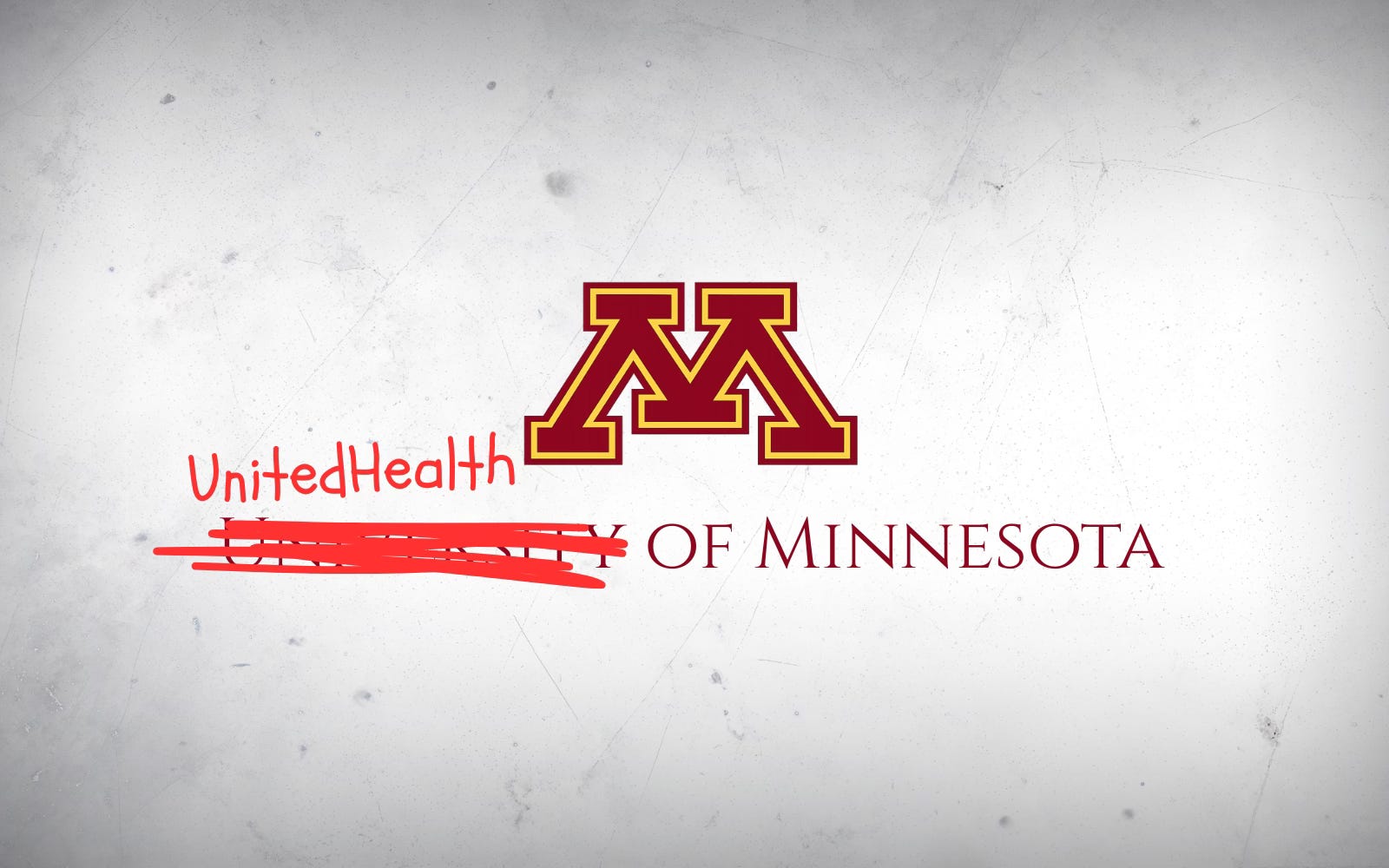
The University of Minnesota Medical School has announced it will end a UnitedHealth Group-sponsored course following original reporting by Dr. Allison Leopold in HEALTH CARE un-covered, which detailed (with receipts, including UnitedHealth Group’s campus guide for student tours, curriculum materials, and course syllabi) how the course blurred the line between education and corporate propaganda.
“This is a win as far as I am concerned,” Dr. Leopold told us over text. “U of M say they’re ‘revising’ the course, in my opinion, to save face because they don’t want to admit to being part of UnitedHealth Group’s machine.”
HEALTH CARE un-covered is a reader-supported publication. To receive new posts and support our work, consider becoming a free or paid subscriber.
Dr. Leopold was one of nine would-be doctors at the University of Minnesota Medical School who enrolled in the pilot course. Here is an excerpt from Dr. Leopold’s original article in HEALTH CARE un-covered:
Students heard from UnitedHealth division leaders throughout the four weeks, with in-person sessions at Optum headquarters once weekly and debriefs at the university with faculty once weekly. On the first day of class, we met Dr. Omar Baker, a pediatrician and deputy chief medical director of UnitedHealth who had just flown in from Washington, D.C. Immediately, he relayed that “UnitedHealth Group is very misunderstood.” He offered students a framework for the course: “It’s no secret we’re a for-profit company. So the question is, how do we balance our fiduciary responsibilities to our shareholders with our clinical work?” He added, “Everything you guys learn, you should try to see it through the lens of the different stakeholders.” This framework was a stark shift from medical education, where students are typically asked to blend a scientific and humanistic perspective to provide evidence-based care without concern for financial imperatives. With this shift in mind, the four-week course began.
The course was framed by the university as an innovative partnership and a way to help medical students understand the operational and financial realities of modern health care. In practice, students were taken to UnitedHealth’s Optum campus, where company leaders made presentations on care delivery, contract negotiation and medical group leadership. Those sessions were followed by reflections back on campus.
But, in reality, said Dr. Leopold, the presentations were largely “company-approved slideshows” that extolled the supposed virtuous attributes of “value-based care.”
Thanks for reading HEALTH CARE un-covered! This post is public so feel free to share it.
“Value-based care” can, in theory, support better outcomes. But as Dr. Leopold explained in her reporting, health insurers also make more money when less care is delivered. That structure creates powerful incentives when the people explaining the system are the same ones who profit from it.
Dr. Leopold’s expose, along with additional reporting by The Minnesota Star Tribune, led to the university’s decision to change course (literally and figuratively).
“Now there is a totally new curriculum and syllabus. And UnitedHealth Group won’t be involved in teaching the course any longer,” Dr. Leopold texted. “This is a big victory for student activists at U of M.”
But even still – and despite the embarrassment – the university and UnitedHealth Group aren’t cutting ties altogether. UnitedHealth’s chief medical officer, Dr. Margaret-Mary Wilson, told the Star Tribune that the company “values its partnership” with the university and will continue working with it as the course evolves.
The Star Tribune also reported that since 2024, UnitedHealth Group and its subsidiaries have given as much as $500,000 to the University of Minnesota Foundation.
0
Comments
Want to join the conversation?
Loading comments...