Healthcare News and Headlines
  • All Technology
  • AI
  • Autonomy
  • B2B Growth
  • Big Data
  • BioTech
  • ClimateTech
  • Consumer Tech
  • Crypto
  • Cybersecurity
  • DevOps
  • Digital Marketing
  • Ecommerce
  • EdTech
  • Enterprise
  • FinTech
  • GovTech
  • Hardware
  • HealthTech
  • HRTech
  • LegalTech
  • Nanotech
  • PropTech
  • Quantum
  • Robotics
  • SaaS
  • SpaceTech
AllNewsDealsSocialBlogsVideosPodcastsDigests

Healthcare Pulse

EMAIL DIGESTS

Daily

Every morning

Weekly

Sunday recap

NewsDealsSocialBlogsVideosPodcasts
HealthcareNewsA Conversation About Nighttime Itch with Gil Yosipovitch, M.D., Dermatology Professor at Miller School of Medicine at the University of Miami and the Director of the Miami Itch Center
A Conversation About Nighttime Itch with Gil Yosipovitch, M.D., Dermatology Professor at Miller School of Medicine at the University of Miami and the Director of the Miami Itch Center
Healthcare

A Conversation About Nighttime Itch with Gil Yosipovitch, M.D., Dermatology Professor at Miller School of Medicine at the University of Miami and the Director of the Miami Itch Center

•February 10, 2026
0
Managed Healthcare Executive
Managed Healthcare Executive•Feb 10, 2026

Why It Matters

Nighttime itch drives substantial sleep loss, magnifying the overall disease burden and healthcare costs. Objective measurement tools could transform diagnosis, treatment selection, and outcome tracking across dermatology and pain management markets.

Key Takeaways

  • •Nighttime itch driven by circadian cytokines and temperature rise
  • •Sleep loss accounts for over one‑third quality‑of‑life burden
  • •Four itch phenotypes: proprioceptive, neuropathic, undetermined, systemic
  • •Wearable AI can objectively track scratching and sleep disruption
  • •Pediatric itch assessment benefits from objective wearable metrics

Pulse Analysis

The physiological underpinnings of nocturnal pruritus are gaining scientific clarity. Researchers attribute the nightly surge to circadian fluctuations in neuropeptides and cytokines, coupled with a slight increase in skin temperature that heightens peripheral nerve excitability. This convergence mirrors mechanisms observed in chronic pain, positioning itch as a parallel sensory disorder that intensifies after dark. Understanding these pathways not only refines clinical phenotyping but also opens avenues for targeted therapeutics that modulate circadian signaling or barrier function.

Beyond biology, the data underscore a profound socioeconomic impact. More than one‑third of the quality‑of‑life decrement linked to chronic itch stems from sleep disruption, and nearly half of functional impairment is attributable to lost rest. These figures translate into higher healthcare utilization, reduced productivity, and increased caregiver burden, especially among older adults and patients with systemic diseases. Traditional patient‑reported outcomes miss the nuance of nighttime symptomatology, prompting clinicians to seek more precise assessment tools.

Emerging wearable technologies, enhanced by artificial intelligence, promise to fill this gap. Devices capable of detecting micro‑movements, skin conductance, and acoustic scratching events can generate continuous, objective data on itch intensity and sleep architecture. For pediatric cohorts, where self‑reporting is unreliable, such metrics are invaluable. The commercial landscape is responding, with startups and established med‑tech firms racing to integrate these sensors into consumer‑grade wearables. Successful validation could accelerate drug development pipelines, inform reimbursement models, and empower insurers to adopt value‑based contracts centered on measurable sleep‑itch outcomes.

A conversation about nighttime itch with Gil Yosipovitch, M.D., dermatology professor at Miller School of Medicine at the University of Miami and the director of the Miami Itch Center

By Logan Lutton · February 10, 2026

A conversation with Gil Yosipovitch, M.D., explores why itch worsens at night, how it rivals chronic pain in quality‑of‑life impact, and why better assessment of nighttime itch and sleep disruption is urgently needed.

Key Takeaways

  • Nocturnal pruritus likely reflects circadian cytokine/neuropeptide shifts, higher nighttime skin permeability, and a ~1 °C increase in skin temperature that amplifies peripheral nerve signaling.

  • Quality‑of‑life impairment from chronic pruritus parallels chronic pain, with sleep loss representing a major mediator of both global burden and functional disability.

  • Inflammatory “proprioceptive” itch includes atopic dermatitis, chronic urticaria, and psoriasis, whereas neuropathic itch can occur without rash due to peripheral or central nerve injury.

  • Chronic pruritus of undetermined origin is common in older adults, lacks a primary rash, and may show excoriations, while systemic itch often signals renal failure or cholestatic liver disease.

  • Objective nocturnal assessment using wearables and AI‑enabled analysis of sleep quality and scratching could improve phenotyping and outcomes measurement, particularly in pediatric populations.

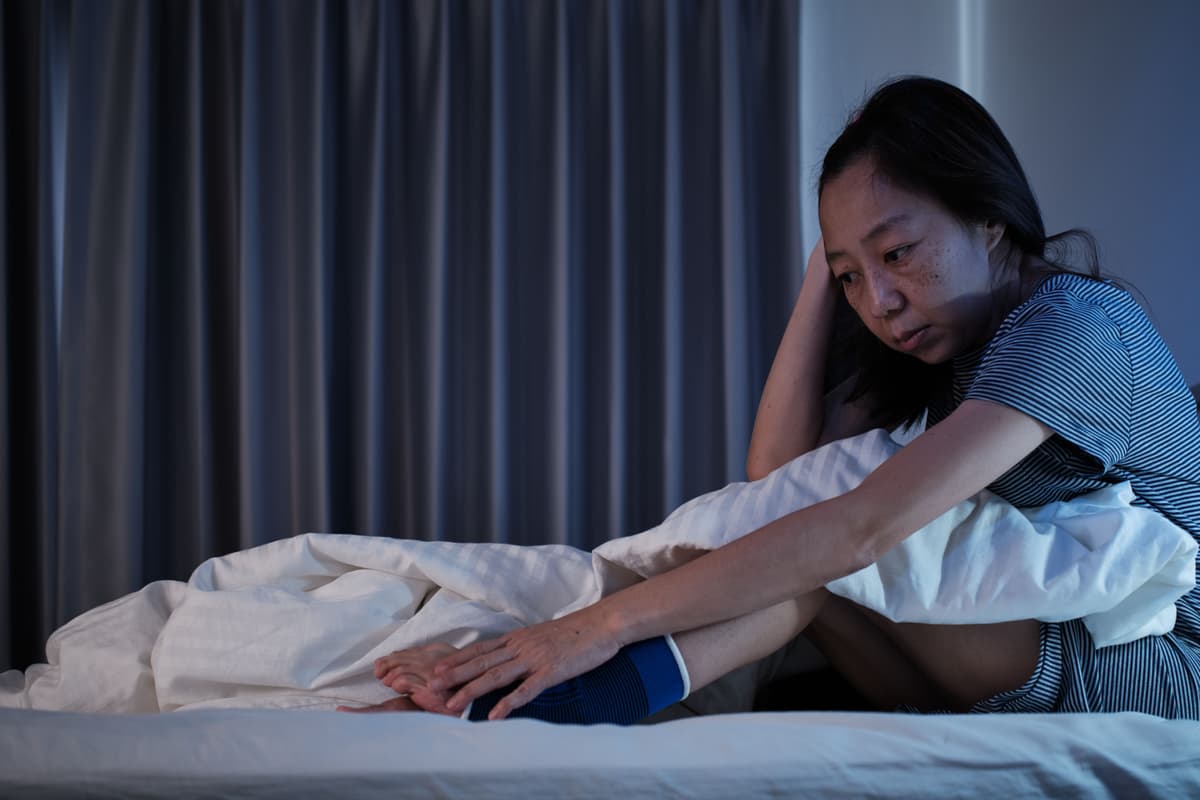
![woman itching foot in bed]

More than one‑third (36 %) of the total negative effect on quality of life from itch comes from sleep problems caused by chronic itch, and 45 % of the negative effect on daily functioning from itch is due to these sleep problems, according to research recently published in JAMA Dermatology.

A team of researchers, including Gil Yosipovitch, M.D., dermatology professor at Miller School of Medicine at the University of Miami and director of the Miami Itch Center, drew data from de‑identified surveys at the Miami Itch Center done as part of routine care. Yosipovitch recently sat down with Managed Healthcare Executive to discuss the results and what they mean for the future of sleep‑itch research. This interview has been edited for length and clarity.

MHE: Why is itchiness more commonly reported at night?

Yosipovitch: There are several explanations. One is that there are circadian rhythms of neuropeptides and cytokines, which are likely higher at nighttime. The skin barrier also is more permeable at night, and skin temperature rises about one degree Celsius, which activates nerves. A misconception is that patients are busier during the day and therefore less aware of itch; in reality, physiological changes play a major role.

MHE: In this study, you write that chronic itch equates to chronic pain in terms of quality‑of‑life impairment. How so?

Yosipovitch: Studies have shown that both itch and chronic pain are bothersome symptoms that significantly affect patients. The impact on quality of life and the sleep disruption caused by chronic itch are very similar to those seen in chronic pain. Both conditions involve alterations in circadian rhythms and neuropeptide activity, leading to comparable burdens.

MHE: Participants were categorized into four itch subtypes. Can you describe the differences between them?

Yosipovitch:

  • Proprioceptive itch – inflammatory skin diseases such as atopic eczema, chronic urticaria, and psoriasis.

  • Neuropathic itch – no primary rash; itch arises from nerve damage (e.g., peripheral neuropathy or spinal cord impingement).

  • Chronic pruritus of undetermined origin (CPU) – common in elderly patients without inflammation; secondary skin changes may be present from scratching, but no primary rash.

  • Systemic itch – linked to systemic diseases, most commonly end‑stage renal failure and cholestatic liver disease.

MHE: The results showed that 36 % of the quality‑of‑life outcome and 45 % of functional outcome of itch may be associated with sleep disturbance. How significant are these findings?

Yosipovitch: Almost half of the patients were significantly impacted by their nighttime itch; more than half reported sleep disturbance. We need to address this issue more seriously—not only the itch itself but also the accompanying sleep loss.

MHE: What is the next step for this research?

Yosipovitch: Multiple avenues are needed. First, we must improve assessment of nighttime itch beyond questionnaires. Wearable devices—some using AI to analyze sleep quality and record scratching activity—offer objective data. This is especially important for children, who cannot reliably provide numerical itch ratings.

Read Original Article
0

Comments

Want to join the conversation?

Loading comments...