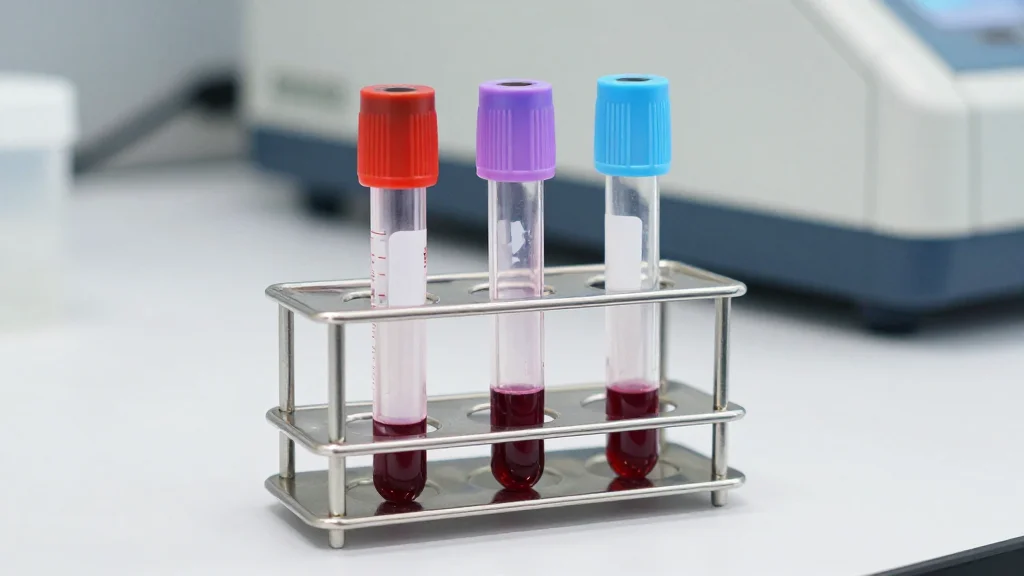
A Match Made in Heaven: Has Your Blood Collection Tube Been Appropriately Validated with Your Assays?
Why It Matters
Undisclosed tube‑assay incompatibilities can skew test results, jeopardizing patient care and regulatory compliance. Clear validation pathways protect laboratory credibility and downstream clinical decisions.
Key Takeaways
- •FDA clearance does not guarantee tube compatibility across all assays
- •CLSI GP34‑A assigns validation to manufacturers, verification to labs
- •Manufacturers often omit additive concentrations and instrument platforms in IFUs
- •Unvalidated tube‑assay combos can cause subtle bias in patient results
- •Targeted local verification complements manufacturer data and protects result integrity
Pulse Analysis
The pre‑analytical phase accounts for a sizable share of laboratory error, and blood‑collection tubes sit at its core. Though classified as in‑vitro diagnostic devices, FDA clearance only requires manufacturers to demonstrate performance on a limited panel of analytes and typically two instrument platforms. CLSI’s GP34‑A guideline formalizes this split of responsibility: manufacturers conduct full validation, while clinical labs must verify that a given tube works with their specific assays. This regulatory architecture aims to balance feasibility with safety, yet it creates a transparency vacuum when manufacturers omit critical details such as additive concentrations, draw‑volume specifications, or the exact platforms evaluated.
In practice, many hospitals select tubes based on cost or inventory rather than documented compatibility, a habit that can produce subtle analytical bias. A 2025 manufacturer notice revealed that a popular serum tube was cleared solely for viral‑marker and immunohematology testing, contradicting its routine use in chemistry panels. Similar studies have shown lithium‑heparin tubes under‑recover albumin on bromocresol‑green methods, underscoring how seemingly minor matrix differences affect results. When labs introduce a new analyzer or assay, the absence of explicit tube validation can force a de‑facto validation, consuming resources and risking non‑compliant data.
The path forward hinges on greater disclosure and collaborative verification. Manufacturers should enrich IFUs with additive formulas, tested draw volumes, and a matrix of assay‑instrument combinations. Laboratories, in turn, can adopt CLSI‑recommended targeted verification protocols—selecting representative analytes, defining acceptance criteria, and documenting clinical relevance. Regulatory bodies may incentivize transparency through updated accreditation checklists, while industry consortia could maintain shared databases of validated tube‑assay pairings. Together, these steps would tighten the “match made in heaven” between collection tubes and assays, safeguarding analytical integrity and patient outcomes.
A match made in heaven: Has your blood collection tube been appropriately validated with your assays?
Comments
Want to join the conversation?
Loading comments...