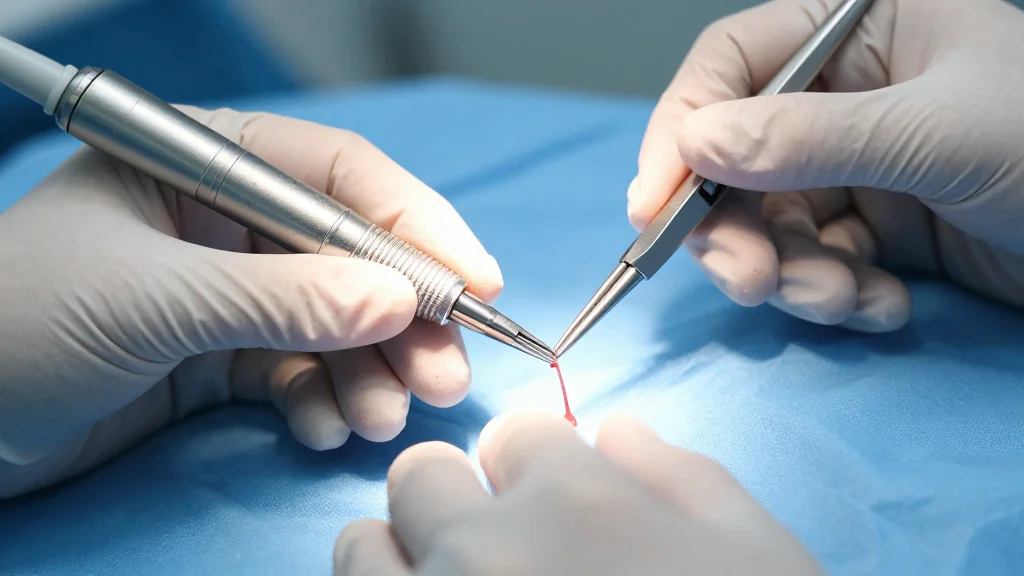
A Stitch-Free Future for Delicate Surgery: Shira Medtech Takes on Preventable Amputations
Companies Mentioned
Why It Matters
Accelerating microvascular surgery and removing the suturing step can dramatically increase the number of surgeons able to perform limb‑saving procedures, reducing preventable amputations in low‑resource settings. This breakthrough also opens new market opportunities for affordable surgical devices in emerging economies.
Key Takeaways
- •Shira Medtech's sutureless device aims to replace stitches in microvascular surgery
- •Device could lower skill barrier, expanding reconstructive procedures in low‑resource hospitals
- •The company’s earlier Shira Clamp already simplifies anastomosis for junior surgeons
- •Backed by Indian government, Tata Trusts, and Lockheed Martin, gaining international approvals
- •Preventable amputations affect ~12 million Indians; faster surgery may reduce this burden
Pulse Analysis
Microvascular anastomosis—joining vessels thinner than a strand of spaghetti—has long been a bottleneck in reconstructive surgery. The procedure demands microscopes, steady hands, and years of training, limiting its availability to a handful of specialists. In countries like India, where millions suffer from disability after preventable amputations, the scarcity of skilled surgeons translates directly into lost limbs and reduced quality of life. Understanding these constraints highlights why a device that can reliably replace sutures would be a game‑changer for both patients and hospitals.
Shira Medtech entered this space in 2016 with the Shira Clamp, a patented tool that steadies vessel ends and reduces tissue manipulation, allowing less‑experienced surgeons to perform microvascular joins with greater confidence. Leveraging that foundation, the company’s new sutureless implant promises to eliminate the most time‑consuming step—hand‑suturing—by providing a permanent, low‑cost connection that can be placed quickly under a microscope. Early clinical data, published in peer‑reviewed journals, show comparable patency rates to traditional stitches, while the device’s simplicity has earned it awards from the Indian government, Tata Trusts, and even Lockheed Martin. International regulatory clearance, including Malaysian market entry, signals broader acceptance beyond domestic pilots.
If the sutureless system proves robust in everyday operating rooms, it could reshape surgical economics and access. Shorter procedures free up operating theatre capacity, lower anesthesia costs, and reduce the need for highly specialized staff, making limb‑saving surgery feasible in district hospitals that previously referred patients to tertiary centers. For health systems grappling with rising chronic disease burdens, the technology offers a scalable solution to curb preventable amputations, improve patient outcomes, and generate a new revenue stream for device manufacturers targeting emerging markets. The next few years will be critical as Shira Medtech scales validation trials and seeks wider adoption across low‑resource settings.
A stitch-free future for delicate surgery: Shira Medtech takes on preventable amputations
Comments
Want to join the conversation?
Loading comments...