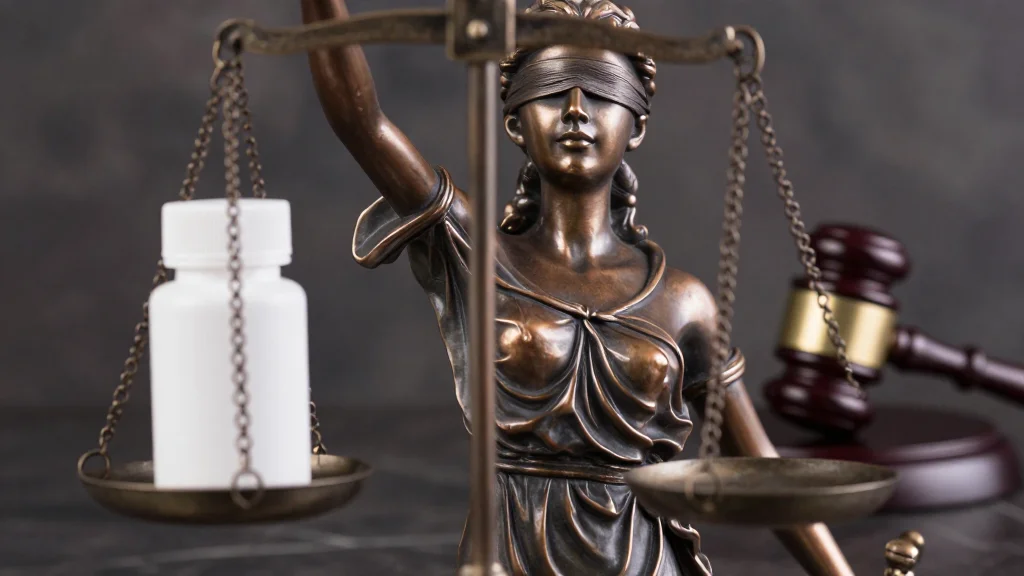
Abortion Pill Fight Thrust Into Spotlight as Midterms Heat Up
Why It Matters
The ruling could reshape nationwide access to medication abortion, influencing voter sentiment and turnout in tight midterm races. It also signals how the Supreme Court may intervene in the ongoing clash between federal authority and state‑level abortion restrictions.
Key Takeaways
- •Supreme Court Justice Alito temporarily restored mail‑order mifepristone access.
- •Federal appeals court barred telehealth prescriptions, sparking nationwide legal battle.
- •Democrats filed amicus brief; DGA targets GOP governors in upcoming races.
- •Medication abortion now makes up two‑thirds of U.S. abortions.
Pulse Analysis
The latest courtroom showdown over mifepristone underscores how medication abortion has become the flashpoint of post‑Dobbs America. A conservative 5th Circuit panel ruled that the drug cannot be prescribed via telehealth, effectively requiring an in‑person visit. Within hours, Justice Samuel Alito issued a temporary order restoring mail‑order access, marking the first Supreme Court intervention since the 2024 unanimous decision that upheld the FDA’s approval on a technicality. Legal scholars say the split highlights the Court’s uneasy position between longstanding precedents and a growing coalition of state‑level restrictions, setting the stage for a potential nationwide ban.
The timing could not be more consequential for the 2026 midterm cycle. Democrats have already filed an amicus brief urging the Court to reject the appeals court’s ruling, while the Democratic Governors Association is mobilizing resources to hold Republican governors accountable in 36 critical races. Campaign strategists are framing abortion access as an economic issue, echoing advocacy messages that link reproductive freedom to household financial stability. Early polling suggests that voters who perceive a direct threat to medication abortion are more likely to turn out for Democratic candidates, making the case a potential catalyst for turnout in swing states.
Beyond the political theater, the dispute reflects deeper shifts in U.S. reproductive health policy. Medication abortion now accounts for roughly two‑thirds of all terminations, and online‑only clinics provide about a quarter of clinician‑provided procedures. Shield laws in blue states protect providers from prosecution, while the FDA’s ongoing safety review of mifepristone adds another layer of uncertainty. If the Supreme Court ultimately permits a nationwide ban, access could retreat to a patchwork of state‑level exceptions, disproportionately affecting low‑income and rural women. Conversely, a reaffirmation of telehealth prescribing could cement the telemedicine model as a permanent fixture of reproductive care.
Abortion pill fight thrust into spotlight as midterms heat up
Comments
Want to join the conversation?
Loading comments...