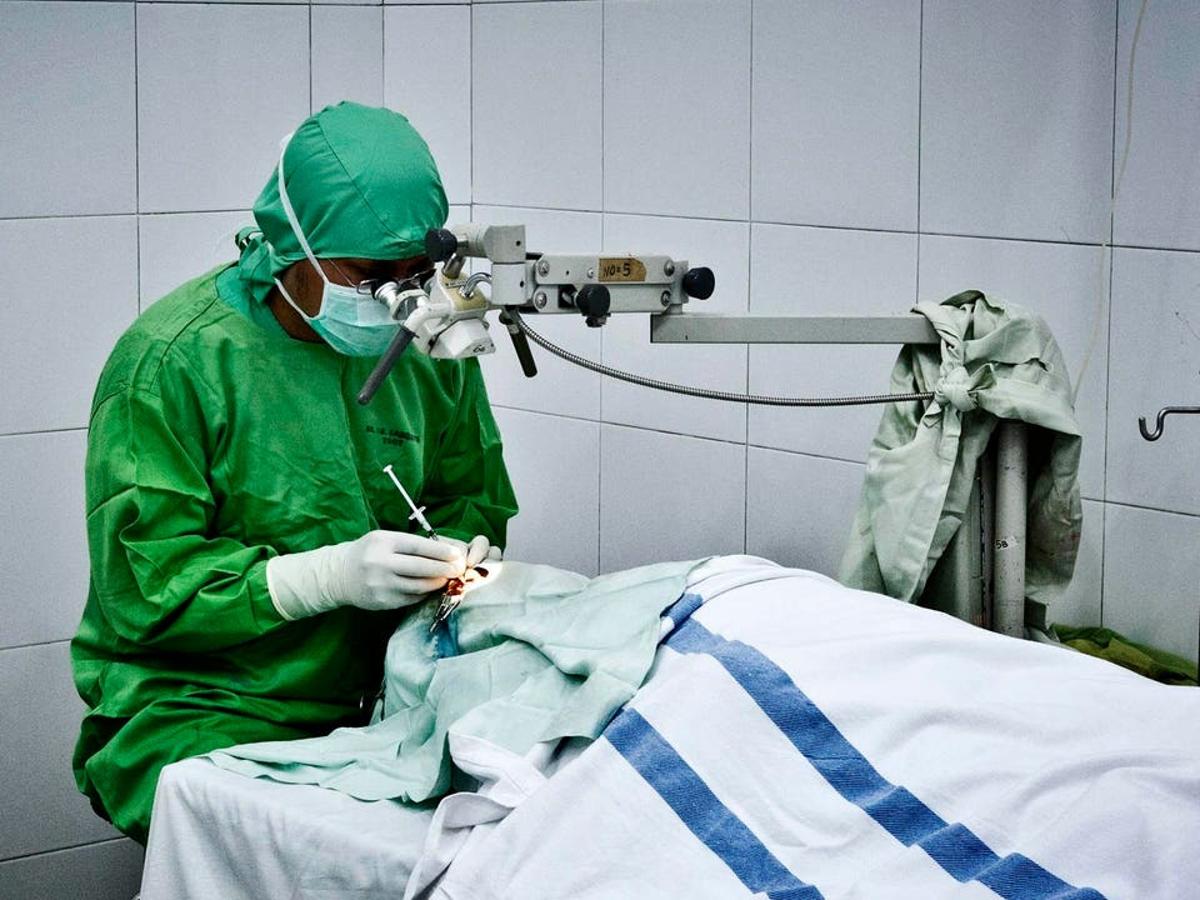
About Half Needing Cataract Surgery Lack Access. How This Is Changing
Companies Mentioned
Why It Matters
Expanding cataract surgery access reduces preventable blindness, unlocking economic and social gains in low‑income regions. The initiative shows how targeted philanthropy can accelerate global eye‑health objectives.
Key Takeaways
- •Global cataract surgical coverage sits at 48.2% in 2025
- •Bloomberg Vision Initiative performed 59,100 surgeries in five low‑income countries
- •Coverage ranges from 2.1% in Burundi to 77.7% in Qatar
- •Goal: 250,000 surgeries and 11 million screenings by 2027
- •Restored vision boosts education, productivity, and accident prevention
Pulse Analysis
Cataracts remain the leading cause of reversible blindness worldwide, affecting roughly 94 million people according to the World Health Organization. The condition progresses silently after the fourth decade of life, eventually clouding the lens and impairing vision. Yet the Lancet Global Health study reveals that only 48.2 % of those who need surgery actually receive it, with stark disparities—from a mere 2.1 % coverage in Burundi to 77.7 % in Qatar. This gap translates into lost educational opportunities, reduced labor productivity, and heightened risk of accidents, underscoring cataract surgery as a critical public‑health lever.
The Bloomberg Philanthropies Vision Initiative, launched in May 2025 with a $75 million commitment, is rapidly narrowing that gap. By partnering with eyeglass distributors such as Warby Parker and NGOs like the Pupils Project, the program has already delivered 706,600 spectacles and facilitated more than 59,100 free cataract operations across Bangladesh, Cambodia, Ethiopia, Kenya and Nigeria. These interventions are concentrated in regions where surgical capacity is scarce, leveraging mobile clinics and training local ophthalmologists to expand service networks. At the current pace, the initiative is on track to meet its 2027 target of 250,000 surgeries and 11 million screenings.
Beyond the immediate health benefits, restored sight generates measurable socioeconomic returns. Studies show that individuals who regain vision experience higher school attendance rates, increased earnings, and lower dependence on social assistance. For governments, scaling cataract services can reduce long‑term healthcare costs associated with falls and comorbidities. The Bloomberg model demonstrates how coordinated philanthropy, private‑sector partnerships, and data‑driven planning can accelerate progress toward the WHO’s Vision 2020 goals. Replicating this approach in other underserved markets will be essential to push global surgical coverage above the projected 52.3 % by 2030 and ultimately eliminate preventable blindness.
About Half Needing Cataract Surgery Lack Access. How This Is Changing
Comments
Want to join the conversation?
Loading comments...