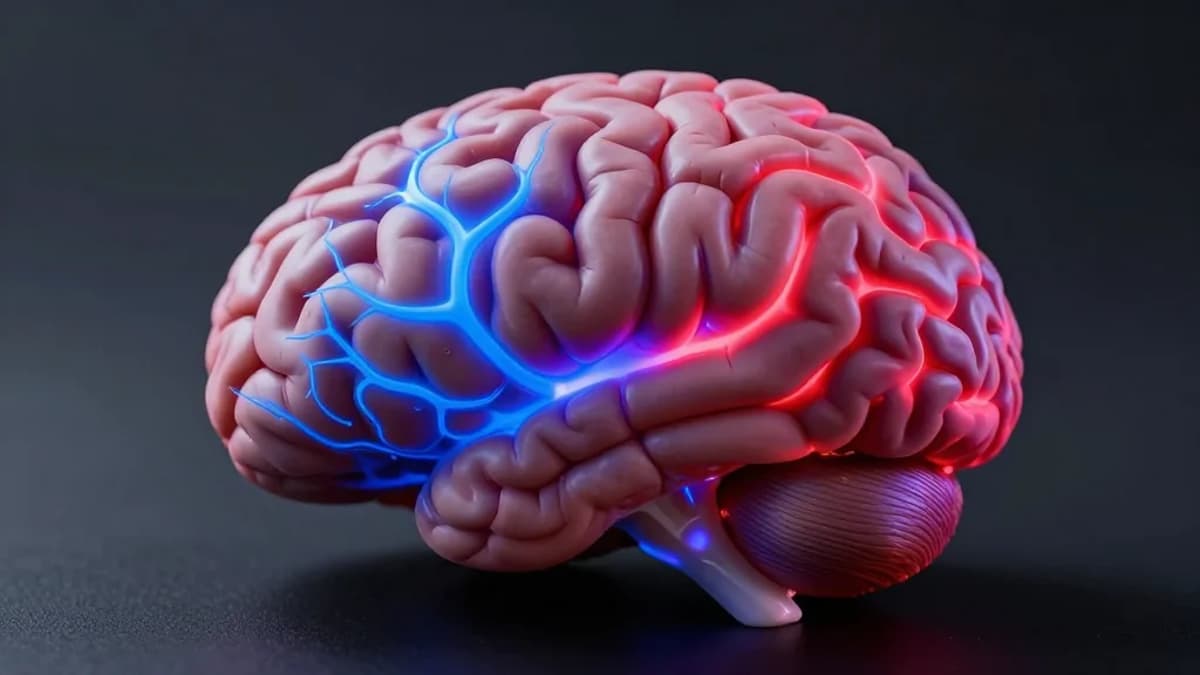
Adolescent Depression Subtypes Show Distinct Brain Dynamics
•February 22, 2026
0
Why It Matters
Identifying brain‑based subtypes enables more accurate prognosis and personalized treatment for a disorder that affects millions of youths. It also provides concrete targets for neuromodulation and drug development, accelerating precision mental‑health care.
Key Takeaways
- •Two depression subtypes identified via sensory‑association cortex dynamics
- •Feedforward subtype links to sensory sensitivity and anxiety
- •Feedback‑deficit subtype associated with anhedonia and cognitive blunting
- •Distinct transcriptomic signatures suggest personalized pharmacological targets
- •Findings enable tailored neuromodulation and psychotherapy strategies
Pulse Analysis
Adolescent major depressive disorder remains a leading cause of disability, yet its clinical presentation is notoriously heterogeneous. Traditional diagnostic frameworks rely on symptom checklists, obscuring the underlying neurobiological diversity that drives treatment response. By applying information‑theoretic metrics—entropy, mutual information, and transfer entropy—to high‑resolution fMRI data, Liu and colleagues quantified the direction and complexity of neural communication within sensory‑association cortices. This methodological leap moves beyond static connectivity maps, capturing dynamic information flow that more accurately reflects functional brain states during a critical developmental window.
The study delineates two opposing information‑processing phenotypes. The feedforward‑dominant group exhibits amplified sensory‑to‑association signaling, manifesting clinically as heightened sensory sensitivity, hypervigilance, and frequent anxiety comorbidity. Conversely, the feedback‑deficit group shows diminished top‑down modulation, aligning with classic depressive features such as anhedonia, slowed cognition, and executive dysfunction. Importantly, each phenotype carries distinct peripheral transcriptomic signatures, hinting at separate molecular mechanisms. These insights open avenues for precision interventions: transcranial magnetic stimulation could be tuned to rebalance feedforward excess or restore feedback pathways, while cognitive‑behavioral protocols might be customized to address specific sensory‑cognitive biases.
Beyond immediate therapeutic implications, the research signals a broader paradigm shift toward biologically anchored psychiatric taxonomy. By integrating neural dynamics, clinical phenotypes, and molecular data, the framework aligns with the goals of precision psychiatry, promising earlier detection and more targeted care. Future work will need longitudinal cohorts to map subtype trajectories, assess treatment responsiveness, and validate scalable biomarkers for clinical use. As the field moves toward multimodal, data‑driven classification, this study provides a template for unraveling the complex circuitry underlying mental illness, ultimately improving outcomes for millions of adolescents worldwide.
Adolescent Depression Subtypes Show Distinct Brain Dynamics
0
Comments
Want to join the conversation?
Loading comments...