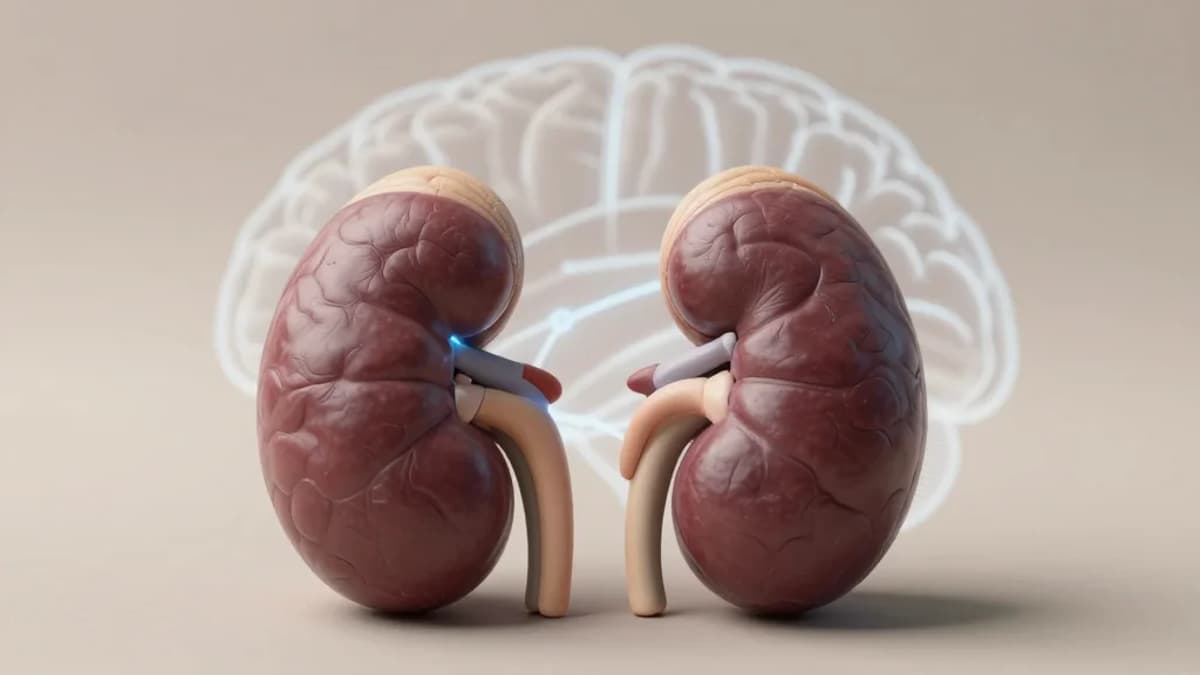
Advanced CKD Linked With Cognitive Impairment
•February 28, 2026
0
Why It Matters
The study underscores the need to incorporate proteinuria screening into CKD management to identify patients at heightened risk of cognitive decline, informing early intervention strategies.
Key Takeaways
- •Proteinuria raises attention/processing speed impairment risk 21%.
- •Low eGFR linked to cognition, effect mediated by proteinuria.
- •Combined eGFR<60 and UPCR≥150 increases global impairment 38%.
- •Proteinuria outperforms eGFR as independent cognitive risk marker.
- •Shared kidney‑brain microvascular injury underlies observed associations.
Pulse Analysis
Chronic kidney disease has long been associated with neurocognitive deficits, yet clinicians have struggled to pinpoint which renal metrics best forecast brain health. Earlier registry studies linked overall kidney function decline to dementia, but they often omitted proteinuria, a marker of glomerular damage. By leveraging the longitudinal CRIC cohort, researchers now provide robust evidence that urinary protein excretion, measured as UPCR, is a more sensitive indicator of early cognitive impairment than eGFR alone, especially for attention and executive tasks.
The analysis reveals a graded risk: each standard‑deviation rise in log‑transformed UPCR boosts the hazard of attention/processing speed deficits by 21% and executive dysfunction by 16%. While lower eGFR also correlates with slower processing, its effect diminishes once proteinuria is accounted for, suggesting that albumin leakage captures the underlying vascular pathology. Importantly, patients harboring both reduced filtration (<60 mL/min/1.73 m²) and high proteinuria (≥150 mg/g) experience a 38% surge in global cognitive impairment risk, highlighting a high‑risk subgroup that could benefit from targeted monitoring.
These insights carry practical implications for nephrology and primary care. Routine UPCR testing, already standard for CKD staging, can double as a neuro‑risk flag, prompting earlier cognitive screening and multidisciplinary management. The shared microvascular architecture of kidney and brain offers a mechanistic bridge, with hypertension, diabetes, and accumulating uremic toxins potentially driving parallel injury. Future trials should explore whether aggressive proteinuria control—through ACE inhibitors, ARBs, or novel agents—mitigates cognitive decline, paving the way for integrated renal‑cerebral care pathways.
Advanced CKD Linked With Cognitive Impairment
0
Comments
Want to join the conversation?
Loading comments...