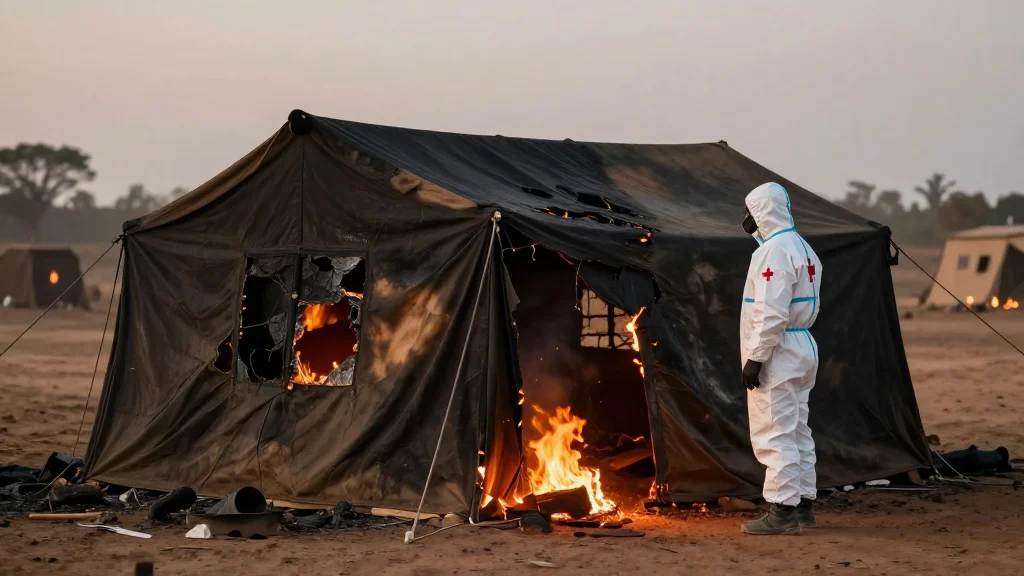
Arson Attacks on Ebola Treatment Centers Push Suspected Cases in Eastern Congo Past 900

Why It Matters
The attacks expose how fragile health interventions are in conflict zones, where mistrust can turn protective measures into flashpoints for violence. With nearly a million people displaced, any lapse in containment risks a regional spillover, potentially affecting neighboring Uganda and destabilizing already strained health systems. Beyond the immediate humanitarian toll, the episode highlights the consequences of dwindling donor support. Reduced resources limit testing, protective gear, and safe burial kits, eroding the capacity to halt transmission. Restoring aid flows and securing humanitarian corridors are essential to prevent the outbreak from becoming a broader public‑health emergency.
Key Takeaways
- •Arson destroyed two Ebola quarantine tents in Ituri, burning eight beds.
- •Suspected Ebola cases rose to 904 with 119 suspected deaths, per Congo's Ministry of Communication.
- •Confirmed cases stand at 82 with seven deaths, WHO says.
- •Nearly 1 million people displaced in Ituri, raising risk of camp transmission.
- •International aid cuts have left health workers with only basic protective gear.
Pulse Analysis
The Congo Ebola crisis illustrates a classic security‑health nexus where armed conflict directly hampers disease control. Historically, outbreaks in the DRC have been prolonged by rebel interference; the current M23 and ADF presence adds a layer of complexity that limits both access and the ability to enforce quarantine. The recent arson attacks are not isolated incidents but part of a pattern where health facilities become symbolic targets for communities feeling alienated by external authorities.
Donor fatigue compounds the problem. The 2025 U.S. aid reduction, echoed across European partners, has stripped the response of essential supplies—face shields, testing kits, and body bags—forcing local NGOs to improvise with hand sanitizer and a handful of masks. This resource gap undermines confidence in the health system, feeding the cycle of rumor and resistance. Re‑engaging the international community will require a clear narrative that links health security to regional stability, especially as the outbreak threatens to cross borders into Uganda.
Looking ahead, the success of containment will depend on three intertwined actions: securing safe corridors for health workers, rebuilding burned infrastructure quickly, and launching culturally attuned communication campaigns led by trusted local figures. If these steps are taken, the outbreak could be contained before it reaches the scale of the 2018‑2020 epidemic that claimed over 2,000 lives. Failure, however, could see a resurgence that overwhelms already fragile health services across the Great Lakes region.
Arson attacks on Ebola treatment centers push suspected cases in eastern Congo past 900
Comments
Want to join the conversation?
Loading comments...