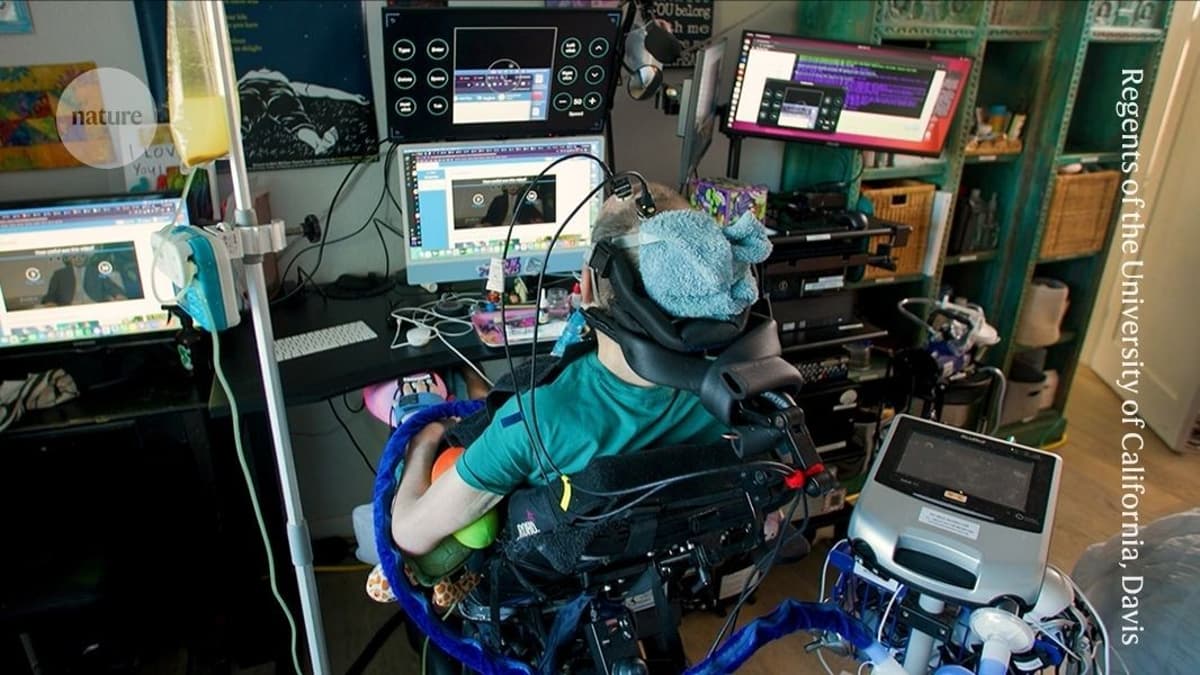
At-Home Brain Implant Gives Man with Motor Neuron Disease His Daily Life Back
Why It Matters
The study proves that high‑performance BCIs can function reliably in everyday settings, opening a commercial pathway for assistive neurotechnology and expanding options for ALS and other motor‑neuron patients.
Key Takeaways
- •256‑electrode implant enables 56 wpm speech decoding at home.
- •Patient used BCI 364 of 397 days, 183 k sentences.
- •92% of decoded sentences were at least mostly correct.
- •System also controls mouse via attempted hand signals.
- •Privacy mode lets user block data transmission to researchers.
Pulse Analysis
The latest home‑use trial of a brain‑computer interface marks a turning point for neurotechnology. While earlier BCIs were confined to research labs, this study demonstrates that a fully implanted system can operate continuously in a non‑clinical environment. By leveraging 256 microelectrodes in the speech motor cortex, the device translates neural firing patterns into text at speeds comparable to typical typing, a leap forward from earlier prototypes that struggled with latency and reliability.
For Casey Harrell, the implant restored more than just communication; it revived his professional life. Over nearly two years he logged 183,060 sentences, maintained a 92% decoding accuracy, and even used neural signals to move a cursor, allowing him to continue his climate‑advocacy work from a wheelchair. The inclusion of a personalized text‑to‑speech voice and a privacy toggle underscores a user‑centric design, addressing both functional needs and data‑security concerns that have hampered broader adoption of neurodevices.
Industry observers see this as a catalyst for commercial BCI development. The demonstrated durability and daily‑use metrics satisfy key regulatory criteria for medical devices, paving the way for FDA pathways and insurance reimbursement models. Moreover, the privacy mode sets a precedent for patient‑controlled data sharing, a critical factor as tech firms eye the lucrative assistive‑tech market. As more companies invest in scalable manufacturing of neural implants, the balance between therapeutic benefit, ethical data handling, and cost will shape the next wave of brain‑computer solutions.
At-home brain implant gives man with motor neuron disease his daily life back
Comments
Want to join the conversation?
Loading comments...