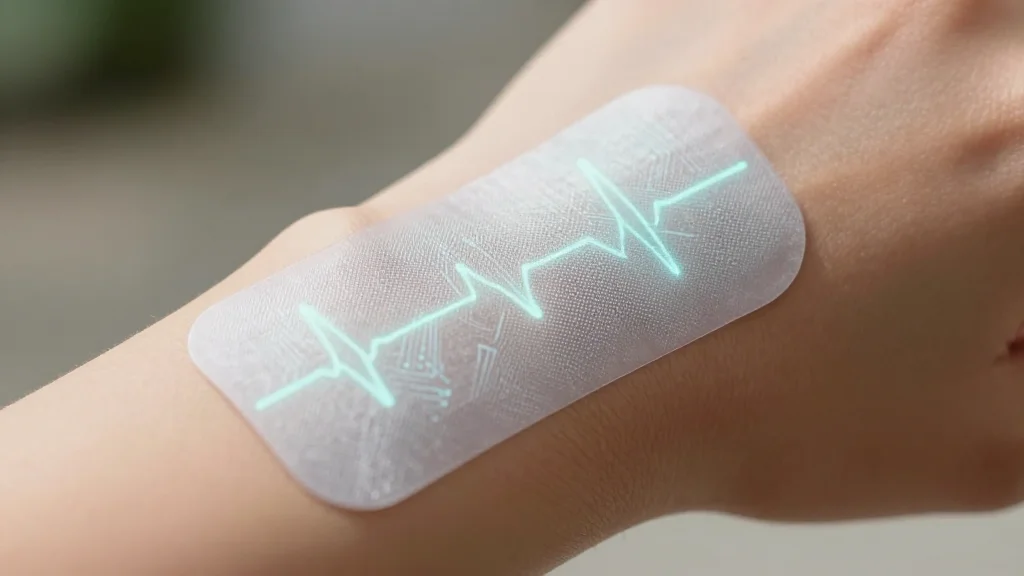
Battery-Free Skin-Conformal Wearable System Can Measure Electrocardiogram Signals
Why It Matters
Eliminating batteries removes size, weight, and charging constraints, accelerating continuous health monitoring and opening new markets for long‑term wearable and implantable devices.
Key Takeaways
- •SkinECG harvests ambient energy, powering ECG sensor without batteries
- •Orthogonal Energy Harvesting Network transmits power via body‑coupled transfer
- •Multi‑frequency harvesters avoid interference, enabling flexible placement
- •System matches safety standards, delivering power comparable to everyday exposure
- •Enables battery‑free expansion to EMG, EEG and other wearable monitors
Pulse Analysis
Wearable health‑tech has surged as clinicians seek continuous, real‑time data, yet the reliance on batteries remains a choke point. Batteries add bulk, limit device lifespan, and require frequent charging—factors that deter long‑term adherence and hinder integration into everyday clothing. By removing the battery, SkinECG tackles these friction points, offering a truly skin‑like form factor that can stay affixed for days without user intervention, a critical advantage for chronic disease management and remote patient monitoring.
The core innovation lies in the Orthogonal Energy Harvesting Network (O‑EHN), which decouples the optimal locations for energy capture and biosignal acquisition. Multiple harvesters—solar, thermoelectric, or kinetic—convert ambient energy and transmit it along the skin using distinct frequency channels, preventing cross‑talk. Body‑coupled power transfer guides the energy directly to the ECG patch, sidestepping the inefficiencies of traditional over‑air wireless charging that suffers from tissue absorption. This architecture not only boosts power delivery efficiency but also adheres to safety guidelines, keeping exposure levels within everyday ambient ranges.
Commercially, the battery‑free paradigm could reshape the wearable market. Manufacturers can design slimmer, more comfortable devices, reducing material costs associated with battery integration and disposal. Moreover, the technology’s compatibility with existing harvesters suggests a rapid path to multi‑modal platforms that monitor heart rhythm, muscle activity, and brain waves simultaneously. Regulatory bodies may view the low‑power, skin‑coupled approach favorably, easing approval for both consumer and medical-grade wearables. As healthcare pivots toward preventive, data‑driven models, SkinECG’s breakthrough positions it as a foundational technology for the next generation of continuous monitoring solutions.
Battery-free skin-conformal wearable system can measure electrocardiogram signals
Comments
Want to join the conversation?
Loading comments...