Biceps Tenodesis May Be Cost-Effective Vs. Superior Labrum Repair
Why It Matters
The findings suggest that surgeons and health systems can improve patient outcomes while reducing expenditures by favoring biceps tenodesis for overhead athletes, influencing treatment guidelines and payer reimbursement policies.
Key Takeaways
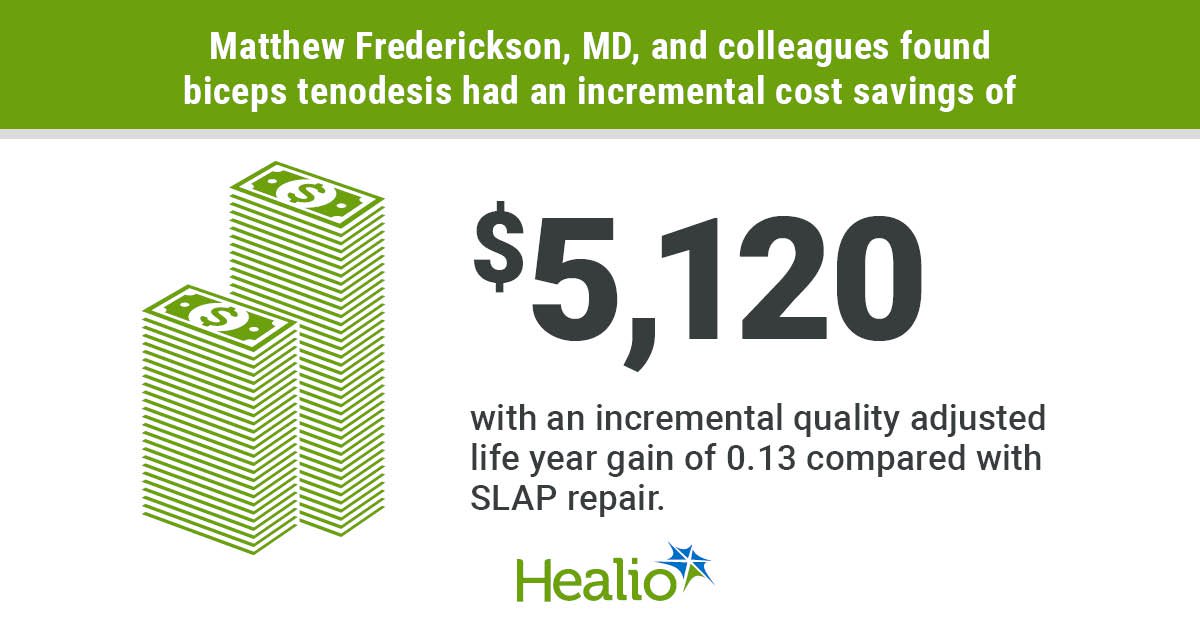
- •Biceps tenodesis saves $5,120 per patient vs. SLAP repair.
- •Tenodesis yields 8.06 QALYs versus 7.93 QALYs for repair.
- •Dominant strategy in 90% of simulations at $50k willingness‑to‑pay.
- •Lower procedural costs and higher return‑to‑sport rates drive advantage.
- •Study applies 10‑year Markov model to overhead athletes.
Pulse Analysis
SLAP (superior labrum anterior‑to‑posterior) tears are a common source of shoulder pain in athletes who perform repetitive overhead motions, such as baseball pitchers and volleyball players. Traditional management often involves arthroscopic repair of the labrum, a procedure that can be technically demanding and carries a risk of prolonged rehabilitation. As health‑care costs rise, clinicians and payers increasingly scrutinize not only clinical efficacy but also the economic value of surgical options, prompting comparative analyses that blend clinical outcomes with cost data.
The recent Markov decision‑analytic study led by Dr. Matthew Frederickson quantifies this value proposition. By modeling a cohort of overhead athletes over a decade, the analysis incorporated probabilities of returning to pre‑injury sport levels, re‑operation rates, and minor complications, drawing on a systematic review for clinical inputs. Tenodesis generated 8.06 quality‑adjusted life years at a total cost of $35,542, while SLAP repair produced 7.93 QALYs at $40,662. The resulting incremental cost‑effectiveness ratio demonstrated a dominant strategy for tenodesis, with a $5,120 per‑patient saving and a 0.13 QALY gain. Sensitivity testing reinforced robustness, showing tenodesis favored in more than 90% of simulations at both $50,000 and $100,000 willingness‑to‑pay thresholds.
For orthopedic surgeons, insurers, and athletic programs, these results provide actionable insight. Choosing biceps tenodesis could shorten recovery timelines, reduce lost productivity, and lower overall spending without compromising functional outcomes. The study also highlights the importance of integrating economic modeling into surgical decision‑making, especially for high‑performance populations where return‑to‑sport is paramount. Future research may expand the model to other athlete subgroups and explore long‑term durability beyond the ten‑year horizon, further informing evidence‑based guidelines.
Biceps tenodesis may be cost-effective vs. superior labrum repair
Comments
Want to join the conversation?
Loading comments...