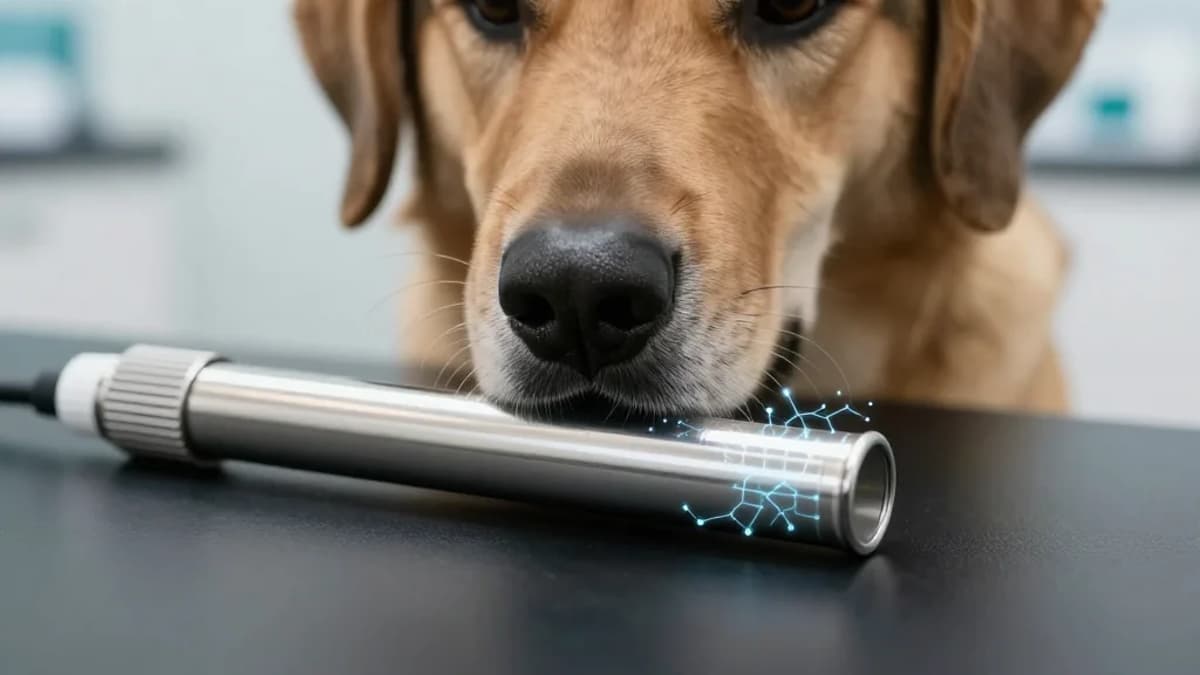
Breath and Barking Present a Breakthrough in Cancer Diagnosis
•February 23, 2026
0
Why It Matters
The technology offers a rapid, low‑cost screening tool that could dramatically increase early cancer detection rates, improving survival outcomes and reducing treatment expenses across healthcare systems.
Key Takeaways
- •Dogs detect cancer biomarkers in breath samples
- •AI refines scent data for diagnostic accuracy
- •Targets lung, prostate, colorectal, breast cancers
- •Non‑invasive screening reduces reliance on biopsies
- •Potential to lower healthcare costs and improve outcomes
Pulse Analysis
The concept of using a dog’s nose to detect disease is not new; research dating back decades has shown canines can sniff out volatile organic compounds linked to infections, diabetes, and various cancers. Breath analysis, in particular, provides a non‑invasive matrix that captures metabolic by‑products released by malignant cells, making it an attractive target for early detection. By combining the innate sensitivity of trained dogs with modern sensor arrays, SpotitEarly bridges biological intuition and digital precision, creating a hybrid diagnostic that leverages the best of both worlds.
SpotitEarly’s platform captures the scent profile from a patient’s exhaled breath using high‑resolution electronic noses, then feeds the data into machine‑learning models trained on canine responses. Early validation studies report sensitivity and specificity rates exceeding 90% across lung, prostate, colorectal, and breast cancer cohorts, rivaling conventional imaging and biopsy pathways. The AI layer filters background noise, standardizes readings, and continuously improves as more samples are processed, addressing variability concerns that have historically limited scent‑based diagnostics. Regulatory filings are underway, with the company targeting FDA breakthrough device designation to accelerate market entry.
If adopted at scale, this technology could reshape population health screening by offering a quick, inexpensive test that can be administered in primary‑care settings or even at community events. Reduced reliance on costly imaging and invasive procedures promises significant cost savings for insurers and health systems, while earlier tumor identification improves patient prognoses. Moreover, the platform’s modular design allows expansion to additional disease markers, positioning SpotitEarly as a potential cornerstone in the next generation of AI‑enhanced, biologically inspired diagnostics.
Breath and barking present a breakthrough in cancer diagnosis
0
Comments
Want to join the conversation?
Loading comments...