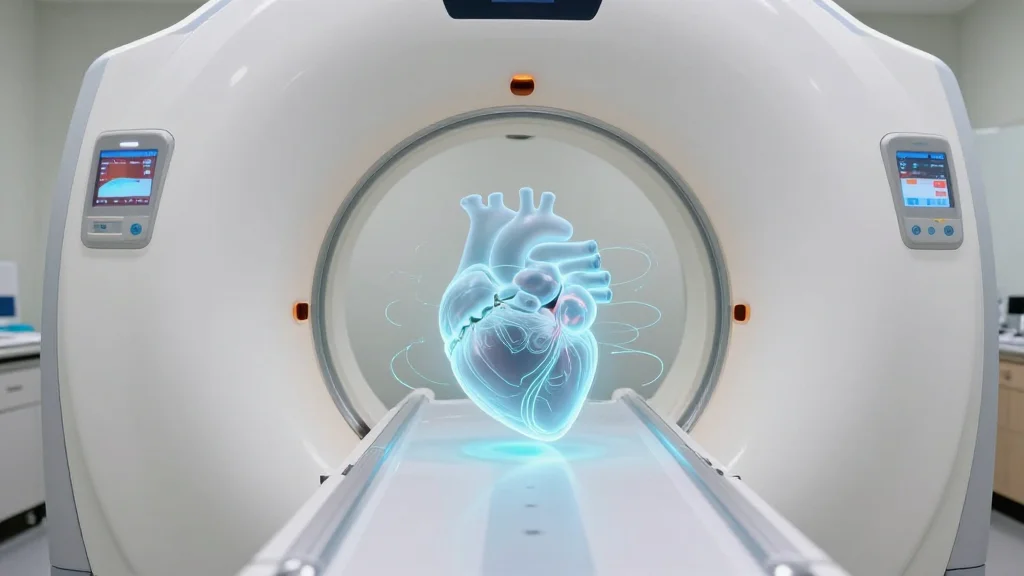
CMU and Cleveland Clinic Launch CMR-CLIP AI, Boosting Cardiac MRI Accuracy to 99%

Companies Mentioned

Why It Matters
The ability to interpret cardiac MRI scans quickly and accurately addresses two persistent challenges in cardiovascular care: diagnostic bottlenecks and high procedural costs. Faster reads can accelerate treatment decisions for conditions such as heart failure or myocardial infarction, where timely intervention improves outcomes. Moreover, by reducing reliance on scarce expert readers, hospitals—especially those in underserved regions—can expand access to the gold‑standard imaging modality without prohibitive staffing expenses. If CMR‑CLIP’s performance holds in real‑world settings, it could set a precedent for domain‑specific foundation models across other complex imaging specialties, prompting a shift away from one‑size‑fits‑all AI solutions toward tailored systems that leverage existing clinical documentation.
Key Takeaways
- •CMR‑CLIP outperforms generic AI models by >35% in cardiac MRI interpretation
- •Achieves up to 99% accuracy on specialized heart conditions
- •Trained on >13,000 de‑identified scans and >1 million images
- •Interpretation time could drop from 40 minutes to a fraction of that
- •Pilot rollout begins at Cleveland Clinic in late 2026
Pulse Analysis
CMU and Cleveland Clinic’s CMR‑CLIP arrives at a moment when the healthcare AI market is grappling with the limits of generic foundation models. While large language and vision models have demonstrated impressive capabilities, their performance often degrades in niche clinical domains where data are scarce and the cost of error is high. CMR‑CLIP’s strategy—pairing video‑based imaging with the textual narratives clinicians already produce—repurposes a ubiquitous data source, turning a labeling bottleneck into a training advantage. This approach could become a template for other specialties, such as neuro‑imaging or oncology, where reports contain rich semantic cues.
From a competitive standpoint, the system pits itself against established vendors like Siemens Healthineers and Philips, which have been integrating AI modules into their imaging platforms. Those solutions typically rely on supervised learning with curated datasets, a model that scales poorly for rare cardiac pathologies. CMR‑CLIP’s zero‑shot capability suggests a lower barrier to entry for new conditions, potentially eroding the market share of incumbent AI tools that require extensive re‑training for each new use case.
Looking ahead, the key risk lies in clinical validation and regulatory acceptance. Even with near‑clinical accuracy, hospitals will demand robust evidence that AI‑assisted reads do not miss subtle findings that could alter patient management. Successful multi‑site trials and FDA clearance will be essential to translate the technology from research to revenue. If those hurdles are cleared, CMR‑CLIP could catalyze a wave of domain‑specific AI investments, reshaping how hospitals allocate resources for advanced imaging and ultimately improving cardiovascular outcomes at scale.
CMU and Cleveland Clinic Launch CMR-CLIP AI, Boosting Cardiac MRI Accuracy to 99%
Comments
Want to join the conversation?
Loading comments...