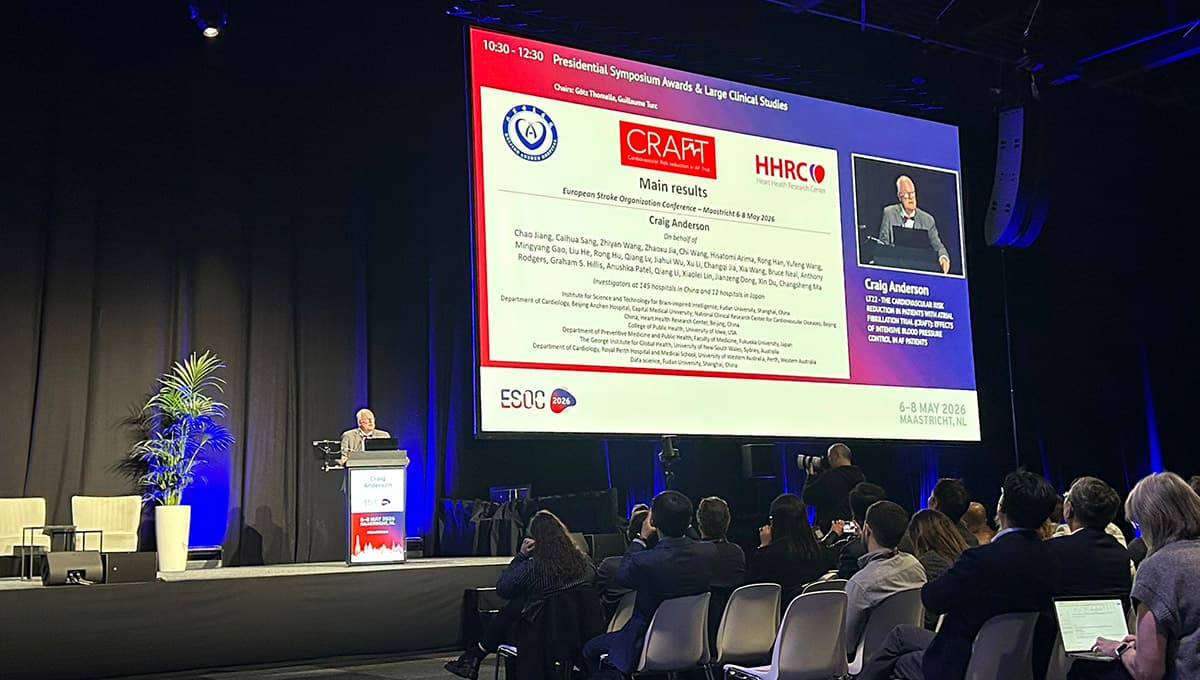
CRAFT: Intensive BP Control Fails to Cut CV Risk in Atrial Fibrillation
Why It Matters
The results challenge the assumption that tighter blood‑pressure control universally improves outcomes in AF, suggesting a more nuanced, patient‑specific approach may be needed. This could reshape hypertension management guidelines for a growing high‑risk population.
Key Takeaways
- •Intensive BP <120 mm Hg did not reduce CV events in AF.
- •Average systolic difference between groups was only ~8 mm Hg.
- •Benefit signals appeared in men, patients <75, and anticoagulated individuals.
- •Women, older adults, and non‑anticoagulated patients favored standard BP target.
- •Drug class mix and modest BP gap raise questions on trial design.
Pulse Analysis
Hypertension remains a major driver of atrial fibrillation (AF) progression and associated morbidity, yet the optimal blood‑pressure target for this cohort has been unclear. Prior large‑scale trials, such as SPRINT, demonstrated cardiovascular benefits of intensive systolic goals in the general population, but they included few AF patients. Consequently, clinicians have extrapolated those findings to AF, assuming a similar risk‑reduction curve. The CRAFT trial, the first multicenter study dedicated to AF, sought to fill this evidence gap by directly testing a home‑based intensive target of under 120 mm Hg against a conventional 135 mm Hg goal.
The trial’s neutral primary outcome—no statistically significant difference in a composite of cardiovascular death, non‑fatal myocardial infarction, stroke, or heart‑failure hospitalization—suggests that merely lowering systolic pressure may not translate into clinical benefit for the overall AF population. Notably, the average systolic separation between arms was modest, about eight millimetres of mercury, potentially insufficient to drive measurable outcome changes. Subgroup signals, however, revealed a nuanced picture: younger men and patients on oral anticoagulants appeared to gain from tighter control, whereas women, those over 75, and non‑anticoagulated individuals trended toward better outcomes with the standard target. These interactions, with p‑values below 0.001, raise the prospect of sex‑ and age‑specific treatment algorithms.
For practitioners, the CRAFT findings underscore the importance of individualized blood‑pressure strategies rather than a one‑size‑fits‑all approach. The lack of detailed data on antihypertensive classes used further complicates interpretation, as drug selection can influence heart‑failure outcomes and renal perfusion, especially in older patients. Future research should dissect medication regimens, explore larger systolic gaps, and validate subgroup hypotheses in larger cohorts. Until then, guideline committees may temper recommendations for universal intensive BP targets in AF, emphasizing shared decision‑making that weighs patient age, sex, anticoagulation status, and comorbidities.
CRAFT: Intensive BP Control Fails to Cut CV Risk in Atrial Fibrillation
Comments
Want to join the conversation?
Loading comments...