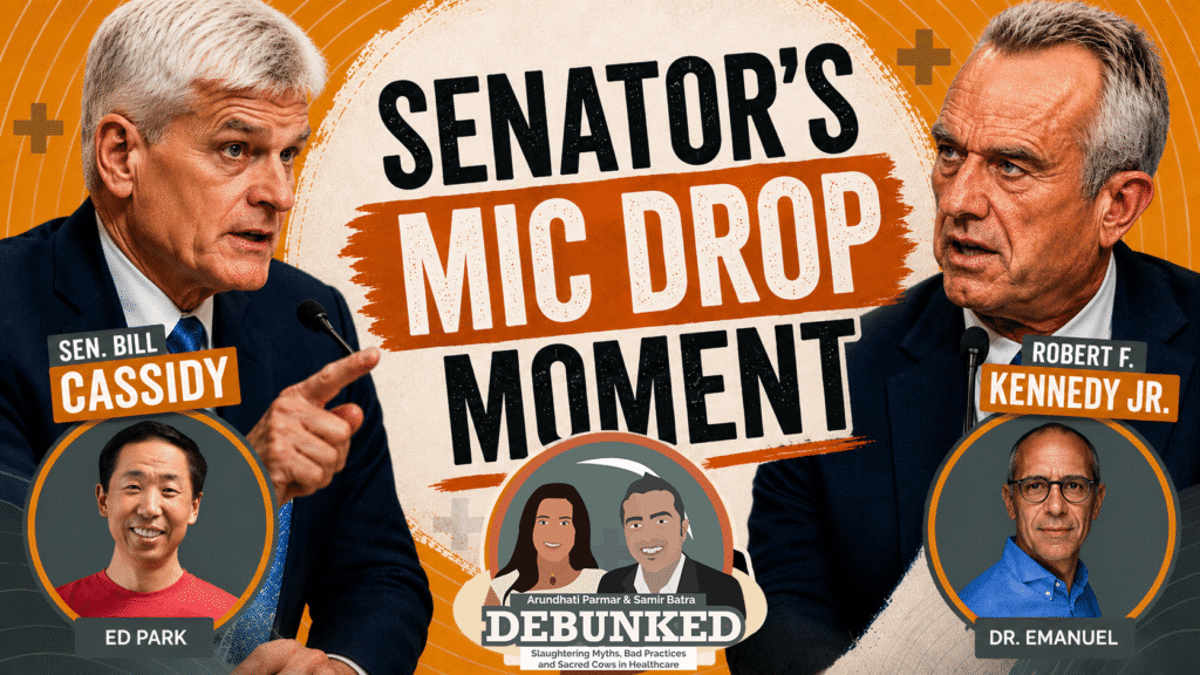
Debunked Episode 26: A Conversation on How to Improve Healthcare
Companies Mentioned
Why It Matters
The debate signals potential shifts in federal vaccine strategy and Medicare Advantage financing, both of which could reshape cost structures for millions of Americans.
Key Takeaways
- •Measles cases dropped from 2,214 to 1,923 year‑to‑year
- •Kennedy Jr. and Sen. Cassidy sparred over vaccines
- •Devoted Health CEO urges CMS to pay MA below inflation
- •Proposal calls for stable, predictable payment growth for MA plans
- •Podcast hosts highlighted drug pricing and PBM reforms as cost levers
Pulse Analysis
The resurgence of measles in the United States—2,214 cases last year and 1,923 so far this year—has reignited political scrutiny of vaccine policy. At a Senate HELP Committee hearing, HHS Secretary Robert Kennedy Jr. confronted Louisiana Republican Senator Bill Cassidy, a practicing physician, over the merits of vaccination mandates and public‑health messaging. Their exchange underscores how epidemiological data can quickly become a flashpoint in partisan debates, influencing funding allocations for disease surveillance and outreach programs.
Amid the controversy, Devoted Health co‑founder and CEO Ed Park used a high‑visibility panel at the Medicarians conference to press the Centers for Medicare & Medicaid Services for a new payment framework for Medicare Advantage (MA) plans. Park argues that CMS should index MA reimbursements to a rate below inflation, ensuring that annual payment increases remain modest and predictable. By tying payments to a lower growth ceiling, insurers could reduce premium volatility and potentially pass savings to beneficiaries, while still maintaining plan viability. This proposal reflects a broader industry push for cost‑containment mechanisms that balance fiscal responsibility with quality of care.
The podcast hosts, Arundhati Parmar and Samir Batra, expanded the conversation to systemic cost drivers such as drug pricing and pharmacy‑benefit managers (PBMs). Referencing Dr. Ezekiel Emmanuel’s Bulwark essay, they highlighted how high drug prices and opaque PBM contracts inflate overall healthcare spending. Addressing these levers could complement payment reforms in Medicare Advantage, delivering a more sustainable financing model for the U.S. health system. Stakeholders—from policymakers to insurers—are watching closely, as any regulatory shift could ripple through the market, affecting everything from prescription costs to plan enrollment strategies.
Debunked Episode 26: A Conversation on How to Improve Healthcare
Comments
Want to join the conversation?
Loading comments...