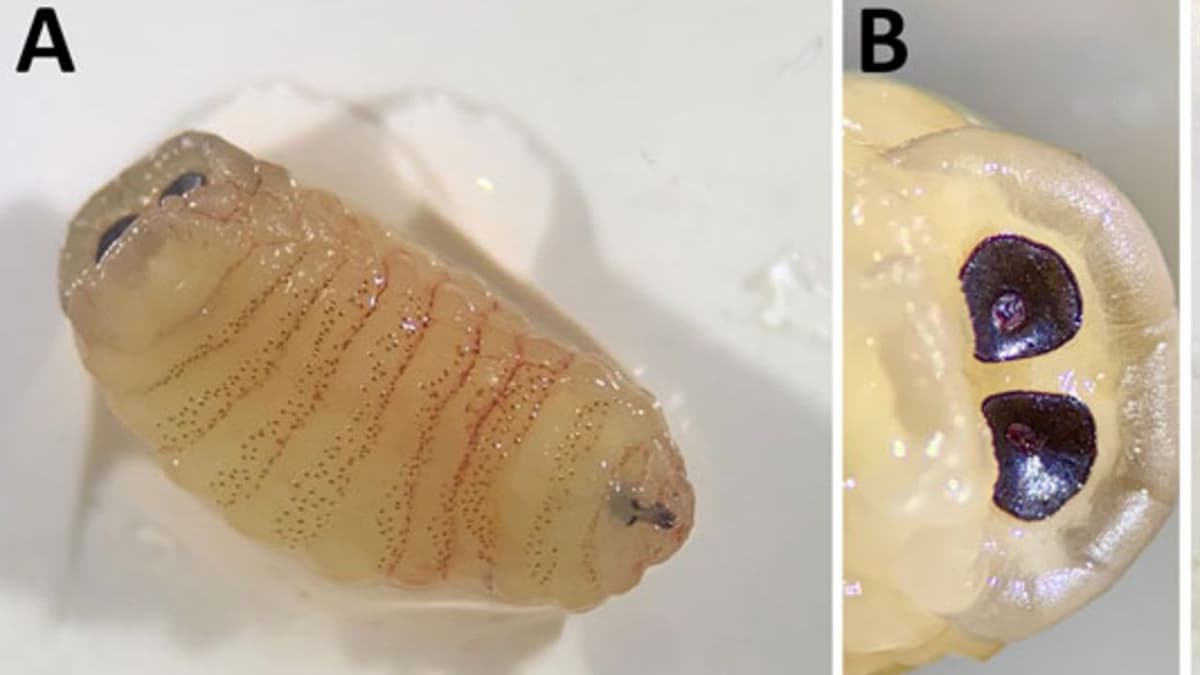
Diagnostic Dilemma: Woman's 'Biologically Implausible' Infection Led Her to Sneeze 'Worms' Out of Her Nose
Why It Matters
The case proves that Oestrus ovis can complete later life stages in humans, expanding the known zoonotic risk and urging clinicians in livestock regions to consider bot‑fly infection in atypical sinus complaints.
Key Takeaways
- •Oestrus ovis larvae extracted from woman's maxillary sinuses
- •Case shows rare human nasal myiasis with pupation
- •Deviated septum likely trapped larvae, enabling L3 development
- •Highlights need for clinician awareness in livestock regions
- •Suggests possible adaptation of bot fly to human hosts
Pulse Analysis
Sheep bot flies (Oestrus ovis) are common parasites of sheep and goats, depositing larvae in the hosts’ nostrils where they develop for weeks before exiting to pupate in the soil. Human infections are exceedingly rare and usually limited to the eye, where larvae cause conjunctival irritation. The recent Greek case breaks that pattern, documenting a full nasal infestation that advanced to the third larval stage (L3) and even pupated within the patient’s sinuses—a development previously deemed biologically implausible for mammalian hosts. This anomaly underscores the importance of understanding vector‑host dynamics beyond traditional livestock contexts.
The patient’s anatomy played a pivotal role. A severely deviated nasal septum created a physical barrier that prevented the larvae from exiting the nasal cavity, effectively turning the sinuses into a containment chamber. This allowed the parasites to progress through their life cycle stages, culminating in a pupal form that was surgically removed. Such anatomic predispositions, combined with close proximity to grazing sheep, raise diagnostic challenges for otolaryngologists who may not initially suspect a parasitic fly in sinus disease presentations. Early identification and prompt surgical extraction, complemented by decongestants, proved essential for full recovery.
From a public‑health perspective, the case signals a potential shift in zoonotic risk as climate change and livestock‑human interactions intensify. While O. ovis has not historically adapted to human hosts, the occurrence of pupation suggests possible evolutionary flexibility. Health authorities in endemic regions should incorporate bot‑fly awareness into differential diagnoses for unexplained sinus pain or nasal discharge, especially among outdoor workers. Further surveillance and case reporting will be critical to determine whether this represents an isolated incident or the emergence of a new human‑compatible parasitic pathway.
Diagnostic dilemma: Woman's 'biologically implausible' infection led her to sneeze 'worms' out of her nose
Comments
Want to join the conversation?
Loading comments...