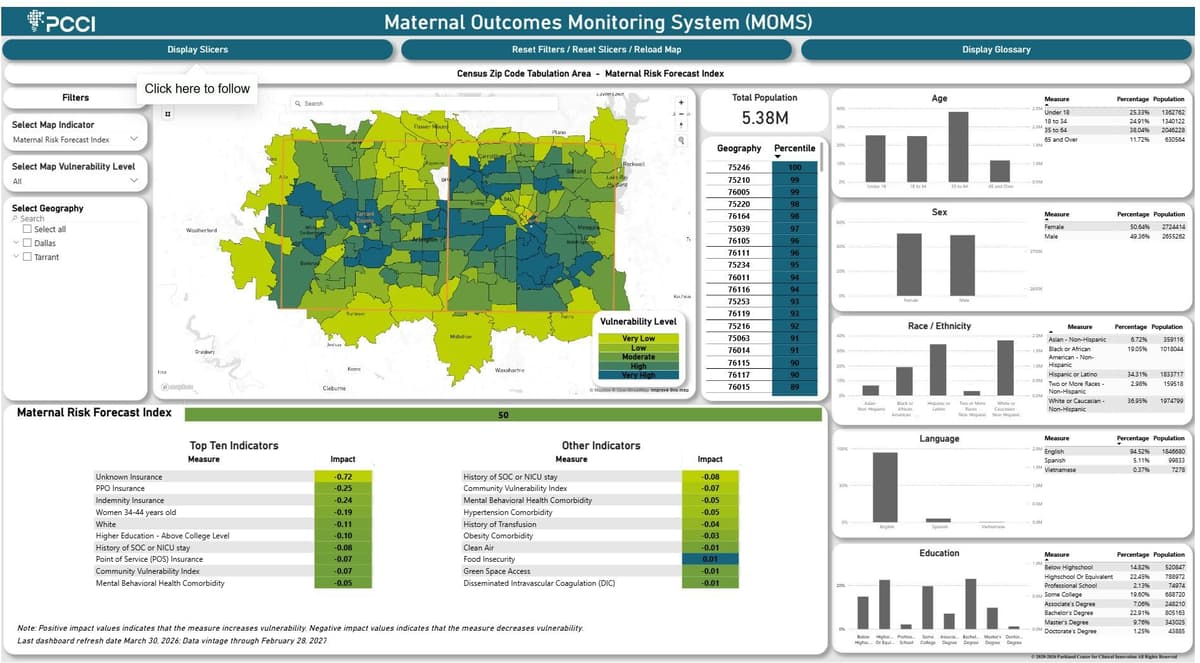
Early Warning Dashboard Targets North Texas Maternal Health Crisis
Why It Matters
Providing hyper‑local, data‑driven foresight enables providers and policymakers to allocate resources before crises erupt, addressing one of the nation’s highest maternal‑mortality rates and potentially saving lives.
Key Takeaways
- •MOMS predicts complications 12 months ahead at ZIP‑code level
- •Integrates clinical data with unemployment, stability, health‑literacy metrics
- •Identifies “hot spots” for targeted iron, mobile clinic, tele‑health
- •Public portal offers real‑time insights to hospitals and nonprofits
- •Aims to cut maternal deaths in Dallas‑Tarrant counties
Pulse Analysis
North Texas has long grappled with maternal‑health outcomes that rank among the nation’s worst, with Tarrant County reporting roughly 48 maternal deaths per 100,000 births. The disparity reflects a complex mix of clinical risk factors and entrenched social challenges—poverty, limited transportation, and low health‑literacy—that traditional hospital dashboards cannot capture. As policymakers and health systems search for solutions, data‑driven approaches that surface community‑level risk have become essential for breaking the cycle of preventable complications.
The Maternal Outcomes Monitoring System (MOMS) dashboard represents a next‑generation analytics platform that fuses granular clinical records from the DFW Hospital Foundation with non‑medical drivers of health. Leveraging algorithms originally honed on a diabetes surveillance model, MOMS generates a composite risk index at the ZIP‑code and census‑tract level, projecting severe obstetric complications and NICU admissions up to a year in advance. By geocoding nearly 100 % of pregnancies in Dallas and Tarrant counties, the tool pinpoints neighborhoods where hypertension, prior birth outcomes, and socioeconomic instability converge, delivering actionable insight that goes far beyond raw mortality statistics.
Stakeholders across the North Texas Maternal Health Accelerator are already mapping interventions to the dashboard’s hot‑spot alerts. Iron supplementation programs can be dispatched to early‑pregnancy cohorts in high‑risk tracts, mobile prenatal clinics can be stationed where clinic access is scarce, and tele‑health services can be expanded to bridge transportation gaps. The publicly available portal ensures that hospitals, nonprofits, and local officials can monitor trends in real time and evaluate the impact of each initiative. If the predictive model holds, the region could see a measurable decline in severe maternal complications, setting a replicable example for other U.S. metros confronting similar health inequities.
Early Warning Dashboard Targets North Texas Maternal Health Crisis
Comments
Want to join the conversation?
Loading comments...