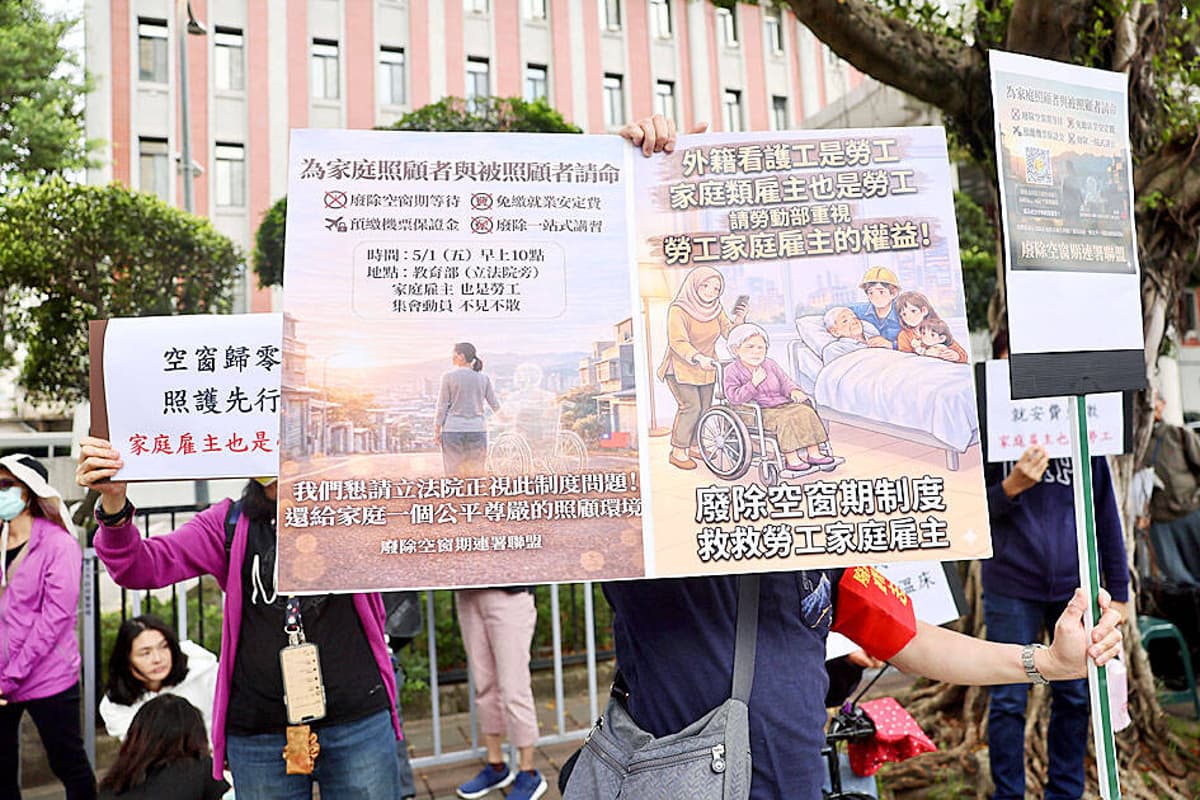
Employers Protest Unfair Migrant Caregiver System
Why It Matters
The protest highlights a growing tension between Taiwan’s expanding migrant‑worker rights and the financial strain on families needing long‑term care, potentially prompting regulatory reforms that could reshape the domestic care market.
Key Takeaways
- •Caregiver costs reach NT$40,000 (~$1,300) monthly
- •Employers face a mandatory NT$2,000 (~$67) stabilization fee
- •Wait period blocks rapid replacement of absent caregivers
- •Protest calls for prepaid airfare deposits and insurance
- •Regulations seen as tilting power toward migrant workers
Pulse Analysis
Taiwan’s aging population has driven many families to rely on migrant caregivers, but the financial model is increasingly unsustainable. Monthly expenses can exceed NT$40,000 ($1,300), covering wages, bonuses, food, accommodation and a NT$2,000 ($67) stabilization fee. When a caregiver leaves unexpectedly or is deported, employers must also shoulder airfare costs, creating a hidden liability that strains household budgets. This economic pressure has sparked a coordinated protest by an alliance of employers seeking clearer, more balanced regulations.
At the heart of the dispute is the government‑mandated replacement wait period, which can delay a family’s ability to secure a new caregiver for weeks or months. Critics argue that the policy, intended to protect workers’ rights, inadvertently empowers non‑compliant caregivers to remain in homes without accountability. The alliance’s demands include scrapping the wait period, eliminating the stabilization fee, and instituting a prepaid airfare insurance pool to cover travel costs if a worker departs legally or is repatriated. Such measures aim to shift financial risk back to the state and ensure continuity of care for vulnerable seniors.
If the Ministry of Labor adopts any of these reforms, the domestic care sector could see a shift toward greater employer confidence and potentially lower turnover rates. However, policymakers must balance these changes with Taiwan’s broader human‑rights commitments to migrant workers, ensuring that protections are not eroded. The outcome will likely influence how other East Asian economies structure their long‑term care frameworks, making Taiwan a bellwether for reconciling caregiver rights with the fiscal realities of families.
Employers protest unfair migrant caregiver system
Comments
Want to join the conversation?
Loading comments...