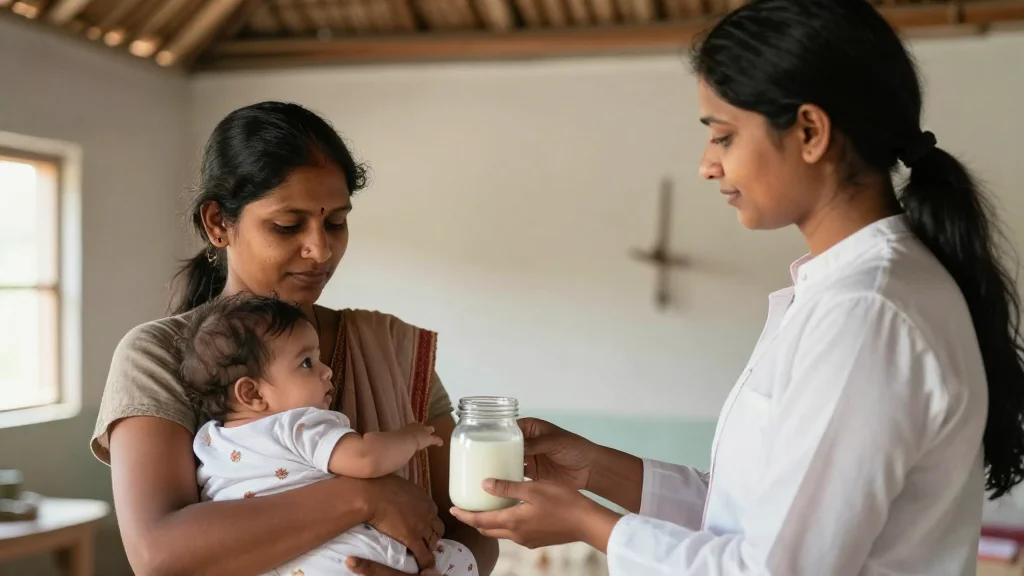
Empowering Girls, Supporting Mothers: Bayer’s Holistic Approach to Maternal and Child Health
Why It Matters
Malnutrition and anemia remain entrenched in India, threatening human capital and economic growth; a scalable, system‑strengthening approach could shift national health trajectories. Demonstrating measurable impact in high‑burden districts offers a blueprint for public‑private partnerships to address chronic nutrition gaps.
Key Takeaways
- •Bayer and Antara Foundation launch 2‑year nutrition program in 800 villages
- •Targets 1,000‑day window: pregnancy, infancy, toddlerhood, plus adolescent girls
- •Leverages existing government schemes and trains ASHA, Anganwadi, ANM workers
- •Early school sessions educate adolescent girls on nutrition and reproductive health
- •Pilot aims to prove scalable model for other high‑burden Indian districts
Pulse Analysis
India’s malnutrition crisis persists despite decades of policy effort, with roughly one‑third of children under five underweight and more than half of women anemic. These figures translate into lost productivity, higher healthcare costs, and intergenerational poverty. In this context, Bayer’s partnership with The Antara Foundation represents a strategic shift from isolated aid to integrated, community‑driven solutions that align with national health missions.
The two‑year pilot zeroes in on the 1,000‑day window, a period widely recognized by researchers as decisive for lifelong health outcomes. By coupling pregnancy nutrition, exclusive breastfeeding, and toddler feeding guidance with early education for adolescent girls, the program tackles the root causes of anemia and stunting before they manifest. Crucially, it operates inside the Integrated Child Development Services and National Health Mission frameworks, empowering frontline workers—ASHA, Anganwadi staff, and auxiliary nurse midwives—with standardized training and digital record‑keeping tools. This approach not only improves service delivery but also builds local capacity for sustained impact.
Early anecdotes, such as a trained Anganwadi worker identifying an underweight newborn and facilitating rapid referral, illustrate the model’s potential to change behavior rather than merely provide supplements. By fostering dialogue around entrenched customs—like postpartum confinement—and demonstrating practical, locally sourced nutrition solutions, the initiative encourages community ownership. If the pilot’s metrics confirm measurable gains, Bayer’s blueprint could be adapted to other high‑burden regions, offering a replicable template for public‑private collaboration that strengthens health systems while delivering tangible social returns.
Empowering girls, supporting mothers: Bayer’s holistic approach to maternal and child health
Comments
Want to join the conversation?
Loading comments...