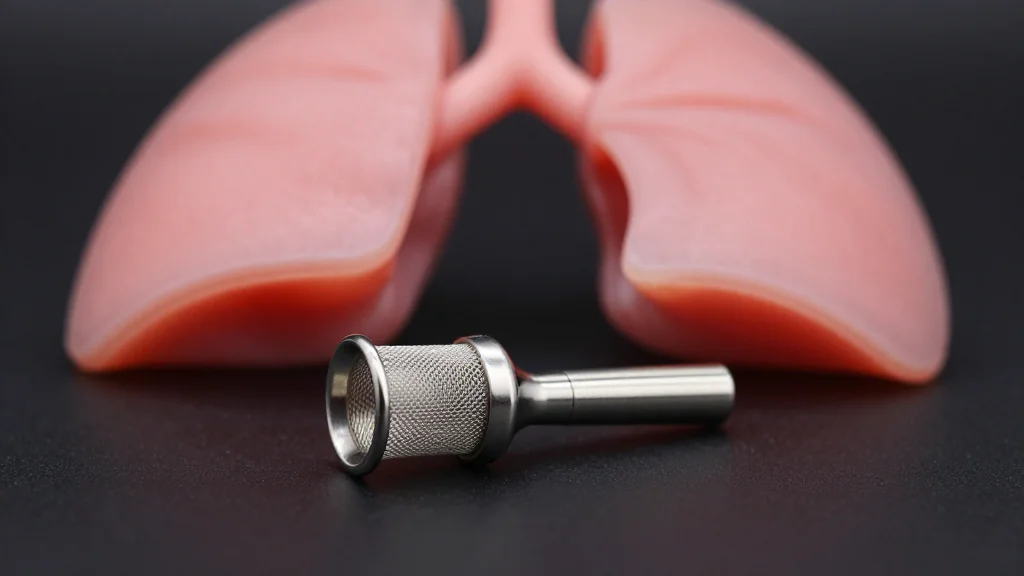
Endobronchial Valves Offer New Hope for Severe COPD Patients

Why It Matters
The Zephyr valve procedure could dramatically reduce dependence on long‑term oxygen therapy, a costly and quality‑of‑life‑limiting intervention for severe COPD patients. By restoring functional lung capacity, the therapy may lower hospital readmission rates, decrease overall healthcare expenditures, and extend patients’ productive years. Moreover, the minimally invasive nature of the treatment offers a safer alternative to surgical lung volume reduction, expanding options for patients who are too frail for major surgery. If adoption accelerates, the technology could shift the COPD treatment paradigm from symptom management toward functional restoration, prompting insurers, clinicians, and policymakers to re‑evaluate care pathways for a disease that accounts for an estimated $50 billion in annual U.S. healthcare costs.
Key Takeaways
- •Zephyr endobronchial valves have treated >40,000 patients worldwide since FDA approval in 2018
- •Nick, a 61‑year‑old severe COPD patient, walked 15,000 steps daily and stopped using oxygen after the procedure
- •COPD affects ~16 million Americans, representing a large potential market
- •Dr. Killol K. Patel cites early patient evaluation as critical for eligibility
- •Adoption may take 7‑10 years to become mainstream, according to clinicians
Pulse Analysis
The Zephyr valve’s emergence reflects a broader trend toward catheter‑based pulmonary interventions that aim to restore function without the morbidity of open surgery. Pulmonx’s first‑in‑class status gave it a head start, but competitors such as Boston Scientific and Medtronic are developing alternative bronchoscopic lung‑volume‑reduction devices, intensifying the race for market share. The key differentiator for Zephyr remains its extensive real‑world data set, which can be leveraged to negotiate favorable reimbursement rates and to influence clinical guidelines.
From a financial perspective, the therapy’s cost—estimated at $30,000‑$45,000 per procedure—must be weighed against the long‑term savings from reduced oxygen use, fewer exacerbations, and lower hospitalization frequency. Early adopters like Hackensack Meridian Health are collecting outcomes that could substantiate value‑based contracts, a model increasingly favored by Medicare Advantage plans. However, the seven‑to‑ten‑year diffusion lag highlighted by Dr. Patel suggests that payer education and robust health‑economic analyses will be decisive.
Looking forward, the next wave of growth will likely be driven by expanded indications, such as treating heterogeneous emphysema patterns and integrating valve placement with emerging AI‑guided bronchoscopic navigation. If Pulmonx can demonstrate consistent durability and safety across diverse patient cohorts, the technology could become a cornerstone of COPD management, reshaping both clinical practice and the economics of chronic lung disease care.
Endobronchial Valves Offer New Hope for Severe COPD Patients
Comments
Want to join the conversation?
Loading comments...