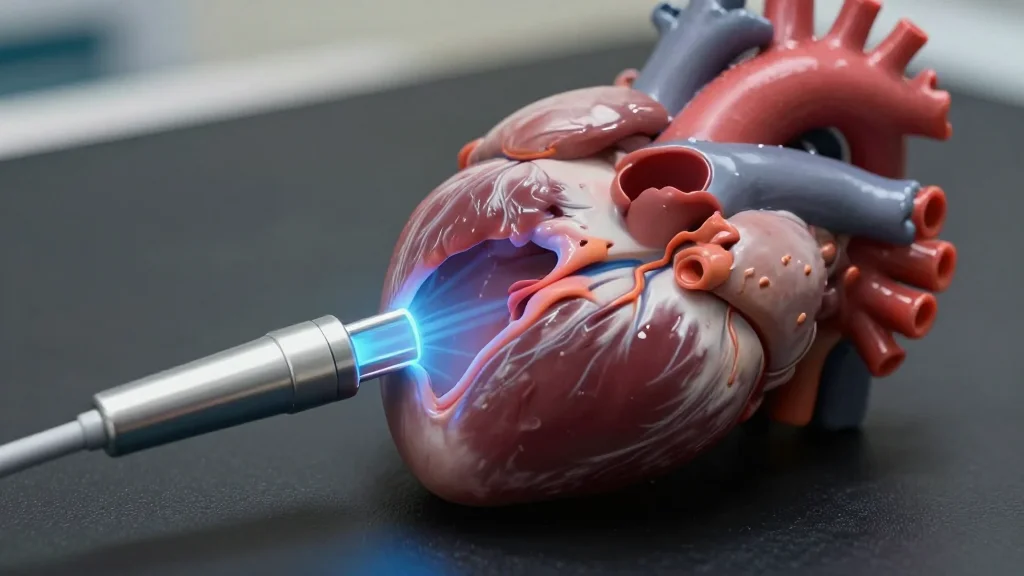
First Patients Treated in New PFA Trial
Why It Matters
If the trial confirms the early performance, the nPulse system could shorten AFib ablation procedures, lower complication rates, and accelerate FDA approval, reshaping electrophysiology practice in the United States.
Key Takeaways
- •nPulse system treats AFib with 5‑second lesion applications.
- •European study showed 96% success at 12 months, 21‑minute dwell time.
- •First U.S. patients enrolled at St. Bernards Medical Center, Arkansas.
- •PFA offers non‑thermal, ultra‑fast energy reducing collateral damage.
- •Trial aims for FDA clearance based on 6‑ and 12‑month outcomes.
Pulse Analysis
The pulse‑field ablation (PFA) platform from Pulse Biosciences represents a shift from thermal to ultra‑fast, non‑thermal energy delivery in cardiac electrophysiology. By emitting nanosecond‑scale electric fields, the nPulse system creates precise lesions without heating surrounding tissue, addressing long‑standing safety concerns such as esophageal injury and nerve damage. This technology also eliminates the need for saline cooling, reducing fluid‑overload risk and simplifying procedural logistics. As hospitals seek faster, more reproducible workflows, PFA’s five‑second applications and integrated mapping promise to streamline pulmonary vein isolation, a cornerstone of atrial fibrillation treatment.
The inaugural U.S. enrollment of seven patients at St. Bernards Medical Center marks the first real‑world test of the NANOPULSE‑AF pivotal trial. Early data echo the European feasibility study, which reported a median left‑atrial dwell time of 21 minutes and overall procedure durations near 65 minutes—substantially shorter than the 2‑ to 3‑hour averages of conventional radiofrequency or cryoballoon ablations. Moreover, the European cohort achieved a 96 % procedural success rate at 12 months and 100 % acute isolation, far surpassing the typical 20‑25 % recurrence seen with thermal methods. These metrics suggest the nPulse system could improve both efficiency and long‑term efficacy.
If the six‑ and twelve‑month endpoints confirm safety and durability, Pulse Biosciences will likely pursue FDA clearance, positioning nPulse as one of the first commercially viable PFA platforms in the United States. A cleared device could accelerate adoption across electrophysiology labs, especially in high‑volume centers where procedure time translates directly into revenue and patient throughput. The technology also aligns with a broader industry trend toward minimally invasive, tissue‑preserving therapies that reduce hospital stays and post‑procedure complications. Ultimately, successful regulatory approval could reshape the AFib ablation market, prompting competitors to accelerate their own PFA development pipelines.
First patients treated in new PFA trial
Comments
Want to join the conversation?
Loading comments...