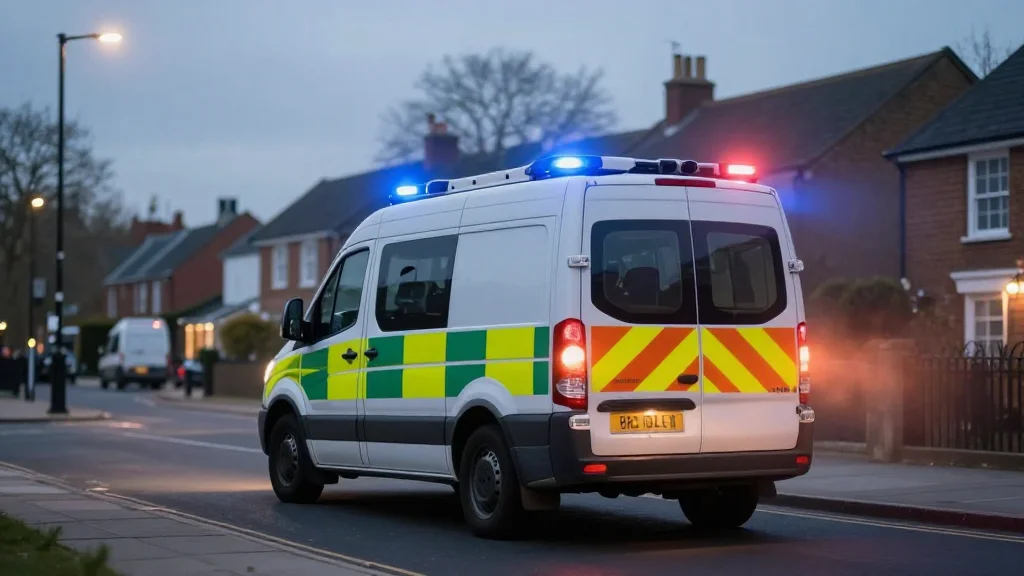
Four Hatzola Ambulances Torched in Golders Green, Police Probe Antisemitic Hate Crime

Why It Matters
The arson attack on Hatzola’s ambulances strikes at the intersection of public health and community security. Hatzola’s fleet provides rapid medical assistance to residents regardless of faith, and any disruption to its operations could leave gaps in emergency response, especially in densely populated London boroughs. Moreover, the incident underscores a broader surge in antisemitic hate crimes that threatens the safety of minority communities and strains law‑enforcement resources. Beyond the immediate impact on health services, the alleged involvement of a radical group with ties to Iran‑backed networks highlights how geopolitical conflicts are spilling over into domestic security challenges. If foreign‑state actors are indeed influencing or funding such attacks, policymakers may need to reassess counter‑terrorism strategies, allocate additional funding for community protection, and strengthen intelligence cooperation across European borders.
Key Takeaways
- •Four Hatzola volunteer ambulances were set on fire in Golders Green, London.
- •Metropolitan Police are investigating the arson as an antisemitic hate crime.
- •Harakat Ashab al‑Yamin al‑Islamiyya claimed responsibility, echoing Iran‑linked extremist rhetoric.
- •Community Security Trust logs >300 antisemitic incidents per month in the UK.
- •Recent European attacks include synagogue bombings in Liège and Rotterdam, and a school arson in Amsterdam.
Pulse Analysis
The Golders Green arson illustrates how extremist ideologies can weaponize community services that are otherwise neutral and life‑saving. Hatzola’s model—volunteer‑run, open‑to‑all—has long been praised for its inclusivity, yet its overt Jewish identity makes it a symbolic target for hate groups seeking to intimidate the broader community. The immediate fallout will likely be a surge in security spending for volunteer emergency fleets, a trend already evident in other European cities where synagogue guards and CCTV installations have become commonplace. This added cost could strain charitable budgets and force a re‑evaluation of how volunteer health services are funded and protected.
Geopolitically, the incident feeds into a narrative that the Israel‑Iran confrontation is no longer confined to the Middle East. The alleged claim by Harakat Ashab al‑Yamin al‑Islamiyya, a group whose communications mirror those of Hezbollah, suggests a diffusion of state‑sponsored propaganda into grassroots terror cells across Europe. Western intelligence agencies may need to broaden their threat models to include low‑tech arson attacks on community assets as part of a larger strategy to destabilize societies and erode public confidence in safety nets.
Finally, the attack could catalyze a stronger coalition between Jewish organizations and broader civil‑rights groups. By framing the incident as an attack on public health infrastructure rather than solely a religious hate crime, advocates can build cross‑community alliances that pressure governments to enact more robust hate‑crime legislation and allocate resources for protective measures. The next few weeks will be critical: police findings, community responses, and any diplomatic fallout will shape how the UK and its European partners address the twin challenges of hate‑motivated violence and the safeguarding of essential volunteer services.
Four Hatzola Ambulances Torched in Golders Green, Police Probe Antisemitic Hate Crime
Comments
Want to join the conversation?
Loading comments...