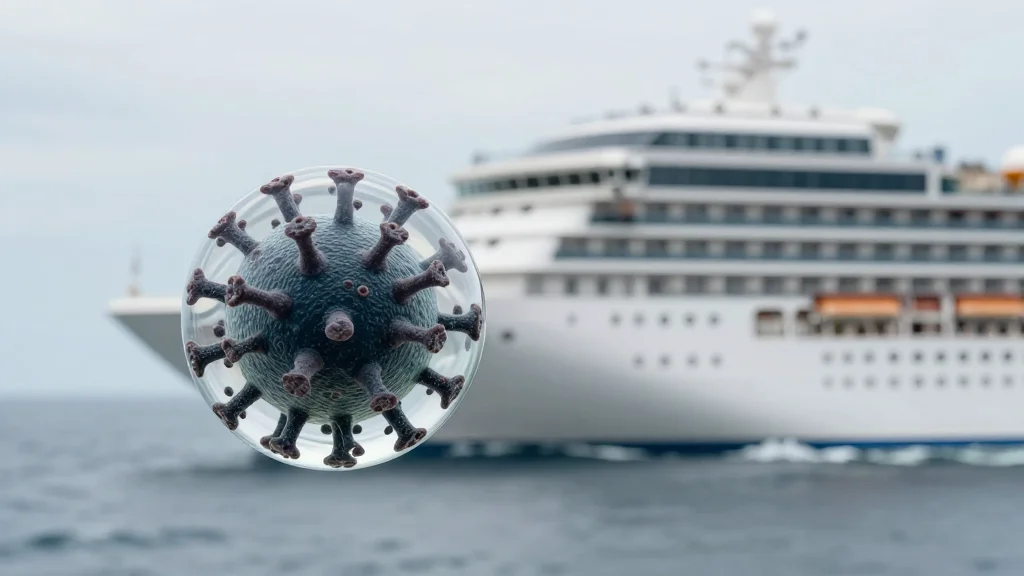
Hantavirus Outbreak on MV Hondius Triggers Cruise Schedule Delays and Expert Reassurance

Why It Matters
The hantavirus episode underscores how quickly a rare zoonotic disease can become a global public‑health concern when it intersects with high‑density travel environments. It forces regulators to revisit quarantine standards for cruise ships, a sector that has already faced scrutiny after COVID‑19 and recent norovirus incidents. Moreover, the coordinated international response—spanning Europe, Australia and the United States—demonstrates the growing capacity for rapid, cross‑border containment of emerging pathogens. For travelers, the outbreak highlights the importance of transparent health communication and the need for robust onboard medical capabilities. For the industry, it may accelerate investments in air filtration, real‑time health monitoring and pre‑boarding screening, reshaping the business model of cruise tourism in a post‑pandemic world.
Key Takeaways
- •MV Hondius reported 10 hantavirus infections, including three deaths, prompting itinerary cancellations.
- •The virus identified is the Andes strain, historically limited to South America and rarely transmissible between humans.
- •Genomic sequencing shows the strain is "virtually identical" to known variants, with no new mutations detected.
- •Six passengers were flown to Australia in full PPE for a three‑week quarantine; additional passengers detained in Italy despite negative tests.
- •The ship will undergo full decontamination in Rotterdam before any future voyages, setting a potential new industry benchmark.
Pulse Analysis
The Hondius outbreak is a textbook case of how a zoonotic pathogen can exploit the unique vulnerabilities of cruise ships—high passenger density, shared ventilation, and prolonged close contact. While the Andes strain’s capacity for limited person‑to‑person spread has been documented, the rapid mobilization of quarantine resources across continents suggests that health authorities have internalized lessons from COVID‑19. The decision to transport asymptomatic passengers in full protective gear, rather than rely on standard commercial flights, reflects a risk‑averse posture that may become the norm for future outbreaks.
From a market perspective, the incident could accelerate a shift toward higher‑priced, health‑focused cruise products. Operators may begin to market enhanced bio‑security certifications, similar to airline HEPA‑filter standards, as a differentiator. This could also spur consolidation, as smaller lines lacking the capital to retrofit ships may exit the market or be acquired by larger players with deeper balance sheets.
Looking ahead, the key variable will be the speed and transparency of data sharing. If the WHO and national agencies can provide real‑time sequencing updates and clear guidance on transmission risk, passenger confidence can be restored more quickly. Conversely, opaque communication could reignite the fear cycle that has plagued the industry since 2020. The Hondius case will likely become a reference point in future policy debates about mandatory health certifications for cruise vessels and the role of international coordination in outbreak containment.
Hantavirus Outbreak on MV Hondius Triggers Cruise Schedule Delays and Expert Reassurance
Comments
Want to join the conversation?
Loading comments...