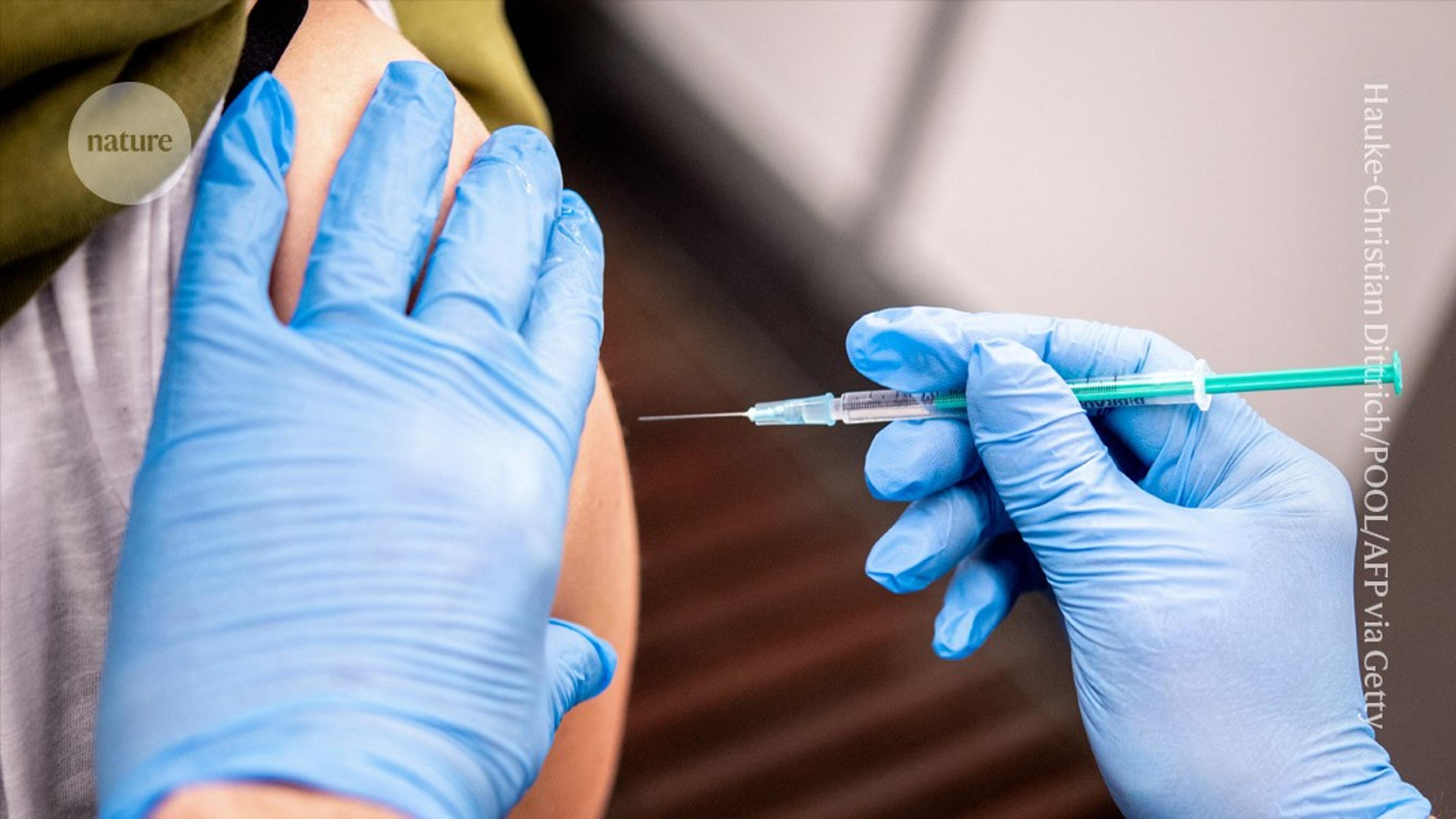
How some COVID Vaccines Triggered Rare Blood-Clot Disorder
•February 12, 2026
0
Why It Matters
Identifying the precise immune mechanism enables targeted risk assessment and informs safer vaccine designs, helping restore public confidence in adenoviral platforms.
Key Takeaways
- •VITT linked to adenovirus vector vaccines.
- •Mutation swaps lysine for glutamic acid in antibodies.
- •Up to 60% carry gene variant predisposing risk.
- •Engineered antibodies without mutation reduced mouse clots.
- •Findings may guide personalized vaccine recommendations.
Pulse Analysis
The rare clotting syndrome VITT emerged as a flashpoint during the global COVID‑19 vaccination campaign, prompting several countries to revise their rollout strategies. While adenovirus‑based vaccines from Johnson & Johnson and AstraZeneca proved highly effective at preventing severe disease, post‑marketing surveillance identified a small but serious adverse event—immune‑mediated thrombosis—occurring in roughly one to three per 100,000 recipients. This backdrop set the stage for intensive research into the underlying immunology, culminating in a New England Journal of Medicine paper that maps the disorder to a precise molecular misfire.
At the heart of the discovery is an antibody‑producing cell mutation that swaps a positively charged lysine for a negatively charged glutamic acid. This subtle amino‑acid change reshapes the antibody’s binding site, causing it to recognize platelet factor 4 (PF4) instead of the intended adenoviral protein pVII. The researchers estimate that up to 60 % of the population carries the genetic variant that predisposes them to generate the initial anti‑pVII response, but only a subset with the lysine‑to‑glutamic‑acid switch develop VITT. Laboratory models confirmed that correcting this mutation dramatically lowered clot formation in mice, providing functional proof of concept.
The implications extend beyond a single adverse event. By linking a specific genetic and molecular signature to VITT, the findings open pathways for pre‑vaccination screening, refined vector engineering, and the development of therapeutic antibodies that neutralize the rogue anti‑PF4 response. Health authorities can leverage this knowledge to tailor vaccine recommendations for high‑risk groups, while manufacturers may explore alternative delivery platforms that bypass the problematic adenoviral component. Ultimately, the work reinforces the importance of post‑market pharmacovigilance and illustrates how deep immunological insight can translate into safer, more trusted public‑health interventions.
How some COVID vaccines triggered rare blood-clot disorder
NEWS · 12 February 2026
How some COVID vaccines triggered rare blood‑clot disorder
By Mohana Basu
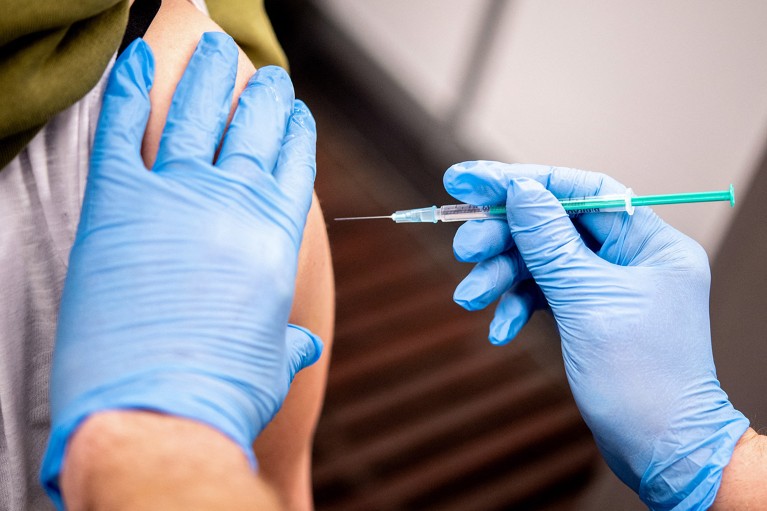
Many countries changed their advice about who should have the AstraZeneca vaccine (pictured) following reports it could trigger a rare blood‑clotting disorder. Credit: Hauke‑Christian Dittrich/POOL/AFP via Getty
Researchers have uncovered the molecular trigger for a rare but potentially deadly clotting disorder that some people experienced after receiving some COVID‑19 vaccines. The findings were published in The New England Journal of Medicine yesterday.
About one in 200,000 people developed vaccine‑induced immune thrombocytopenia and thrombosis (VITT), as the syndrome became known, after receiving a vaccine made by Johnson & Johnson in the United States. The rare condition was also reported in about 3 out of every 100,000 people who received the vaccine made by AstraZeneca in the United Kingdom. Both vaccines used a modified version of an adenovirus, a type of virus known to cause the common cold, to carry the gene for part of the SARS‑CoV‑2 virus into human cells. This triggered the immune system to create antibodies against SARS‑CoV‑2.
Although the vaccines were generally safe and reduced the risk of severe COVID‑19 for most people, a small number of cases of VITT were documented worldwide. This led to several governments changing their vaccine recommendations. For example, in 2021 the UK government advised people under 40, who had a slightly higher risk of VITT, to have an alternative vaccine.
First clues
In 2021, researchers reported that the antibodies in people with VITT were attacking a naturally occurring blood‑clotting protein called platelet factor 4 (PF4).
In the latest study, the researchers suggest that when people with a specific gene variant (up to 60 % of the population) encounter an adenovirus — either through vaccination or natural infection — their immune system produces antibodies against an adenovirus protein called pVII. For almost everyone, this response is harmless.
But the team suggests that a subset of people have a mutation in their antibody‑producing immune cells in which a positively charged amino acid known as lysine (K) is swapped out for a negatively charged one known as glutamic acid (E). This tiny chemical change reshapes the antibody so that it binds to PF4 instead of pVII.
If these people had previously been exposed to the adenovirus in the vaccine, the authors hypothesize that the vaccination triggered an explosion of their anti‑PF4 antibodies, leading to severe clotting and a drop in platelets.
“This is the first time we’ve been able to trace an autoimmune disorder back to the original triggering event,” says co‑author Tom Gordon, an immunopathologist at Flinders University in Adelaide, Australia.
When the team engineered versions of the anti‑PF4 antibodies without the amino‑acid change and tested them in mice, the animals developed many fewer clots. The study looked at samples from 21 people who developed VITT — all of them had the mutation.
The problem was not with the vaccine design, says Gordon, but a series of unlikely events that triggered the clotting disorder.
Nature has contacted AstraZeneca and Johnson & Johnson for comment on the study results.
References
-
Wang, J. J. et al. N. Engl. J. Med. 394, 669–683 (2026).
DOI: https://doi.org/10.1056/NEJMoa2514824
-
Greinacher, A. et al. N. Engl. J. Med. 384, 2092–2101 (2021).
doi: https://doi.org/10.1038/d41586-026-00457-4
0
Comments
Want to join the conversation?
Loading comments...