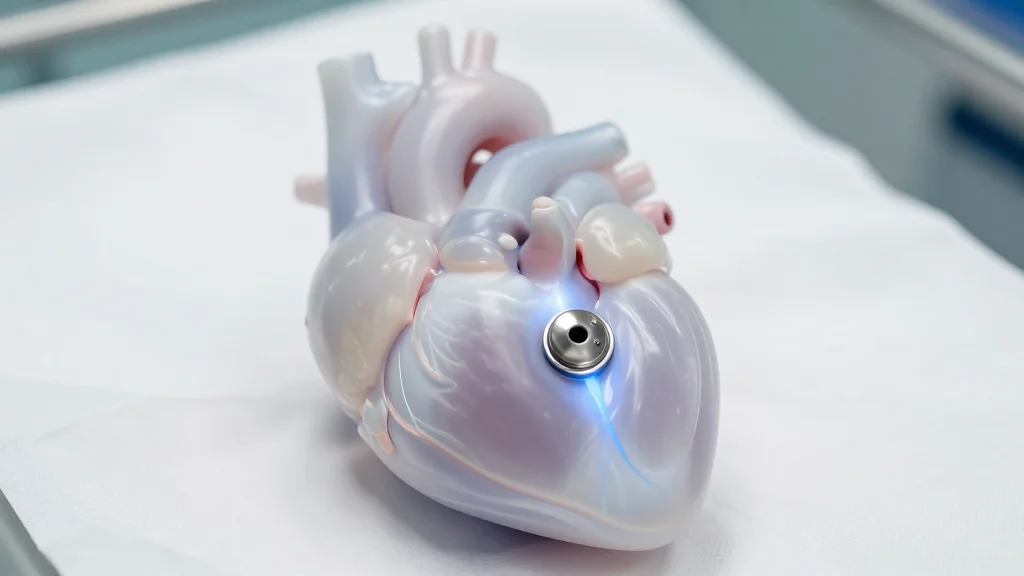
How TAVR Valve Implant Depth Impacts Clinical Outcomes
Why It Matters
Optimizing TAVR implant depth can cut costly complications like pacemaker implantation while preserving safety, a critical factor as the procedure moves into lower‑risk, younger populations.
Key Takeaways
- •Higher TAVR implantation depth reduces pacemaker and LBBB rates
- •One-year mortality and stroke rates remain ~9.7% across depths
- •Operators overestimate implant depth by ~2 mm versus core lab
- •No difference in gradients or valve area across implantation positions
- •Higher positioning shortens stay and reduces repositioning maneuvers
Pulse Analysis
Transcatheter aortic valve replacement has become a mainstay for treating severe aortic stenosis, but procedural nuances still shape outcomes. Recent data from a multi‑center cohort underscore that positioning the valve slightly higher—closer to the annulus—does not compromise hemodynamics; mean gradients and effective orifice areas remain consistent across depths. More importantly, the study links higher placement to a marked reduction in permanent pacemaker implantation and new left‑bundle branch block, two complications that drive post‑procedure morbidity and long‑term healthcare costs.
The analysis also reveals a systematic bias in operator‑reported implant depth, with clinicians estimating the valve to sit roughly 2 mm higher than core‑lab measurements. This discrepancy emphasizes the need for uniform imaging protocols, such as standardized fluoroscopic angles and post‑deployment CT, to ensure accurate depth assessment and reproducible results. By minimizing unnecessary repositioning maneuvers, higher implantation correlates with shorter hospital stays, translating into immediate economic benefits for hospitals and insurers alike.
Looking ahead, the findings raise pivotal questions for the evolving TAVR landscape. As the technology expands into younger, lower‑risk cohorts, the balance between early safety advantages and potential challenges for future coronary access or valve‑in‑valve procedures becomes paramount. Ongoing trials must evaluate whether the observed early benefits persist over a decade, influencing valve durability and the feasibility of redo interventions. Clear, evidence‑based guidelines on optimal implant depth could soon become a cornerstone of TAVR training and quality‑control programs, shaping both clinical practice and device innovation.
How TAVR valve implant depth impacts clinical outcomes
Comments
Want to join the conversation?
Loading comments...