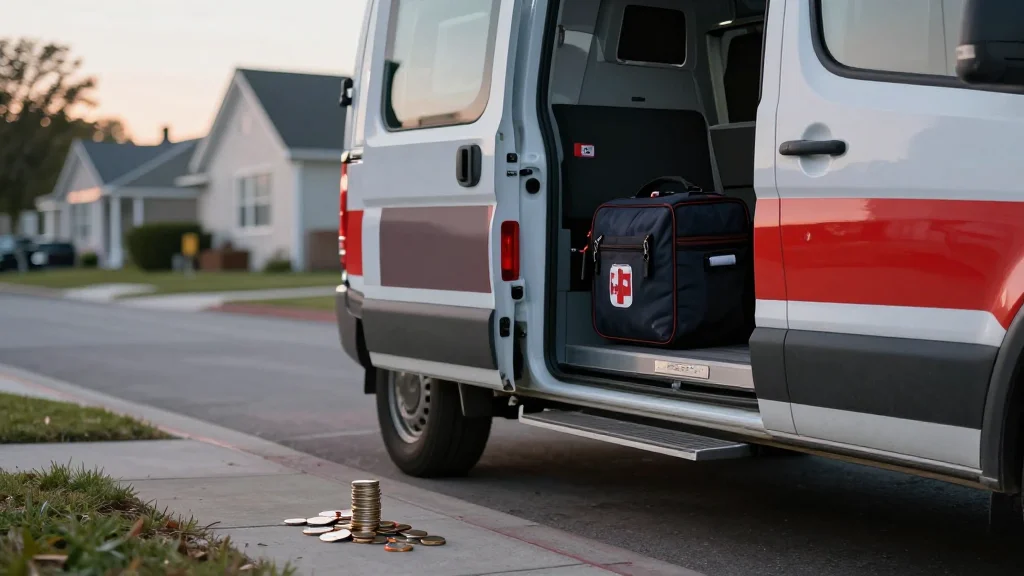
Ill. FD Raises Fees for Repeated Non-Emergency EMS Calls
Why It Matters
By attaching costs to non‑medical EMS usage, Schaumburg seeks to preserve ambulance availability for true emergencies and encourage alternative assistance pathways, a move that could reshape how municipalities manage public safety budgets.
Key Takeaways
- •Fees start at $100 for 11th non-transport call
- •Charges rise to $250 for 12th, $325 thereafter
- •Policy aims to curb non‑medical lift‑assist requests
- •Similar fee structures exist in nearby Illinois suburbs
Pulse Analysis
Emergency medical services across the United States face mounting pressure from non‑clinical calls that divert ambulances from life‑saving missions. Lift‑assist requests, misplaced‑item retrievals, and other household‑help inquiries have surged in suburban areas, inflating response times and increasing operational costs. Municipalities are therefore exploring demand‑management tools, ranging from public education campaigns to financial disincentives, to protect the integrity of emergency response systems.
Schaumburg’s latest initiative introduces a tiered fee model that activates after ten non‑transport calls in a calendar year, with charges escalating from $100 to $325 per incident. Fire Chief Fabio Puccini highlighted that the measure is not revenue‑driven but intended to redirect residents toward social‑service channels better equipped for non‑medical assistance. The village’s approach mirrors policies already in place in Hoffman Estates and Arlington Heights, where similar fee structures have reportedly reduced repeat lift‑assist calls and freed up ambulance capacity for critical emergencies.
The broader implications extend beyond budgetary considerations. While the fees may curb frivolous calls, they also raise equity concerns for low‑income residents who might lack alternative support options. Policymakers must balance deterrence with accessibility, potentially pairing fees with expanded community‑based services. As more jurisdictions experiment with cost‑based triage, the industry will watch closely to gauge effectiveness, public reception, and any unintended consequences on health outcomes and EMS utilization patterns.
Ill. FD raises fees for repeated non-emergency EMS calls
Comments
Want to join the conversation?
Loading comments...