Inflammation Common in HF, No Matter the Ejection Fraction: POSEIDON
Why It Matters
Inflammation emerges as a common driver of heart‑failure progression across all ejection‑fraction categories, expanding the potential market for targeted anti‑inflammatory therapies and risk‑stratification tools.
Key Takeaways
- •~39% of HF patients show hs‑CRP ≥2 mg/L across all EF types
- •Smoking, obesity, low eGFR and higher NYHA class predict high hs‑CRP
- •IL‑6 levels are similarly elevated in HFrEF, HFmrEF, HFpEF
- •Inflammatory risk profile mirrors a cardio‑kidney‑metabolic phenotype
- •Study size (≈12,000 HF cases) offers real‑world therapy eligibility estimate
Pulse Analysis
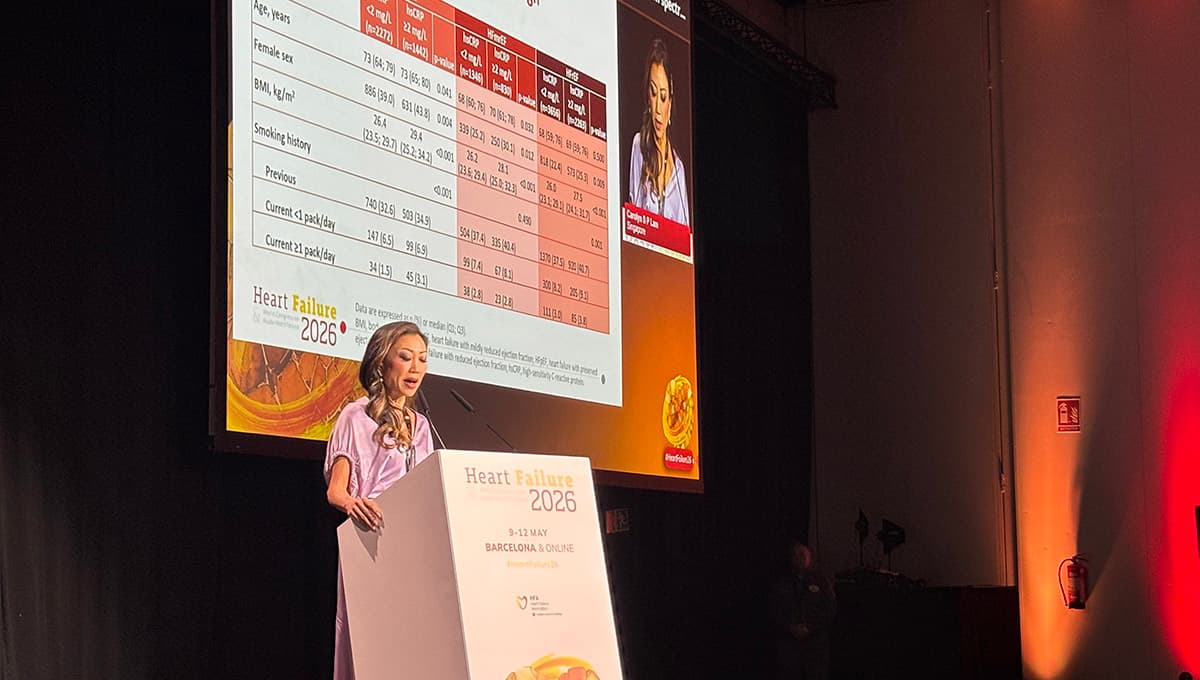
Inflammation has long been recognized as a contributor to heart‑failure progression, but most prior work focused on HFpEF, where comorbidities such as obesity and hypertension were thought to drive a chronic inflammatory state. Retrospective and region‑specific cohorts left clinicians uncertain whether this pattern held true for reduced‑ejection‑fraction disease. The POSEIDON study, presented at ESC Heart Failure 2026, fills that gap by enrolling a diverse, multinational sample of 11,809 symptomatic HF patients and measuring systemic inflammation with high‑sensitivity C‑reactive protein and interleukin‑6. Its findings overturn the conventional wisdom: roughly 38‑39% of patients in each EF subgroup—HFrEF, HFmrEF and HFpEF—exhibit elevated hs‑CRP, and IL‑6 concentrations are uniformly raised, indicating a shared inflammatory pathway across the spectrum.
Beyond prevalence, POSEIDON identifies consistent predictors of high inflammatory burden: current or former smoking, obesity, reduced kidney function, dyslipidemia and more severe NYHA class. These factors coalesce into a cardio‑kidney‑metabolic phenotype that transcends ejection‑fraction categories, suggesting that clinicians could use simple clinical variables alongside hs‑CRP to flag high‑risk patients. The study’s multivariable analysis also highlights that body‑mass index is especially linked to inflammation in HFpEF, hinting at phenotype‑specific nuances that may inform personalized treatment.
The practical implications are twofold. First, the sizable proportion of HF patients with systemic inflammation creates a broad target for emerging anti‑inflammatory agents, including IL‑6 blockers and novel SGLT2‑based strategies. Second, the cross‑sectional nature of POSEIDON underscores the need for longitudinal trials to determine whether lowering hs‑CRP translates into reduced hospitalizations or mortality. As the field moves toward precision cardiology, integrating inflammatory biomarkers into risk models could refine therapeutic selection and accelerate the development of disease‑modifying interventions for heart failure.
Inflammation Common in HF, No Matter the Ejection Fraction: POSEIDON
Comments
Want to join the conversation?
Loading comments...