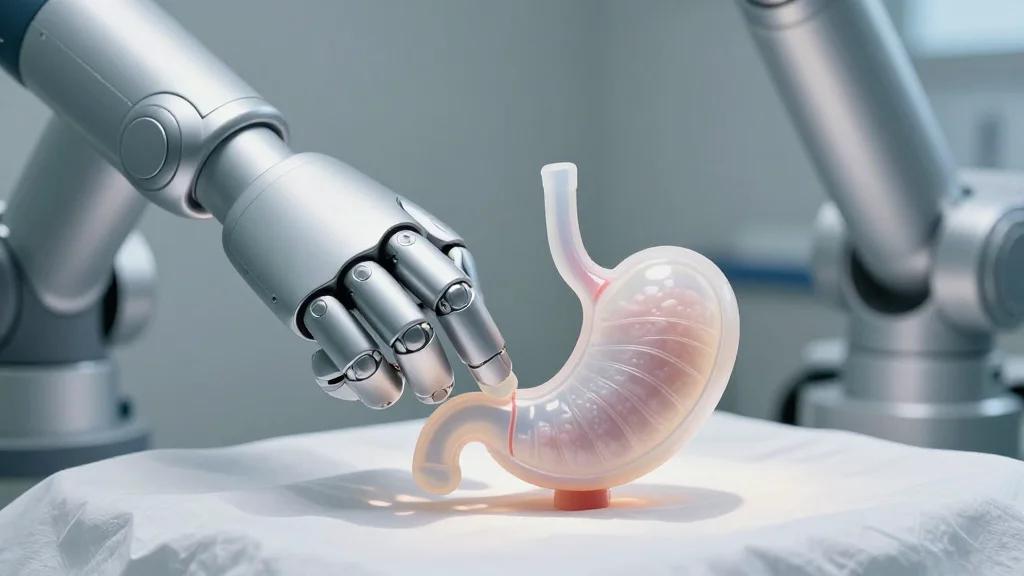
Johnson & Johnson’s Ottava System Completes First Robotic Gastric Bypass

Companies Mentioned
Why It Matters
The successful gastric bypass demonstrates that Ottava can handle one of the most technically demanding bariatric procedures, a prerequisite for broader clinical acceptance. A positive FDA decision would give Johnson & Johnson a foothold in a segment historically dominated by a few players, potentially reshaping the competitive dynamics of surgical robotics. For hospitals, a new platform could introduce pricing competition and alternative training pathways, influencing procurement strategies and ultimately patient access to minimally invasive surgery. From an investor perspective, the milestone adds a tangible growth catalyst to Johnson & Johnson’s MedTech narrative. If Ottava achieves commercial scale, it could diversify the company’s revenue streams beyond pharmaceuticals and consumer health, aligning with broader industry trends toward integrated digital health solutions.
Key Takeaways
- •Ottava completed its first fully robotic gastric bypass with no conversions
- •All procedures were performed robotically, indicating early clinical viability
- •Johnson & Johnson has filed an FDA De Novo application to seek clearance
- •The system aims to compete with Intuitive Surgical’s da Vinci and Medtronic’s Hugo
- •J&J stock trades near $225.55, reflecting a 50.1% 1‑year return
Pulse Analysis
Johnson & Johnson’s entry into the surgical robotics arena reflects a strategic pivot toward high‑margin MedTech offerings. Historically, the company’s growth has been anchored in pharmaceuticals, but the Ottava platform signals an intent to capture a share of the expanding robotic surgery market, which is projected to grow at double‑digit rates over the next decade. The first gastric bypass serves as a proof point that could accelerate the De Novo review, but the real test will be whether Ottava can achieve cost parity or superiority relative to da Vinci, which commands premium pricing and a deep installed base.
Competitive pressure will likely intensify as Intuitive Surgical and Medtronic respond with incremental upgrades and bundled service contracts. Johnson & Johnson’s advantage may lie in its broader ecosystem, including its existing relationships with hospitals through wound care, orthopedics, and interventional devices. Leveraging cross‑selling opportunities could lower total cost of ownership for buyers, a compelling argument in an environment where capital expenditures are scrutinized.
Looking ahead, the speed of adoption will hinge on two factors: regulatory clearance and the ability to demonstrate measurable clinical outcomes, such as reduced operative time or lower complication rates. If Ottava can deliver data that translates into reimbursement incentives, it could quickly move from a niche bariatric tool to a platform for a suite of upper abdominal procedures. That trajectory would not only diversify Johnson & Johnson’s revenue mix but also pressure incumbents to innovate or adjust pricing, potentially reshaping the economics of robotic surgery for the next decade.
Johnson & Johnson’s Ottava System Completes First Robotic Gastric Bypass
Comments
Want to join the conversation?
Loading comments...