KLAS Releases 2026 Patient Financing Services Report Examining Recourse Vs. Nonrecourse Offerings
Why It Matters
The transition reshapes hospitals' balance sheets by moving bad‑debt risk off‑site, enabling faster revenue cycles and broader patient access. Providers must choose models that align with their risk tolerance and financial strategy.
Key Takeaways
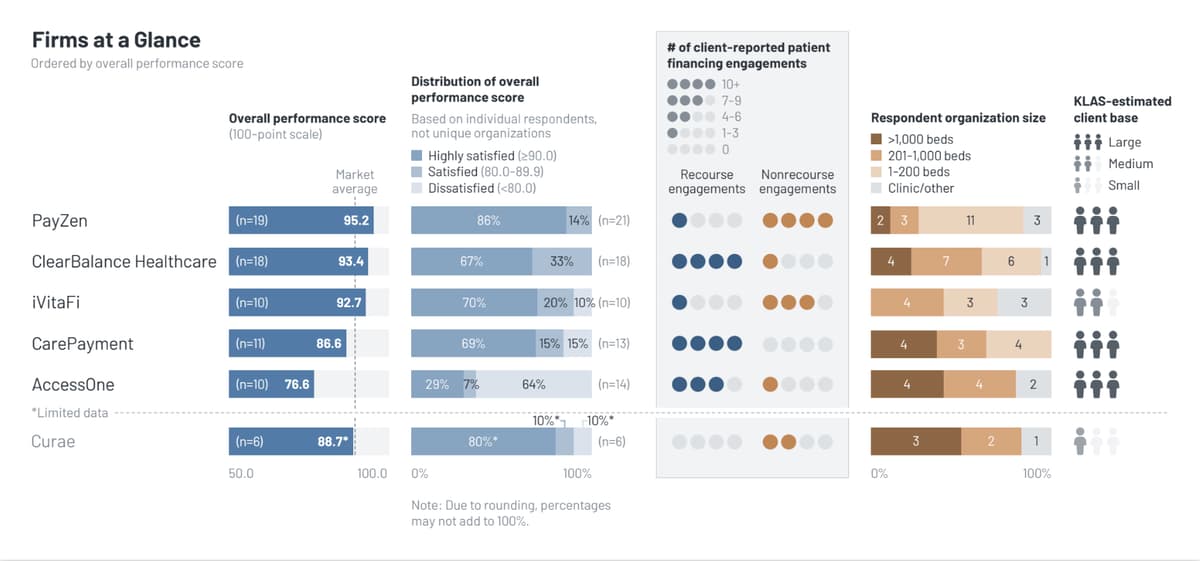
- •PayZen leads with 95.2 score using nonrecourse model
- •Nonrecourse financing transfers default risk, ensures predictable cash flow
- •Recourse models offer lower fees and broader patient eligibility
- •ClearBalance scores 93.4 with flexible recourse plans
Pulse Analysis
The KLAS 2026 report signals a structural realignment in patient financing, driven by providers’ desire to offload credit risk while preserving affordability for patients. Recourse financing, long favored for its lower program fees, still obligates hospitals to absorb defaults, creating volatility in accounts receivable. By contrast, nonrecourse solutions shift that exposure to fintech partners, delivering immediate cash settlements and simplifying accounting. This risk‑transfer dynamic is gaining traction as health systems confront tighter margins and heightened regulatory scrutiny over patient debt.
Vendor performance data reinforces the market’s bifurcation. PayZen, with a 95.2 KLAS score, dominates the nonrecourse segment, lauded for seamless technology, transparent reporting, and multichannel engagement that accelerates payment collection. iVitaFi and Curae also rank highly, emphasizing predictable cash flow and reduced collection burdens despite higher fees. On the recourse side, ClearBalance shines with a 93.4 score, offering tiered plans and low recourse rates that appeal to institutions prioritizing lower program costs and broader eligibility. CarePayment and AccessOne illustrate the spectrum of satisfaction, where leadership turnover can erode client confidence.
For healthcare executives, the report’s insights translate into strategic imperatives. Selecting a nonrecourse partner can improve liquidity and reduce bad‑debt write‑offs, but cost structures must be weighed against margin pressures. Recourse options remain attractive for organizations seeking lower fees and extensive patient coverage, provided they have robust internal collection capabilities. As fintech innovation accelerates, providers will likely adopt hybrid models, leveraging data analytics to balance risk, cost, and patient experience, shaping the next wave of financing solutions in the U.S. healthcare ecosystem.
KLAS Releases 2026 Patient Financing Services Report Examining Recourse vs. Nonrecourse Offerings
Comments
Want to join the conversation?
Loading comments...