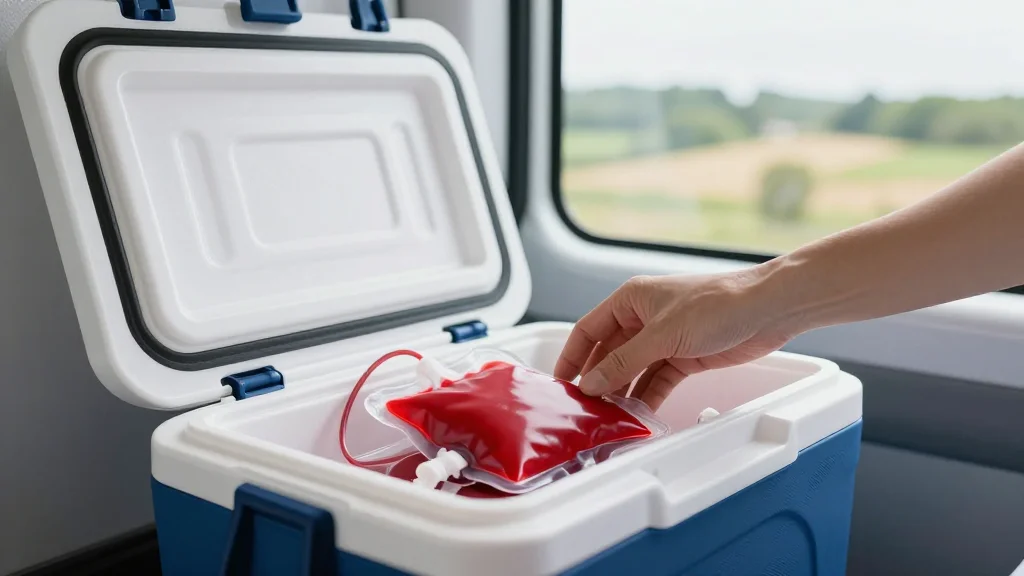
Md. County Debates Grant-Funded Whole Blood Program for EMS
Why It Matters
The decision will determine whether rural EMS can gain a proven tool to reduce pre‑hospital trauma mortality, while also setting a precedent for how grant‑based health initiatives are financed after federal funding ends.
Key Takeaways
- •Whole blood can reduce pre‑hospital trauma deaths in rural areas
- •Grant funds cover program for five years, but post‑grant financing uncertain
- •Somerset County officials fear future taxpayer burden from unfunded program
- •State police already transport whole blood via helicopters, cutting response time
- •Emergency physicians cite 75% of preventable deaths occur before hospital arrival
Pulse Analysis
Whole blood, a component that contains red cells, plasma and platelets, offers a rapid, single‑unit solution for severe hemorrhage. In trauma care, the first hour—often called the “golden hour”—is critical; studies show that up to 75% of preventable deaths happen before patients reach a hospital. Rural EMS agencies, like those in Somerset County, Maryland, can bring whole blood directly to the scene, shortening the time to transfusion and improving survival odds. The Maryland Institute for Emergency Medical Services Systems (MIEMSS) has rolled out a grant‑funded pilot to equip ambulances with this capability, mirroring similar programs in 13 other Maryland counties.
The pilot is financed through the Rural Health Transformation Program, part of the state’s One, Big, Beautiful Bill, allocating $160 million annually for five years. While the grant eliminates upfront costs, county officials warn that once the federal money expires, the program could become a fiscal liability for local taxpayers. Somerset County commissioners have voiced concerns about long‑term sustainability, fearing they may inherit recurring expenses for blood storage, staff training, and equipment maintenance. Proponents argue that insurance reimbursements and future grant cycles could offset these costs, but the uncertainty remains a political flashpoint.
Maryland’s experience reflects a national shift toward pre‑hospital blood products, with state police and medevac helicopters already carrying whole blood in several jurisdictions. If Somerset adopts the program, it could serve as a model for other rural communities grappling with limited trauma‑center access. Successful implementation may spur additional legislation to secure permanent funding streams, encouraging broader adoption across the United States. Conversely, a failed rollout could reinforce skepticism about grant‑driven health initiatives, prompting policymakers to demand more rigorous cost‑benefit analyses before committing public resources.
Md. county debates grant-funded whole blood program for EMS
Comments
Want to join the conversation?
Loading comments...