On‑scene whole blood dramatically improves trauma survival, especially in rural areas where transport delays threaten the golden hour. The program offers a replicable model for EMS agencies seeking higher survival outcomes and cost‑shared funding.
The shift from hospital‑based component therapy to pre‑hospital whole blood reflects a broader trend that began in combat zones. Military medics discovered that delivering a single, unseparated unit of red cells, plasma, and platelets could halt exsanguination within minutes. Since the first civilian rollout in San Antonio in 2017, more than 350 EMS systems across the United States have followed suit, adapting the technology for civilian trauma care. Carroll County’s deployment mirrors this evolution, pairing a temperature‑controlled cooler with a portable monitoring device to keep blood within the critical 2‑6 °C range, ensuring product viability during rapid response missions.
Clinical outcomes underscore the program’s value. In the nine months since activation, paramedics have administered whole blood 17 times, achieving a 100% survival rate for patients with internal bleeding and a 50% survival rate for crash‑related injuries—figures that approach the 85% survival reported by larger urban EMS agencies. By delivering blood during the “golden hour,” providers can stabilize patients before transport, a crucial advantage in Carroll’s rural setting where ambulance trips to trauma centers can exceed an hour and helicopter evacuations are weather‑dependent. The cost‑effective nature of a single‑unit transfusion also reduces the logistical burden of maintaining separate red cell, plasma, and platelet inventories.
Funding and scalability are central to the program’s sustainability. A $911,000 federal grant secured through Maryland’s Department of Health will cover equipment, storage, and staffing costs for five years, illustrating how federal rural health initiatives can underwrite innovative EMS solutions. The collaborative model—combining county‑run full‑time staff with volunteer fire stations—creates a shared‑resource framework that other jurisdictions can emulate. As eight additional Maryland counties launch similar programs and larger metros evaluate whole‑blood protocols, the industry is poised for broader adoption, potentially reshaping pre‑hospital trauma care standards nationwide.
By Lily Carey · Baltimore Sun
CARROLL COUNTY, Md. — Leaning over a table at the Carroll County Public Safety Training Center, Lt. Chris Petry opened a hefty blue cooler, revealing a 500‑milliliter unit of Type O‑positive blood. Fixed to the cooler’s exterior, a small electronic device monitors the temperature inside, ensuring that the blood stays between 2 and 6 degrees Celsius.
“The concept is pretty much like a lunchbox, or like an Igloo cooler,” Petry said.
Because human blood needs to be kept at a stable temperature, it can be complicated to transport on an ambulance. When Carroll County’s paramedics encountered a patient who had lost a lot of blood, it used to be difficult to treat them. Using this cooler and other equipment, local paramedics can now administer blood to patients on‑scene, providing crucial care before they’re transported to a hospital.
This system, called the Whole Blood Program, has helped save 14 lives in Carroll County since its implementation in May, according to Carroll County Assistant Fire Chief Eric Zaney.
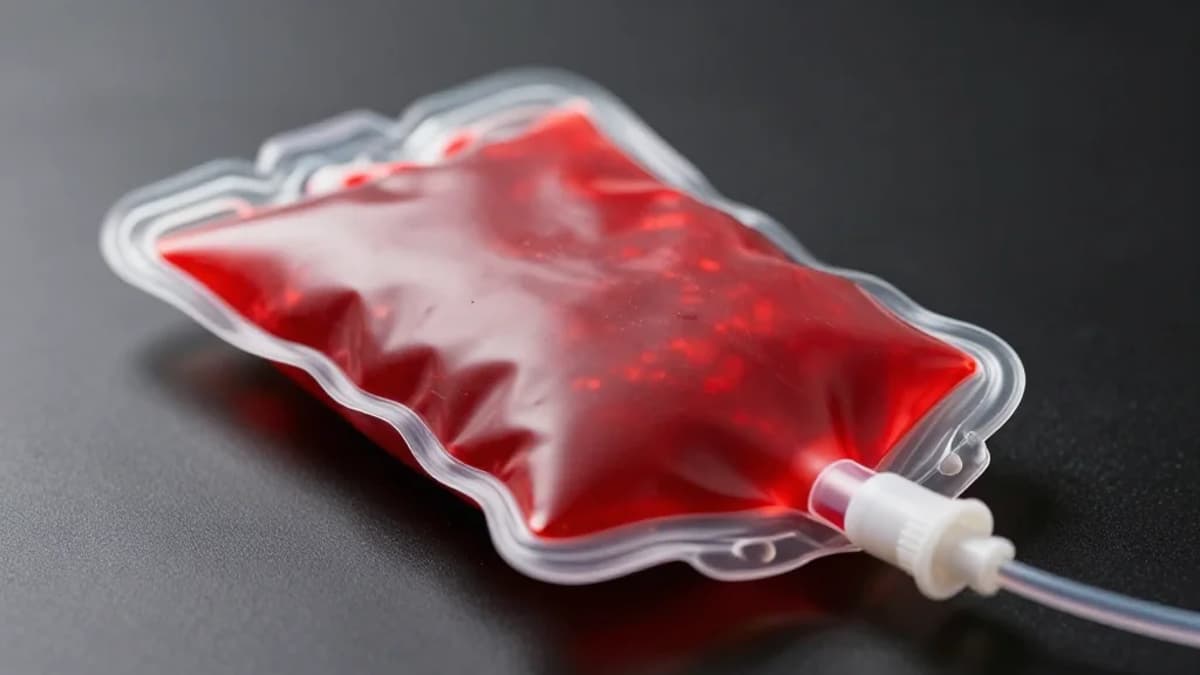
Whole blood provides red blood cells (for oxygen), plasma and platelets (for clotting) in one unit, whereas, in the hospital, these are usually separated. By administering blood at the scene, the program significantly increases survival odds for trauma patients.
And with a new federal grant approved by the county commissioners on Feb. 5, the program has guaranteed funding for the next five years.
“With whole blood, having seen it firsthand, this is something that will turn a patient around instantly,” Petry said. “Patients who are unconscious receive a unit of blood, and they’re conscious and talking to you within two minutes. It’s truly incredible.”
Carroll was the fourth county in Maryland and the 350th EMS system in the country to establish a Whole Blood Program. The initiative started in the San Antonio, Texas, area in 2017 and drew from military practices for treating wounds in combat.
Though treating people who have been injured in car crashes is very different from treating a wound on the battlefield, Petry said they lead to similar types of traumatic injuries — and in both situations, administering blood on the scene can drastically improve chances of survival.
Since Carroll started its program, eight more Maryland counties have started Whole Blood Programs, including Harford County. Several more, including Baltimore County, Baltimore City and Anne Arundel County, are looking into it.
“In Maryland, as soon as they identified that this was going to be extremely beneficial, they pushed it out,” Zaney said. “We knew that, being a smaller agency and being rural, that we needed to get this blood into our community as quickly as possible because if weather is bad and helicopters can’t fly, our units are transporting [patients] up to an hour to a trauma center by ground, and that’s our golden hour.”
During the past nine months, Carroll County paramedics have administered whole blood 17 times. Of the patients who were being treated for internal hemorrhages, all survived after receiving blood. For patients being treated for injuries from car crashes or falls, the survival rate has been about 50%.
Larger EMS systems such as those in Washington, D.C., that have more data to draw from have seen overall survival rates of about 85% after administering whole blood to patients.
The Whole Blood Program came to Carroll County just three years after the county established its own government‑run Department of Fire and EMS.
Under this new system, the county government covers the salaries of full‑time firefighters and paramedics, while individual volunteer companies continue to provide volunteer staff and pay for the buildings, fire engines and ambulances that the county uses.
This hybrid system can become complicated when it comes to funding, with the volunteers and the county government now splitting the costs of running Carroll’s fire and EMS system. But programs like the Whole Blood Program offer an opportunity to share resources.
The grant that the commissioners approved on Feb. 5, which came from the Maryland Department of Health through the Federal Rural Health Transformation Program, provided just over $911,000 to cover five years of operating and equipment costs.
“To have the county commissioners’ support for a program that they didn’t know about, and to embrace that, and then for our volunteer partners, to have these housed at … the Manchester, Winfield and Taneytown volunteer fire stations, that’s all part of it, right?” Zaney said. “… So it was a whole collaborative approach, and it’s pretty awesome. I’m extremely pumped up about it.”
Comments
Want to join the conversation?
Loading comments...