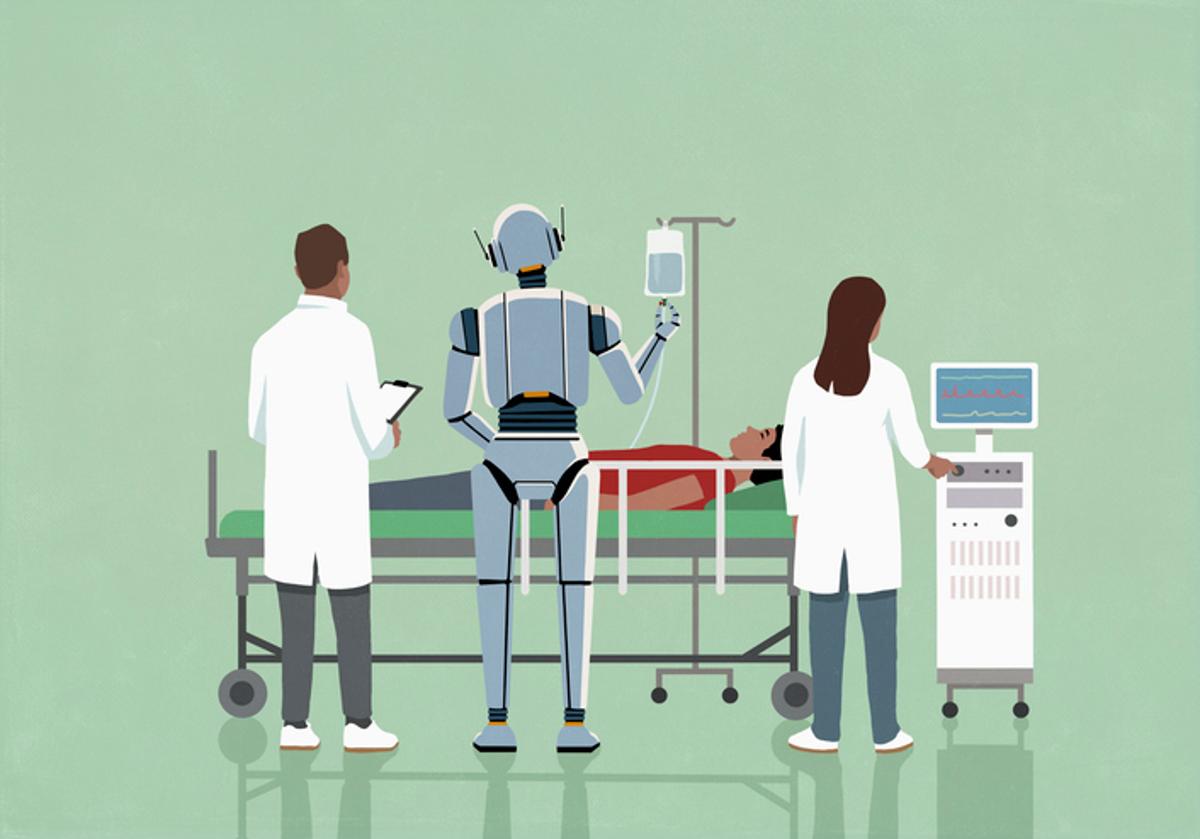
Medical Education Is at a Crossroads. AI Isn’t the Problem — It’s the Mirror
Why It Matters
Physicians will increasingly rely on AI at the bedside, so training that cultivates critical appraisal of AI outputs is essential to patient safety and to preserve the human elements of care. Ignoring this shift risks producing clinicians ill‑prepared for a technology‑driven healthcare system.
Key Takeaways
- •LLMs can pass USMLE but struggle with real‑world patient complexity
- •AI highlights mismatch between exam focus and clinical reasoning skills
- •Faculty must model responsible AI use rather than ban it
- •AI offers scalable simulated patient encounters for extra trainee practice
- •Curricula lag literature growth; AI can help redesign education
Pulse Analysis
Artificial intelligence has moved from a futuristic concept to a daily tool in hospitals, clinics, and even the pocket of every resident. Large language models now achieve USMLE‑level scores, yet studies show their accuracy plummets when faced with the messy, narrative‑driven cases that define real patient interactions. This discrepancy underscores a deeper problem: medical training has become overly focused on standardized testing, while the core skill of contextual clinical reasoning remains under‑taught. Recognizing AI’s current capabilities—and its limits—offers educators a chance to recalibrate curricula toward the competencies that truly matter on the front lines.
The path forward is not to ban AI from the classroom but to embed it as a disciplined learning aid. Faculty should demonstrate how to interrogate model outputs, trace references to primary literature, and identify hallucinations before they influence care decisions. When used responsibly, AI can generate thousands of simulated patient encounters, giving trainees unprecedented exposure to diverse presentations without the logistical constraints of traditional clerkships. This scalable practice not only accelerates skill acquisition but also levels the playing field for students from resource‑limited institutions, fostering a more equitable training environment.
Beyond technology, the article spotlights longstanding structural flaws—rapidly expanding medical literature, soaring student debt of $300,000‑$400,000, and mismatched specialty distribution—that predate AI yet are intensified by it. Addressing these issues requires a curriculum that prizes empathy, teamwork, and lifelong learning over rote memorization. By aligning assessment methods with real‑world clinical demands and leveraging AI for continuous, contextual education, the next generation of physicians can become adept at both human judgment and digital augmentation, ensuring patient care remains both compassionate and cutting‑edge.
Medical Education Is at a Crossroads. AI Isn’t the Problem — It’s the Mirror
Comments
Want to join the conversation?
Loading comments...